
Completed in March, Buried in February: Auerbach, Krzepicki and the Making of a Treblinka Eyewitness Testimony
Holocaust eyewitness testimonies are often treated as relatively stable documents that can be dated, compared and used as evidence for historical reconstruction. But what happens when a single testimony exists in multiple versions, bears clear traces of editorial intervention, and resists secure dating? This article argues that such problems are not merely factual inconveniences. They reveal something more fundamental about the collaborative and iterative nature of Holocaust testimony production, where the boundaries between witness, recorder and editor are frequently blurred – boundaries that historians have rarely attempted to clarify.
The case examined here is the testimony of Jakub (Abraham) Krzepicki, an early reported escapee of Treblinka II, recorded and edited by Rachel Auerbach, a journalist and member of the Warsaw Jewish underground. The standard chronology places the completion of her Yiddish manuscript in January 1943 and its burial in a hidden archive in February. Yet that timeline strains under scrutiny: it is contradicted by Auerbach’s own recollections, by an apparent anachronism in Krzepicki’s narrative, and by the existence of a shorter Polish version whose relationship to the Yiddish text remains unexplained.
These chronological tensions are not merely problems of dating. Rather, they point toward a more unstable textual history involving continued composition, multiple circulating versions, and ongoing editorial shaping beyond the presumed burial date. By tracing the relationship between chronology, textual variation and Auerbach’s documented literary practices, this article shifts the question from “when was this testimony completed” to “how was this testimony produced, and who actually produced it?” The Krzepicki account thus becomes a case study in the mediated, collaborative and often unstable nature of Holocaust witness testimony itself.
Standard Chronology and Tensions
Recording and Composition
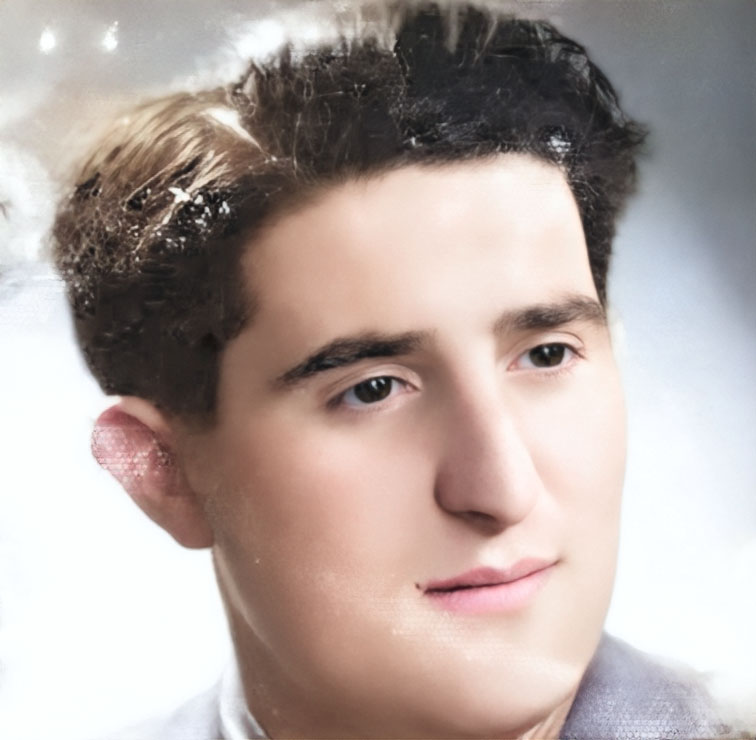
Jakub Jozef Krzepicki was born in 1915 in Praszka, Wielun County, Poland. He enlisted in the Polish army in 1938 and was captured during Germany’s invasion of Poland, spending time in a prisoner-of-war camp in Lublin.[1] He escaped to Warsaw and entered the ghetto, where he used identification papers in the name of his father, Abraham, the name by which Auerbach came to know him.[2]
Krzepicki was deported from Warsaw to Treblinka on August 25, 1942.[3] He escaped from the camp on September 13, spending about a month in the Stoczek area, nine miles southwest of Treblinka II, before returning to Warsaw. The exact date he re-entered the ghetto is unknown, though estimated as early October.
Upon learning of Krzepicki’s survival and return, Shmuel Winter[4] and Emmanuel Ringelblum,[5] members of the underground archive Oyneg Shabes group, assigned fellow member Rachel Auerbach the task of recording his testimony and preparing it for publication.[6] Krzepicki and Auerbach started working together around December 28, 1942.[7] No evidence in the surviving record suggests the two were acquainted before this project. Krzepicki died fighting in the Warsaw Ghetto Uprising in April 1943.[8] Auerbach survived the war, leaving the ghetto for the Aryan side in March 1943.[9]
Historians generally date Auerbach’s recording of Krzepicki’s testimony between late December 1942 and January 1943.[10] None cite a primary source for this endpoint, and Auerbach’s own account tells a different story. She states that she began recording Krzepicki’s account in December, but finished only the day before she left the Warsaw Ghetto in March.[11] She later recalled:[12]
“I moved twice, from one apartment to another from January 22 to March 7. […] Krzepicki visited me several more times at my new locations, but we hardly managed to finish the manuscript. […] I parted ways with Krzepicki the day before I left and never saw him again.”
Thus, she links her memory of leaving the ghetto with that of barely completing the testimony.
Rather than describing a limited act of transcription completed shortly after their collaboration began, Auerbach recalled an extended process of meetings, composition and revisions stretching to the end of her residence in the ghetto. This directly contradicts the December-January window assumed by the standard chronology.
Burial and the Ringelblum Archive
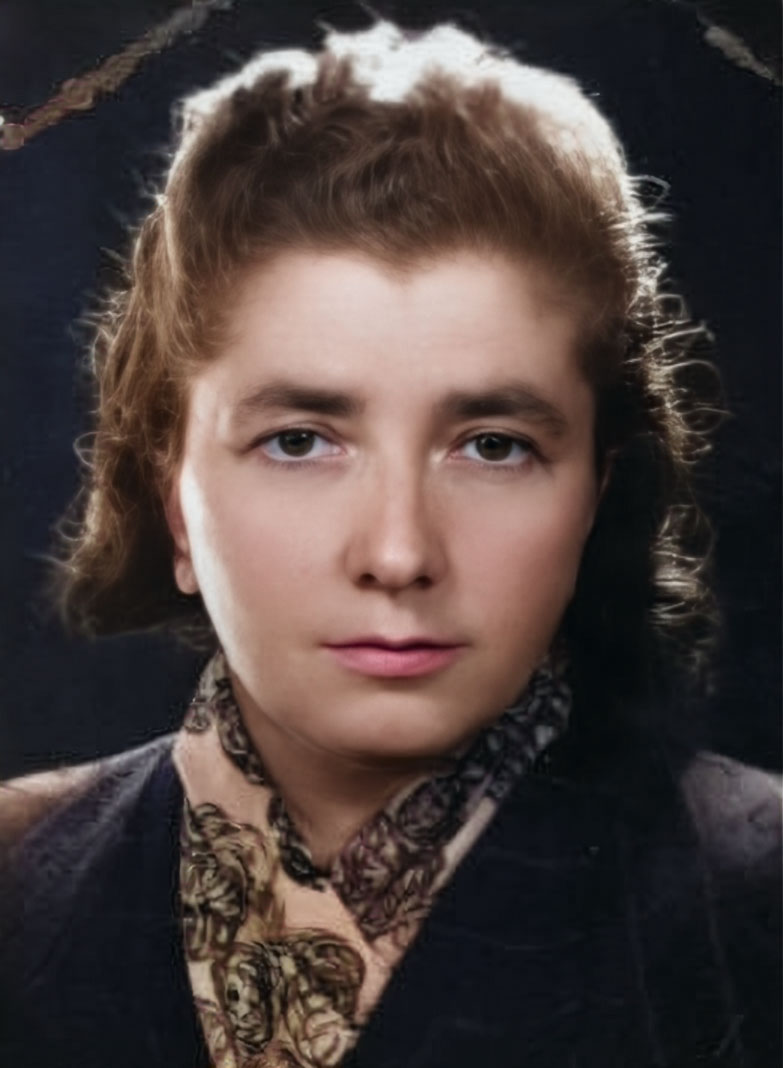
The notebooks that contain Krzepicki’s account were reportedly buried in large milk cans as part of the Oyneg Shabes Ringelblum Archive. While uncertain of the exact date the cans were buried, historical consensus places it in February 1943, with estimates generally favoring early in the month.[13] Auerbach herself is one of the few sources for context regarding the burial of the milk cans, although contemporaneous sources do not record a date, whether precise or approximate.[14]
The Jewish Historical Institute (JHI) states:[15]
“We do not know for sure when the second part of the Ringelblum Archive was hidden; only by analysing the dates of its documents we can assume that it took place in February 1943. It is likely that Emanuel Ringelblum hid it together with Izrael Lichtensztajn.”
Based on their analysis of the documents, “the very last materials in the second part of the archive, buried in two aluminum milk cans, date from late January and early February 1943,” with February 1 the latest date on a document.[16]
The chronology becomes more unstable when Auerbach’s own recollections concerning the archive’s burial are considered. She recalled meeting Ringelblum shortly before she moved out of the ghetto, where he told her that “the archive was secure, that the documents were ‘protected from fire and water.’”[17] While Ringelblum could theoretically have been referring to the first cache, it had been buried on August 3, 1942, months before this conversation.[18] He was more likely referring to the milk cans buried that February.
A February burial date is difficult to reconcile with Auerbach’s recollection that the manuscript was only completed shortly before her departure from the ghetto. If both Auerbach’s memory and the document dating are substantially correct, the relationship between the surviving Krzepicki notebooks and the February cache becomes uncertain. While it remains possible that she turned the notebooks over to others sometime in March, such a scenario would place them well beyond the dating of the other documents inside the buried cache.[19] The problem is therefore not merely one of chronology, but also whether the testimony existed as a complete and stable manuscript by the time the archive was buried, or whether it continued to develop afterward.
The difficulty is not limited to conflicting recollections concerning the recording or burial of the manuscript. Even if Auerbach’s memory is set aside, the testimony itself appears to reference the transmission of a rumor about events at Treblinka that are not reported to have begun until after the archive’s burial.
Cremations at Treblinka
Historians generally place the ordering of large-scale exhumation and cremation of corpses from mass graves at Treblinka in late February or early March 1943. This phase is usually linked to a visit to the camp by Heinrich Himmler where he ordered the covering up Nazi crimes following two key events in February 1943: the German defeat at Stalingrad and the German discovery of mass graves of Polish officers in the Katyn forest (though not publicly announced until April).[20]
In Jankiel Wiernik’s early account of Treblinka, it is directly related to “the period when the Germans talked a lot about Katyn.”[21] Immediate postwar investigations dated the Himmler visit to “February or March” or “early spring of 1943,” although an exact date cannot be established.[22] More recent historians concur, variously linking it to Katyn, Stalingrad, or both.[23] As a result of Himmler’s purported order, mass cremations are alleged to have begun soon thereafter.[24]
However, when describing mass graves in the area of the gas chambers, Krzepicki reports being told “later on” about large-scale cremations:[25]
“A comfortable, neat little bathhouse set in the middle of a wooded area. There was nothing more to see. But as one stood in front of the entrance to this ‘bathhouse’ one could see hills of lime, and beneath them the giant, still open mass graves where tens, perhaps hundreds of thousands of ‘bathers’ lay in eternal rest. Later on, I was told that here, too, they had begun to cremate the bodies in the ditches.”
The phrase “later on” is ambiguous, but in context it distinguishes this information from Krzepicki’s direct observations of the bathhouse and adjacent mass graves.
Earlier in his account, Krzepicki states he participated in cremations of bodies in graves in the so-called “lower camp,” reserved for camp staff and laborers.[26] He states that, “no gassing victims were buried in this area; only those who had died in the transports or who had been shot on arrival at the camp, before entering the showers.”[27] Thus, these make up a separate group of corpses than the “bathers,” who are alleged to have been buried in the “upper camp” near the bathhouse, an area Krzepicki reported visiting a single time after sneaking away from his labor group.[28]
While one could argue that he generalized from cremations observed in the “lower camp,” the text itself distinguishes the two. Krzepicki describes the “lower camp” ditches from direct observation, but the “upper camp” cremations are introduced with “later on, I was told.” The phrasing presents this not as an inference or rumors circulating within the camp at the time he was there, but as subsequent information pass on about an operational change that began months after he escaped.[29]
This distinction becomes clearer when considered alongside early postwar efforts, including Auerbach’s own, to date the beginning of large-scale cremations. In a 1946 essay describing her trip to Treblinka with a group of alleged survivors, Auerbach wrote that “Himmler visited Treblinka late in February 1943,” and that it was only after this “when they began to exhumate [sic] the corpses from the mass graves and cremate them.”[30]
While it is possible that Krzepicki heard premature rumors concerning cremations at Treblinka, similar underground reporting rarely described events with such specificity. Early reports predating the mass deportations to Treblinka II contained vague, exaggerated or conflicting accounts about the “death camp.”[31] Polish Underground reports from April and May 1943 are some of the earliest to mention mass exhumations, but referred to the use of corrosive substances to reduce corpses to ash, rather than cremation.[32] Krzepicki’s account, unlike anonymous rumor transmission, is framed as information connected to a specific location he had personally observed, concerns a later operational phase of the camp, and is unusually accurate in light of later historical consensus.[33]
Taken together, the external dating of the cremations, the internal phrasing of the text, and the broader context of wartime underground reporting suggest that this passage reflects information about events at Treblinka that postdates not only the archive’s burial but is also more precise than the earliest reports from months later.
The Polish Version: Textual Variation as Chronological Uncertainty
The chronological instability is further complicated by the existence of a second, shorter testimony attributed to Jakub Krzepicki, which provides direct evidence that the account existed in multiple forms. This Polish-language version not only strains the conventional timeline but also raises questions about the production and authorship of Krzepicki’s testimony itself.
The dating of this text remains uncertain even at the institutional level. The Jewish Historical Institute previously dated it to “After 09.1942,” preceding Auerbach’s collaboration, although neither Krzepicki nor Auerbach mention an earlier testimony.[34] A more recent JHI publication now dates the Polish document to “After December 1942,” describing it as “an abridged and slightly altered, unfinished testimony” and identifying Auerbach’s Yiddish version as the “original testimony.”[35] A September date implies an otherwise unattested earlier account, while a December-January date requires the rapid abridgment of over 300 handwritten pages within a narrow timeframe.[36] A March completion date would allow Auerbach’s notebooks to be read and redacted, relaxing the time pressure at the expense of putting the accounts outside the buried cache altogether.
The JHI’s current dating places significant strain on the conventional historiography. Assuming the Polish version was completed after December and Auerbach’s Yiddish text was the original, Auerbach would have had to complete her version quickly enough for it to be abridged by multiple hands and buried alongside the rest of the archive. Yet there is no evidence Auerbach was aware of the Polish text. The document itself is anonymous, its two scribes unidentified despite the first-person narration, and several mid-sentence shifts in handwriting effectively rule out dictation. Its purpose is likewise unclear: whether as an outline for later expansion, to be published alongside or in advance of the longer “secret brochure,” or for some other function. Neither version was published during the war.
The internal relationship between the two texts further complicates matters. While containing the core narrative shared by both accounts, the Polish version compresses Krzepicki’s statement that bodies from the “bathhouse” were taken to nearby pits and “cremated along with all the refuse from the camp.”[37] This formulation conflates the two types of cremations clearly distinguished in the longer account, where small-scale burning of corpses occurs in refuse pits early in the camp’s existence, but is specifically denied regarding the bodies in larger open mass graves near the bathhouse.[38] By merging these separate operational phases, the Polish version lacks the distinction that makes the Yiddish account’s “later on, I was told” so striking. That reference to large-scale cremations which began months after Krzepicki escaped has no direct parallel in the Polish text. This contrast highlights the chronological anomaly.
At the same time, the Polish version lacks the features that mark Auerbach’s editorial hand. There are no chapter divisions, no marginal notations, and none of the poetic or literary elements that, as discussed below, characterize her notebooks. This absence is better explained by Auerbach’s expansion of the Polish testimony rather than others redacting her version of Krzepicki’s narrative. Stripping out all traces of her literary styling would be far less likely than their introduction during the process of extending the text for publication.
The relationship between the two documents remains uncertain, and there is no direct evidence that their respective authors were aware of one another. Nevertheless, the structural and narrative overlap suggests that a coherent version of Krzepicki’s core testimony existed in some form prior to, or alongside, Auerbach’s longer version. On this reading, her notebooks do not represent the initial version of the testimony, but its expansion and reworking. This in turn raises the possibility that the continued development of the text did not rely on Krzepicki’s ongoing presence.
From Chronology to Composition
The chronological tensions and textual variations examined above point toward a testimony that remained subject to continued revision and expansion rather than a stable eyewitness document completed at a fixed point.
Thus, the central issue is no longer simply when the testimony was completed, but how it was produced and for what reasons. The conventional chronology depends on several assumptions concerning textual stability: that Auerbach misremembered the timing of the manuscript’s completion, that the testimony already existed in substantially finished form by February 1943, and that the text remained fixed thereafter. Once those assumptions are relaxed, the testimony can be approached as a collaborative document shaped through ongoing editorial intervention, underground information transmission and preparation for clandestine publication.
This reading also aligns with Auerbach’s documented practice of continued writing after leaving the ghetto, as well as with the intention to publish the manuscript as a “secret brochure.” The standard view concedes her continued writing but maintains she was contributing to a new underground archive on the Aryan side of Warsaw or retaining her writings, while the alternative view holds that the Krzepicki account itself remained available for further revision and adaptation.[39]
The following analysis examines these compositional processes through the testimony’s intended publication, a successfully published “secret brochure,” and Auerbach’s documented literary and editorial practices.
Intended Publication
The intended function of the Krzepicki account, as stated earlier, was to publish it as a “secret brochure.”[40] During the same period, Oyneg Shabes members were preparing the “Liquidation of Jewish Warsaw” report, completed in mid-November 1942 and smuggled out of occupied Poland.[41] This document contained a detailed recounting of the July-September deportations from Warsaw, as well as a map and description of the Treblinka camp. It came after several previous bulletins and reports that the Oyneg Shabes group had produced for circulation beyond the ghetto.[42]
In this context, the “secret brochure” can be understood as complementing the November report. Where “Liquidation of Jewish Warsaw” presented a structured overview, a firsthand eyewitness account could reinforce events from the report in a more grounded, experiential narrative. While there is no evidence the testimony was deliberately intended to mirror the report, their shared vocabulary, proximity in time, purpose and institutional setting suggest they fulfilled related communicative functions.
The second deportation action in the Warsaw Ghetto (January 1943) disrupted daily life and underground work alike, likely delaying efforts to coordinate the texts or prepare Krzepicki’s account for publication. Burying the manuscript in early February would have effectively ended the “secret brochure” project. Retention, by contrast, kept open the possibility of further revision, eventual publication or repurposing, options fully aligned with Oyneg Shabes’s stated intention of distributing the material in addition to archiving it.
A later, successful effort at underground dissemination of eyewitness testimony suggests that the “secret brochure” project was not abandoned but merely postponed. What the Oyneg Shabes group could not complete in early 1943, the Jewish underground on the Aryan side would accomplish a year later.
A Successful “Secret Brochure”
A useful comparison can be made to the case of Jankiel Wiernik, whose text provides a completed example of how witness narrative could evolve from collaborative composition into an expanded, published work. His book A Year in Treblinka was written, published, and smuggled out of Poland in 1944.[43] While there is no direct evidence that Wiernik’s account was derived from the Krzepicki drafts, the former’s publication demonstrates that the effort to produce a clandestine Treblinka eyewitness testimony persisted beyond 1942-1943.
The preparation histories of the two accounts show notable similarities. A surviving three-page draft of Wiernik’s account, written in the first person but composed by two or three hands, sits alongside the significantly longer published version. Some details in the final text mirror the draft, while others are inconsistent with it. Similar to the Yiddish and Polish versions of the Krzepicki account, the relation between the textual variants of Wiernik’s account is uncertain. Such features complicate any straightforward distinction between witness, recorder and editor, and point to a process of mediated textual production rather than simple transcription.[44]
These issues of the purpose of the “secret brochure” and the collaborative production of eyewitness testimonies raise a larger question: not simply whether Auerbach edited the Krzepicki text, but how extensively her influence shaped its ongoing composition. As that influence grew, Krzepicki’s individual presence in the text becomes increasingly difficult to discern. The instability of authorship, in other words, mirrors the instability of chronology, as both are products of the same collaborative, iterative and editorially mediated process. The evidence that follows reveals a text that became as much hers as his.
Authorship
Auerbach’s Editorial Practice
The Krzepicki testimony itself provides direct evidence of Auerbach’s editorial role, taking the form of a project she actively shaped. Her presence is evident throughout the Yiddish notebooks. In an article for Yad Vashem Studies, Lea Prais points to Auerbach’s corrections, remarks, stylistic treatment and marginal notes, noting that this “eyewitness testimony” contains chapters and subchapter headings written into the narrative.[45] As a journalist, Auerbach wrote and structured material for a living, professionally tailoring narratives for publication. Krzepicki, before the war, was a tailor.[46]
The Krzepicki account comprises three notebooks of over three hundred pages of handwritten Yiddish, whose structure reflects advance planning. The first notebook consists of an introductory essay by Auerbach alone, titled “What does it mean Treblinka? Phenomenology of the death factory.” The second begins with a table of contents that positions Krzepicki’s account as only “Part One” of a projected multi-part work. “Part Two” was intended to contain five additional eyewitness accounts.[47] This notebook concludes with an outline of Krzepicki’s post-escape wandering and travel back to Warsaw, which is then substantially expanded into the narrative of the third notebook, titled “Treblinka – Supplement.”[48]
This structure aligns with the planned “secret brochure” but also extends beyond her assignment of recording a single testimony. Her expansion of the project’s scope is observable in the introduction and the plan to include additional eyewitness reports, which may have complicated efforts to complete the work and publish it.[49]
Auerbach’s Literary Intervention: The Shtern Poem
Auerbach’s authorial intervention is not limited to structure and organization. It is also visible at the level of language and imagery, with her incorporation of a poem into Krzepicki’s account that she had been given nearly a year earlier in the Warsaw Ghetto. In the middle of the second notebook, this is written by Auerbach on its own page:[50]
“Such a beautiful sky and the forest with trees in it. The world is too small for me. I analyse whether I am happy or unhappy. Either way, I must live. I want to die of natural causes.”
According to Auerbach, this is a poem by Yisroel Shtern[51] who gave it to her just before Passover in 1942 (April 1).[52]
Phrases from this poem recur at several points in Krzepicki’s account, both in his own narration and in speech attributed to others: “The sky and trees were beautiful, and this world was not large enough for me.”[53] “A beautiful sky, a big world, but there seemed to be no room in it for me.”[54] “Some of those among us were ready to give up. ‘Look fellows,’ they argued, ‘there’s no way out. The world has no room for us.’”[55] This pattern is unlikely to be coincidental or derived from an independent source, instead pointing to deliberate stylistic use.
Shtern gave the poem to Auerbach, not to Krzepicki. No evidence suggests Krzepicki was acquainted with either Shtern or Auerbach before this project, nor that he had any other way of encountering Shtern’s unpublished work. Krzepicki could not have independently read it, let alone memorized it sufficiently to reproduce its phrasing during interviews with Auerbach, or attribute similar language to others. The repeated appearance of these distinctive phrases points to Auerbach’s stylistic and compositional shaping of the text.
In her memoirs, Auerbach reports that Bernard (Ber) Mark[56] of the Jewish Historical Institute included this poem in a book published in 1954:
“The sky is so blue
In this world
I have no space
A forest full of trees
I look around
Am I happy?
Or unhappy.
I must live
I want to die a natural death.”
She writes:[57]
“[A]fter Ber Mark returned from the Soviet Union [to Poland], I let him look at my wartime notebooks. He read about how Shtern, when I saw him as Leszno 14, gave me a poem that he had written on the left side of a blank order form for some ghetto laundry.”
Mark himself states that he got the lines from the Krzepicki manuscript, observing that “we found a couple of lines that have nothing to do with Krzepicki’s story.” He attributes it to Shtern and concludes:[58]
“[T]he inner poetic breath of these lines has nothing to do with the way Krzepicki’s experiences are described in the same place of the manuscript, on the other side of the page. Do these lines not make the stars tremble? Or perhaps the poet [Shtern] listened to Krzepicki’s stories and tried to throw in the beginning of a poem?”
Mark’s speculation that Krzepicki inspired Shtern is clearly incorrect, as Shtern was deported from Warsaw before Krzepicki escaped from Treblinka. More plausibly, the poem preceded and informed the narrative, not the other way around. In her memoirs, Auerbach equivocates, explicitly identifying this as the poem Shtern gave her, while at the same time attributing parts of it to Krzepicki’s own words. She cautions future historians against regarding it as a Holocaust poem by Shtern, yet also admits that she was unable to confirm if the passage came from the Krzepicki notebooks, as the microfilm copy she reviewed in Israel was not sufficiently legible.[59]
Taken together, Auerbach’s structured organization of the notebooks and her demonstrable insertion of external literary material point to a level of authorial influence that exceeds that of mere recorder or editor. Given this degree of intervention, her continued development of the text did not necessarily require Krzepicki’s ongoing presence, provided that the core narrative had already been established.
A Circulating Motif within Oyneg Shabes
Beyond direct textual insertion, a subtler form of influence appears in a recurring literary theme across Oyneg Shabes writings. In late 1942, several members described the deportations in terms of Jews fearing Germans more than they feared death. On September 25, 1942, Abraham Lewin met with Hersh Wasser and his wife, as well as Shie Rabinowicz, the cousin of Jakub Rabinowicz who had reportedly escaped from Treblinka. According to Lewin:[60]
“For hours on end, [Shie] recounted the horrors of Tr[eblinka]. His central observation: it has nearly reached the point that the Jews are more afraid of a German than of death.”
This idea was subsequently formalized in the aforementioned “Liquidation of Jewish Warsaw” report, authored by Emanuel Ringelblum, Hersh Wasser and Eliyahu Gutkowski:[61]
“Throughout the whole second stage of the Aktion the Germans gave nobody any time to rest or think. The blows were dealt one after another. Consequently, the Jews’ fear of the Germans grew greater than their fear of death.”
Here, it functions as an interpretive conclusion rather than reported speech.[62]
In the Krzepicki testimony, the same theme appears again, but attributed only vaguely:[63]
“Someone said very correctly that the Jews were more afraid of the Germans than they were of death.”
The speaker is not identified, nor is it specified when Krzepicki heard this. The phrasing is closer to the generalized language of the November report than to Lewin’s attribution to Rabinowicz.
One explanation is that the phrase was a common expression of a widely shared perception at Treblinka or within the Warsaw Ghetto. However, given the overlap in personnel and the circulation of this language within Oyneg Shabes, it more likely functioned as a shared way of interpreting events. Its appearance in the Krzepicki account is therefore consistent with Auerbach’s fluency in the group’s vocabulary. Seen in this light, the recurrence of the theme is less likely to reflect independent expression than the influence of a shared interpretive framework Auerbach could draw on while shaping Krzepicki’s testimony.
The Treblinka Movie Script
Auerbach’s continued engagement with the material after the war provides further evidence of this ongoing authorial relationship. She drew on both the Shtern poem and her version of Krzepicki’s account for a later project, taking events one-to-one or embellishing them with elements from other works. For instance, her personal papers at Yad Vashem include a three-page “screenplay outline” she wrote for a film called Rebellion in Treblinka.[64] Much of this outline is based on her prior Treblinka writings, with additional material from Jankiel Wiernik’s 1944 book A Year in Treblinka and other sources.
An echo of the Shtern poem appears in a description of a group of survivors of the Treblinka revolt, which is reported to have taken place on August 2, 1943. After the prisoners escape and successfully evade the Germans, there is a pause in the action:[65]
“Some people sit down for a moment, looking out at the green, beautiful world. They have won freedom. Will they enjoy it for long?”
In her memoirs, Auerbach explicitly references the phrase “such a beautiful, green world” when discussing Mark’s publication of the poem.[66]
On the second page of this fictional screenplay outline are six “Episodes,” short summaries of scenes that “are available to choose from and are designed so as not to interrupt the action.”[67] Every single one of these episodes has a direct analog to events in Auerbach’s Krzepicki account. One on a Himmler visit combines material from Krzepicki with Auerbach’s “In the Fields of Treblinka” essay.[68] The others are nearly identical between the two sources.
The close correspondence between this screenplay outline and the Krzepicki account indicates that Auerbach continued to take inspiration from her version of the narrative, with less influence from independent sources. This reinforces her authorial engagement with the material as she continued to adapt it for later creative projects, extending well after the war and across multiple formats.
Conclusion
The conventional chronology of the Krzepicki accounts depends on a set of assumptions that cannot all hold at once. Accepting a February burial date requires dismissing Auerbach’s link between the manuscript’s completion and leaving the ghetto, as well as Ringelblum’s remark that the archive was already secured. It also requires treating the reference to mass cremations as a remarkably rapid, accurate, and prescient rumor. Taken individually, each tension might be explained away. Together, they reveal a deeper instability in the textual history of the testimony itself.
The evidence examined here points toward a testimony that did not exist as a single, fixed eyewitness account, but as a developing project shaped through multiple stages of recording, revision, abridgment, expansion and editorial organization. The uncertain relationship between the Yiddish and Polish versions, together with Auerbach’s documented literary and structural shaping of the notebooks, complicates any straightforward distinction between witness and recorder. The Krzepicki materials instead reflect a compositional process in which firsthand experience, underground information production, and authorial mediation became increasingly difficult to untangle.
In this respect, the Krzepicki account appears representative of a specific documentary practice within Oyneg Shabes: the production of material not merely for archiving but for clandestine publication beyond the ghetto. Yet the “secret brochure” also marked an escalation in these efforts. Earlier Oyneg Shabes publications largely consisted of bulletins and reports for underground circulation or transmission abroad, whereas the Krzepicki text was conceived as a standalone eyewitness testimony prepared directly for publication.
Auerbach’s expansion of the original scope, the disruption of the January deportations, her departure from the ghetto, and rapid developments of the war itself disrupted efforts to finalize the testimony for publication before the project was overtaken by events. The testimony’s chronological, textual and compositional instabilities emerged from this ongoing process of production.
The tensions surrounding the accounts attributed to Jakub Krzepicki suggest broader issues that extend beyond this single witness. To what extent is Holocaust “eyewitness testimony” shaped – or even substantially composed – by recorders and editors?[69] His testimony is not the only instance of a first-person “death camp” testimony where the boundaries between witness, scribe and editor are blurred. The history of testimony production may itself constitute an important object of Holocaust study.
The Krzepicki case also demonstrates the risks of treating Holocaust testimony as a transparent and fixed record divorced from its conditions of production.[70] Questions of mediation, revision, editorial intervention and external motivations are not secondary to the testimony itself, but part of the historical evidence historians must account for when interpreting such texts.
Addendum: Note on Translations
Both of the accounts attributed to Krzepicki have been published in English translation.
The longer Yiddish version first appeared in Alexander Donat’s The death camp Treblinka: a documentary under the title “Eighteen Days in Treblinka.” This version is incomplete, omitting several passages, as well as Auerbach’s notations and interjections. A more recent translation was published in 2021 by the Jewish Historical Institute in The last stage of resettlement is death: Pomiechówek, Chełmno on the Ner, Treblinka. This version, while drawing on Donat’s earlier translation, is more complete and includes Auerbach’s marginalia, along with editorial footnotes by the JHI.
The shorter Polish version was first published in To Live With Honor and Die With Honor!… Selected Documents from the Warsaw Ghetto Underground Archives “O.S.” [“Oneg Shabbath”], edited by Joseph Kermish (Yad Vashem, 1986). It has since been newly translated and published in The last stage of resettlement is death, and in 2024 as Document 169 of The persecution and murder of the European Jews by Nazi Germany, 1933-1945: General Government, August 1941-1945. A Polish transcription with AI-assisted translation is also available online via the CODOH Forum Wiki, which includes the original page scans and is the only one to indicate in the text where the handwriting switches between writers.
Rachel Auerbach’s “Rebellion in Treblinka (screenplay outline)” survives in several typed copies and one handwritten version in her personal papers at Yad Vashem. Although no official English translation has been published, an AI-assisted translation has been posted on the CODOH Forum Wiki.
Bibliography
Editions of the Yiddish Krzepicki Account
- “A Man Has Escaped from Treblinka… Conversations with the Returnee, Recorded and Edited by Rachel Auerbach and with Her Introduction.” In The Last Stage of Resettlement Is Death: Pomiechówek, Chełmno on the Ner, Treblinka, with Rachel Auerbach. The Ringelblum Archive: Underground Archive of the Warsaw Ghetto 5. Żydowski Instytut Historyczny im. Emanuela Ringelbluma, 2021.
- Krzepicki, Abraham. “Eighteen Days in Treblinka.” In The Death Camp Treblinka: A Documentary, translated by Alexander Donat. Holocaust Library, 1979.
- Krzepicki, Abraham. “Report entitled ‘A Man Escaped from Treblinka… Conversations with a Returnee.’” With Rachel Auerbach. December 26, 1942. Originally published as Relacja pt. „Człowiek uciekł z Treblinek… rozmowy z powracającym”. ARG II 382. Center for Jewish History.
Editions of the Polish Krzepicki Account
- Krzepicki, Abraham. “Abram Jakub Krzepicki, an Abridged and Slightly Altered, Unfinished Testimony from Treblinka, with a Map of the Site Attached.” In The Last Stage of Resettlement Is Death: Pomiechówek, Chełmno on the Ner, Treblinka. The Ringelblum Archive : Underground Archive of the Warsaw Ghetto 5. Warsaw Ghetto, 1942. Wydanie I. Żydowski Instytut Historyczny im. Emanuela Ringelbluma, 2021.
- Krzepicki, Abraham. “Account of a Treblinka escapee.” Warsaw Ghetto, December 1942. Originally published as Relacja uciekiniera z Treblinki. ARG II 378. Center for Jewish History.
- Krzepicki, Abraham. “Account of a Treblinka Escapee (Abraham Krzepicki).” CODOH Forum Wiki. Accessed April 3, 2026. https://wiki.codohforum.com/pages/index.php?title=Account_of_a_Treblinka_Escapee_(Abraham_Krzepicki).
- Krzepicki, Abraham. “In October 1942 an Escapee from Treblinka Describes His Time in the Extermination Camp and His Escape.” In The Persecution and Murder of the European Jews by Nazi Germany, 1933-1945: General Government, August 1941-1945, edited by Klaus-Peter Friedrich. De Gruyter Oldenbourg, 2024, pp. 508–14.
- “Reminiscences of a Treblinka Escape.” In To Live With Honor and Die With Honor!… Selected Documents from the Warsaw Ghetto Underground Archives “O.S.” [“Oneg Shabbath”]. Yad Vashem, 1986.
Secondary Sources
- Arad, Yitzhak. The Operation Reinhard Death Camps: Belzec, Sobibor, Treblinka. Revised and Expanded edition. Indiana University Press Yad Vashem publications, 2018.
- Auerbach, Rachel. “In the Fields of Treblinka.” In The Death Camp Treblinka: A Documentary. Holocaust Library, 1946.
- Auerbach, Rachel. “Rebellion in Treblinka (screenplay outline).” CODOH Forum Wiki, After 1950. https://wiki.codohforum.com/pages/index.php?title=Rebellion_in_Treblinka_(screenplay_outline).
- Auerbach, Rachel. “Scripts written by Rachel Auerbach or in whose production Rachel Auerbach participated.” After 1950. Item ID 3688638. Yad Vashem. https://collections.yadvashem.org/en/documents/3688638.
- Auerbach, Rachel. “A Tree in the Ghetto (Yisroel Shtern).” In Book of Kehilat Ostrolenka: Yizkor Book of the Jewish Community of Ostrolenka. Irgun Yotzei Ostrolenka, 2009. https://www.jewishgen.org/Yizkor/ostrolenka1/ostrolenka1.html.
- Auerbach, Rokhl. Warsaw Testament. Edited by Samuel Kassow. Translated by Samuel D. Kassow. White Goat Press, 2024.
- Bańkowska, Aleksandra, and Tadeusz Epsztein, eds. Oyneg Shabes: People and Works. First edition. The Ringelblum Archive: Underground Archive of the Warsaw Ghetto 3. Żydowski Instytut Historyczny im. Emanuela Ringelbluma, 2020.
- Berger, Sara. Experten der Vernichtung Das T4-Reinhardt-Netzwerk in den Lagern Belzec, Sobibor und Treblinka. Epub. Studien zur Gewaltgeschichte des 20. Jahrhunderts. Hamburger Ed, 2014.
- Bergman, Eleonora. “Discovering Second Part of Archive.” Żydowski Instytut Historyczny, 2021. https://www.jhi.pl/en/articles/discovering-second-part-of-archive,66.
- Bergman, Eleonora, Maria Ferenc, and Katarzyna Person, eds. Diaries from the Warsaw Ghetto. First edition. The Ringelblum Archive : Underground Archive of the Warsaw Ghetto, vol. 8. The Emanuel Ringelblum Jewish Historical Institute, 2023. https://cbj.jhi.pl/documents/1369647/0/.
- Chrostowski, Witold. Extermination Camp Treblinka. Vallentine Mitchell, 2004.
- Cohen, Nathan. “Shtern, Yisroel.” In The YIVO Encyclopedia of Jews in Eastern Europe, vol. 2. Yale University Press, 2008. https://encyclopedia.yivo.org/article/1145.
- Donat, Alexander, ed. The Death Camp Treblinka: A Documentary. Holocaust Library, 1979.
- Dziennik Polski (London). “The Massacre of the Jews.” July 11, 1942. Number 615 Edition. Originally published as Rzeź Żydów. Śląska Biblioteka Cyfrowa. https://sbc.org.pl/dlibra/publication/418054/edition/392035.
- Engelking, Barbara, and Jacek Leociak. The Warsaw Ghetto: A Guide to the Perished City. Yale University Press, 2009.
- Engelking, Barbara, Alina Skibińska, and Ewa Wiatr, eds. The Last Stage of Resettlement Is Death: Pomiechówek, Chełmno on the Ner, Treblinka. Wydanie I. The Ringelblum Archive: Underground Archive of the Warsaw Ghetto 5. Żydowski Instytut Historyczny im. Emanuela Ringelbluma, 2021.
- Epsztein, Tadeusz. “About the Ringelblum Archive.” Żydowski Instytut Historyczny, July 2012. https://www.jhi.pl/en/research/the-ringelblum-archive-and-the-oneg-shabbat-group/about-the-ringelblum-archive.
- Ferenc Piotrowska, Maria. “‘All Those Rumors Occupy People’s Thoughts…’. On the Relationship between Rumors and Knowledge about the Holocaust in the Warsaw Ghetto.” Rocznik Antropologii Historii 8, no. 11 (2018): 139–58. https://doi.org/10.25945/T4DH-4F29.
- Goldberg, Amos. “Rumor Culture among Warsaw Jews under Nazi Occupation: A World of Catastrophe Reenchanted.” Jewish Social Studies 21, no. 3 (2016): 91–125. https://doi.org/10.2979/jewisocistud.21.3.04.
- Grinberger, Rakhel. “Jakob Jozef Krzepicki.” Page of Testimony. 1956. 1475790. Yad Vashem – Pages of Testimony Names Memorial Collection. https://collections.yadvashem.org/en/names/15724498.
- Harrison, Jonathan, Roberto Muehlenkamp, Jason Myers, Sergey Romanov, and Nicholas Terry. Belzec, Sobibor, Treblinka: Holocaust Denial and Operation Reinhard. First. Holocaust Controversies, 2011.
- Kassow, Samuel. “Emanuel Ringelblum (1900–1944) and Oyneg Shabes.” In History from Loss, 1st ed., edited by Marnie Hughes-Warrington and Daniel Woolf. Routledge, 2023. https://doi.org/10.4324/9781003127499-29.
- Kassow, Samuel. “Ringelblum, Emanuel.” In The YIVO Encyclopedia of Jews in Eastern Europe. Yale University Press, 2008. https://encyclopedia.yivo.org/article/998.
- Kassow, Samuel. “The Warsaw Ghetto in the Writings of Rachel Auerbach.” In Warsaw. The Jewish Metropolis: Essays in Honor of the 75th Birthday of Professor Antony Polonsky. IJS Studies in Judaica 15. Brill, 2015.
- Kassow, Samuel D. Who Will Write Our History? Emanuel Ringelblum, the Warsaw Ghetto, and the Oyneg Shabes Archive. The Helen and Martin Schwartz Lectures in Jewish Studies. Indiana University Press, 2007.
- Kerenji, Emil, ed. Jewish Responses to Persecution: 1942-1943. Documenting Life and Destruction. Holocaust Sources in Context 4. Rowman & Littlefield, 2015.
- Kermish, Joseph, ed. To Live With Honor and Die With Honor!… Selected Documents from the Warsaw Ghetto Underground Archives “O.S.” [“Oneg Shabbath”]. Yad Vashem, 1986.
- Krzepicki, Menachem. “Testimony of Menachem Krzepicki, Born in Praszka, Poland, 1912, Regarding His Experiences in Danzig, Bratislava, Crete, Cyprus and Other Places.” Testimony. Yad Vashem, 1967. Item ID: 3557351. Moshal Repository, Yad Vashem Archival Collection. https://collections.yadvashem.org/en/documents/3557351.
- Kues, Thomas. “A Premature News Report on a ‘Death Camp’ for Jews.” Inconvenient History 3, no. 3 (2011): 237–56. https://codoh.com/library/document/a-premature-news-report-on-a-death-camp-for-jews/.
- Łukaszkiewicz, Zdzisław. “The Treblinka Extermination Camp.” In German Crimes in Poland. Central Commission for Investigation of German Crimes in Poland, vol. 1. Tłoczono w Drukarni św. Wojciecha pod zarządem państwowym, 1946. https://pbc.gda.pl/dlibra/publication/115931/edition/103612.
- Majchrowska, Anna. “Where Was the World When the Jews Were Going to Their Death? Szmuel Winter.” Żydowski Instytut Historyczny, 2023. https://www.jhi.pl/en/articles/where-was-the-world-when-the-jews-were-going-to-their-death-szmuel-winter,6187.
- Mark, Bernard. Di umgeḳumene shrayber fun di geṭos un lagern un zeyere ṿerḳ. With National Yiddish Book Center. Ṿarshe : Yidish Bukh, 1954. http://archive.org/details/nybc208503.
- Mattogno, Carlo. The “Operation Reinhardt” Camps Treblinka, Sobibór, Bełżec: Black Propaganda, Archeological Research, Expected Material Evidence. 1st ed. Holocaust Handbooks 28. Academic Research Media Review Education Group Ltd, 2024. https://holocausthandbooks.com/book/the-operation-reinhardt-camps-treblinka-sobibor-belzec/.
- Mattogno, Carlo, and Jürgen Graf. Treblinka: Extermination Camp or Transit Camp? 4th ed. Holocaust Handbooks 8. Academic Research Media Review Education Group Ltd, 2024. https://holocausthandbooks.com/book/treblinka/.
- Olson, Thomas. “Missing Passages of ‘A Year in Treblinka’: Censorship? Plagiarism?” Inconvenient History (London) 17, no. 4 (2025): 457–91. https://codoh.com/library/document/missing-passages-of-a-year-in-treblinka/.
- Person, Katarzyna, ed. Warsaw Ghetto: Everyday Life. First edition. The Ringelblum Archive: Underground Archive of the Warsaw Ghetto 1. Żydowski Instytut Historyczny im. Emanuela Ringelbluma, 2017.
- Prais, Lea. “‘Jews from the World to Come’: The First Testimonies of Escapees from Chełmno and Teblinka in the Warsaw Ghetto, 1942-1943.” Translated by Natali Greenwood. Yad Vashem Studies 42, no. 1 (2014): 47. https://www.academia.edu/34646896/Prais_pdf.
- Roskies, David G., ed. Voices from the Warsaw Ghetto: Writing Our History. Yale University Press, 2019.
- Shapiro, Robert Moses, and Tadeusz Epsztein, eds. The Warsaw Ghetto Oyneg Shabes-Ringelblum Archive: Catalog and Guide. Indiana university press, 2009.
- Silberklang, David. “From Persecution to Documentation.” Yad Vashem Jerusalem Magazine (Jerusalem), October 2017. https://www.yadvashem.org/sites/default/files/84.pdf.
- Tych, Feliks. “Jewish Historical Institute.” In The YIVO Encyclopedia of Jews in Eastern Europe. Yale University Press, 2008. https://encyclopedia.yivo.org/article/228.
- Webb, Chris, and Michal Chocholatý. The Treblinka Death Camp: History, Biographies, Remembrance. Second, Revised an updated edition. Ibidem, 2021.
- Wiernik, Jankiel. “One Year in Treblinka.” In The Death Camp Treblinka: A Documentary, translated by Alexander Donat. Holocaust Library, 1979.
- Wiernik, Jankiel. “Rok w Treblince.” Typescript, Manuscript. Warsaw, 1944. 11261collec. Ghetto Fighters House Archives. http://www.infocenters.co.il/gfh/notebook_ext.asp?item=41584&site=gfh&lang=ENG&menu=1.
- Wiernik, Jankiel. “Year In Treblinka Manuscript.” CODOH Forum Wiki. Accessed April 16, 2026. https://wiki.codohforum.com/pages/index.php?title=Year_In_Treblinka_Manuscript.
- Zimmerman, Joshua D. The Polish Underground and the Jews, 1939-1945. First paperback edition. Cambridge University Press, 2017. https://doi.org/10.1017/CBO9781139013666.
Endnotes
| [1] | Jakub Krzepicki’s brother Menachem Krzepicki gave a joint testimony to Yad Vashem with Rachel Auerbach, which contains biographical information about Jakub. In addition, his sister Rakhel Grinberger left a Page of Testimony to Yad Vashem which indicates Jakub was a tailor before the war. Prais, “Jews from the World to Come”; see also Krzepicki, “Testimony of Menachem Krzepicki”; Grinberger, “Jakob Jozef Krzepicki.” |
| [2] | Auerbach, Warsaw Testament, p. 373, note 7. This name was confirmed by his brother, Menachem Krzepicki, who jointly gave a testimony with Rachel Auerbach to Yad Vashem in 1967; see Krzepicki, “Testimony of Menachem Krzepicki.” His sister also left a page of testimony with Yad Vashem; see Grinberger, “Jakob Jozef Krzepicki.” |
| [3] | Auerbach, “A Man Has Escaped from Treblinka,” p. 173. Krzepicki, “Abram Jakub Krzepicki, Abridged, Slightly Altered, Unfinished Testimony,” p. 254. |
| [4] | Shmuel Winter was a YIVO (Yiddish Scientific Institute) activist in Poland. See Majchrowska, “Where Was the World When the Jews Were Going to Their Death?” |
| [5] | Emmanuel Ringelblum was a historian and organized the Warsaw Jewish underground archive Oyneg Shabes. He worked for the American Jewish Joint Distribution Committee before the war and headed the Aleynhilf (Jewish Self-Help Society) in the Warsaw Ghetto. See Kassow, “Ringelblum, Emanuel.” |
| [6] | Auerbach, Warsaw Testament, pp. 231f.; see also Kassow, Who Will Write Our History?, p. 201. |
| [7] | Auerbach, Warsaw Testament, pp. 232f. |
| [8] | Auerbach, Warsaw Testament, p. 306; see also Prais, “Jews from the World to Come,” p. 28; Kassow, Who Will Write Our History?, p. 204. |
| [9] | After the war, Auerbach helped establish the Jewish Historical Institute in Poland and collected eyewitness accounts. In 1954, she became head of Yad Vashem’s department for collecting survivor testimony. |
| [10] | Krzepicki, “Eighteen Days in Treblinka,” p. 77, editor’s introduction; Prais, “Jews from the World to Come,” p. 29; Webb and Chocholatý, The Treblinka Death Camp, p. 277; Kerenji, Jewish Responses to Persecution: 1942-1943, p. 46. |
| [11] | Auerbach has variously given this departure date as March 7 or 9. For March 7, see Krzepicki, “Testimony of Menachem Krzepicki”; see also Prais, “Jews from the World to Come,” p. 14; Silberklang, “From Persecution to Documentation,” p. 3. For March 9, see Auerbach, Warsaw Testament, p. 303. |
| [12] | Krzepicki, “Testimony of Menachem Krzepicki.” |
| [13] | One author, Samuel Kassow, extends this to late February or early March, although elsewhere he dates the event more generally to February. March appears less tenable than other proposed dates, as most sources suggest Ringelblum ordered or participated in the hiding of the archive, and he is reported to have left the Warsaw Ghetto in February. Epsztein, “About the Ringelblum Archive”; Person, Warsaw Ghetto: Everyday Life, p. xxi; Engelking and Leociak, The Warsaw Ghetto, pp. 668f.; Roskies, Voices from the Warsaw Ghetto, p. xiv; Kassow, Who Will Write Our History?, p. 5; Kassow, “Emanuel Ringelblum (1900–1944) and Oyneg Shabes,” p. 212. |
| [14] | Auerbach, Warsaw Testament, p. 149; see also Kassow, Who Will Write Our History?, p. 402, note 14. |
| [15] | Israel Lichtenstein was an editor, political activist and teacher. He was a member of the Oyneg Shabes group. He and two students buried the first part of the Ringelblum Archive in metal tins in August 1942. Bergman, “Discovering Second Part of Archive.” |
| [16] | Kassow, Who Will Write Our History? Pp. 357f.; see also Shapiro and Epsztein, The Warsaw Ghetto Oyneg Shabes-Ringelblum Archive, p. 2. |
| [17] | Auerbach, Warsaw Testament, p. 143. |
| [18] | Kassow, Who Will Write Our History?, p. 3. |
| [19] | In her 1974 memoirs, Auerbach references completing the Treblinka testimony and handing over “my last manuscripts” to the archive, but she does not directly link them. Her earlier 1967 recollection that the testimony was completed the day before her departure would still place the manuscript’s completion significantly later than the latest dating of the other documents in the milk cans (early February). Auerbach, Warsaw Testament, p. 252. |
| [20] | Radio Berlin first announced the Katyn discovery on April 13, 1943, although the Germans had discovered the mass graves of Polish officers in late February and begun investigations in March. Zimmerman, The Polish Underground and the Jews, p. 210. |
| [21] | Other witness accounts diverge considerably on this dating, but historians have generally followed Wiernik’s timeframe as the most coherent with external events. Wiernik, “One Year in Treblinka,” p. 167. |
| [22] | Mattogno and Graf, Treblinka, p. 141, for 1945 report. Łukaszkiewicz, “The Treblinka Extermination Camp,” p. 106, for 1946 report. |
| [23] | An exception is Polish historian Witold Chrostowski who places it in mid-March. Arad, The Operation Reinhard Death Camps, pp. 206, 215; Berger, Experts of Extermination, Section “Auflösung von Belzec und Restrukturierung in Treblinka und Sobibor 1943”; Harrison et al., Belzec, Sobibor, Treblinka, p. 445; Webb and Chocholatý, The Treblinka Death Camp, p. 83; Chrostowski, Extermination Camp Treblinka, pp. 75f. |
| [24] | Revisionist authors Carlo Mattogno and Jürgen Graf point out that this alleged Himmler visit relies primarily on eyewitness testimony rather than contemporaneous German documentation and what German documents exist suggest Himmler never visited Treblinka; Mattogno and Graf, Treblinka, pp. 141f.; Mattogno, The “Operation Reinhardt” Camps, pp. 150f. |
| [25] | Auerbach, “A Man Has Escaped from Treblinka,” pp. 207f. |
| [26] | The terms “lower camp” or “upper camp” are not used in the testimony, but the two areas are conventionally understood as separate sections of the camp. The “upper camp” is synonymous with the so-called “death camp” area, where the gas chambers, mass graves of bathhouse victims and cremation pyres were supposedly located. |
| [27] | Auerbach, “A Man Has Escaped from Treblinka,” pp. 183-185. |
| [28] | Auerbach, “A Man Has Escaped from Treblinka,” p. 207. |
| [29] | Krzepicki does not reveal a source for this new knowledge of the exhumations at Treblinka, whether it was from another reported escapee or a circulating rumor. Mainstream historians also treat this as a new operational phase of the camp; see Berger, Experts of Extermination, Section “Auflösung von Belzec und Restrukturierung in Treblinka und Sobibor 1943.” |
| [30] | Auerbach, “In the Fields of Treblinka,” pp. 48, 58. |
| [31] | These accounts predate the first deportations from Warsaw which began on July 22, 1942. On the process for how Oyneg Shabes gathered and presented information from various sources in its bulletins and reports, see Bańkowska and Epsztein, Oyneg Shabes: People and Works, pp. xlix-lxviii. For early Oyneg Shabes bulletins, see Mattogno, The “Operation Reinhardt” Camps, p. 93; Bańkowska and Epsztein, Oyneg Shabes: People and Works, Chapter 4, for complete bulletins. A Polish-language newspaper in London also reported on the use of “poison gas” at Treblinka before it opened; see Dziennik Polski, “The Massacre of the Jews”; see also Kues, “A Premature News Report on a ‘Death Camp’ for Jews.” |
| [32] | Mattogno, The “Operation Reinhardt” Camps, p. 105. |
| [33] | For discussions of the Warsaw Ghetto’s rumor culture, see Goldberg, “Rumor Culture among Warsaw Jews”; Ferenc Piotrowska, “All Those Rumors Occupy People’s Thoughts.” |
| [34] | This would also align it closer in time with the other Treblinka accounts in the Ringelblum Archive, which generally date from September-October 1942 and lack explicit references to the later phase of large-scale exhumation-cremations described in Auerbach’s longer version. Shapiro and Epsztein, The Warsaw Ghetto Oyneg Shabes-Ringelblum Archive, p. 394. |
| [35] | Krzepicki, “Abram Jakub Krzepicki, Abridged, Slightly Altered, Unfinished Testimony,” p. 254. |
| [36] | Krzepicki, “Account of a Treblinka escapee”; see also Krzepicki, “Account of a Treblinka Escapee (Abraham Krzepicki),” an English translation posted on the CODOH Forum Wiki containing the page scans. |
| [37] | Krzepicki, “Abram Jakub Krzepicki, Abridged, Slightly Altered, Unfinished Testimony,” p. 259. |
| [38] | Auerbach, “A Man Has Escaped from Treblinka,” p. 193. Elsewhere, Carlo Mattogno has examined contradictions in the descriptions of the bathhouse and cremations; see Mattogno, The “Operation Reinhardt” Camps, pp. 122-124. |
| [39] | With the help of Poles, she buried her own papers in two caches around Warsaw in 1944; both were recovered after the war. Kassow, Who Will Write Our History? P. 201; Auerbach, “In the Fields of Treblinka,” p. 20, editor’s introduction to essay; see also Kassow, “The Warsaw Ghetto in the Writings of Rachel Auerbach,” p. 511. |
| [40] | Auerbach, Warsaw Testament, p. 232. |
| [41] | This is the well-known “Steam Chamber” report, called “the most important historical source for the Treblinka Camp during the time of its existence.” For analysis of the report, see Mattogno and Graf, Treblinka, pp. 62-64; Mattogno, The “Operation Reinhardt” Camps, pp. 167-170. |
| [42] | Oyneg Shabes had produced three earlier reports and a number of bulletins throughout 1942. Bańkowska and Epsztein, Oyneg Shabes: People and Works, p. 359; see also Mattogno and Graf, Treblinka, pp. 51-57. |
| [43] | The British and Soviet Union both had copies within months of its initial publication, and the book was quickly translated into Yiddish, English and Russian. |
| [44] | Wiernik, “A Year in Treblinka, Typescript & Manuscript”; see also Olson, “Missing Passages,” pp. 485-488; Wiernik, “Year In Treblinka Manuscript,” an English translation posted on the CODOH Forum Wiki containing the page scans. |
| [45] | Prais, “Jews from the World to Come,” p. 30. |
| [46] | This, according to his sister; see Grinberger, “Jakob Jozef Krzepicki.” |
| [47] | In this text and her memoirs, Auerbach does not identify these additional witnesses, who are only referred to with initials; Auerbach, “A Man Has Escaped from Treblinka,” p. 172. |
| [48] | Auerbach, “A Man Has Escaped from Treblinka,” pp. 243f. |
| [49] | By contrast, the scope of Wiernik’s book is limited to a single testimony. The Polish original of Wiernik’s account also lacks chapter headings that were added in later translations. |
| [50] | Auerbach, “A Man Has Escaped from Treblinka,” p. 225, note 291. |
| [51] | Yisroel Shtern was a poet and journalist who lived in the Warsaw Ghetto. He was deported during the September 6-12 selection. Auerbach, Warsaw Testament, p. 278; see also Cohen, “Shtern, Yisroel,” p. 1731. |
| [52] | Auerbach, Warsaw Testament, p. 275. |
| [53] | Auerbach, “A Man Has Escaped from Treblinka,” p. 233. |
| [54] | Ibid., p. 240. |
| [55] | Ibid., p. 246. |
| [56] | Bernard Mark was a Jewish Communist who became director of the Jewish Historical Institute in 1949. Tych, “Jewish Historical Institute,” 829. |
| [57] | Elsewhere in her memoirs, Auerbach refers to the Treblinka testimony and her “final manuscripts.” It is not clear if her “wartime notebooks” refer to a different set of writings. Auerbach, Warsaw Testament, p. 378, note 3. |
| [58] | Mark, Di umgeḳumene shrayber fun di geṭos un lagern un zeyere ṿerḳ, p. 57. |
| [59] | Elsewhere in her memoirs, Auerbach refers to a (possibly distinct) Shtern poem and locates it in the second part of the Ringelblum Archive, though no such text survives among those materials. In an earlier version of the same chapter published in an Ostroleka memorial book, she instead places the poem in the third part of the archive, which was not recovered, adding to the uncertainty surrounding the poem’s provenance and transmission. Auerbach, Warsaw Testament, p. 378, note 3; see also Auerbach, “A Tree in the Ghetto (Yisroel Shtern).” |
| [60] | Bergman et al., Diaries from the Warsaw Ghetto, p. 200. |
| [61] | Bańkowska and Epsztein, Oyneg Shabes: People and Works, p. 382. |
| [62] | Lewin, Shie Rabinowicz, Ringelblum, Wasser, and Gutkowski were all members of Oyneg Shabes. Lewin was a teacher and kept a diary. Rabinowicz was affiliated with the Bund. Wasser and Gutkowski served as secretaries for Oyneg Shabes. For biographical details, see Kassow, Who Will Write Our History? |
| [63] | Auerbach, “A Man Has Escaped from Treblinka,” p. 216. |
| [64] | An English translation of the screenplay outline is available on the CODOH Forum Wiki. Auerbach, “Rebellion in Treblinka.” |
| [65] | Auerbach, “Scripts.” |
| [66] | Auerbach, Warsaw Testament, p. 378, note 3. |
| [67] | Auerbach, “Scripts.” |
| [68] | Auerbach, “In the Fields of Treblinka,” p. 48. |
| [69] | An additional question outside the scope of this article is this: with her strong authorial and editorial hand apparent in the Krzepicki testimony, how much influence did she have on other survivors’ accounts during her years at the Jewish Historical Institute (1945-1950) and as head of the Department for the Collection of Witness Testimony at Yad Vashem (1954-1968)? |
| [70] | Similar issues arise in the use of translated and editorially modified Holocaust testimonies, where abridgment, omission or material changes can further obscure the textual history and conditions of production underlying the text. |

Bibliographic information about this document: Inconvenient History, 2026, Vol. 18, No. 2
Other contributors to this document:
Editor’s comments: