The Deportation of Hungarian Jews from May to July 1944
A preliminary account
Introduction
Jürgen Graf’s article »What happened to the Jews who were deported to Auschwitz but not registered there?” [1] as well as the response by Arthur Butz under the title »What happened to the Hungarian Jews? A response to Jürgen Graf« [2] caused new discussions within the Revisionist camp about the question about the Jewish transports from Hungary from May to June 1944. Also Richard A. Widmann [3] and Samuel Crowell [4] dealt with this subject.
The documents which I could obtain during the last years, which were still unknown to the specialists, as well as new interpretations of already known documents with a view on the new documents, made it now possible for me to form a preliminary answer to this question, which no doubt will be the starting point for future further studies.
In the Beginning
The first edition of the Kalendarium of Auschwitz [5] listed 91 transports of Jews from Hungary for the period between May 2 and October 1944. A total of 29,159 of these deportees were registered in the camp Auschwitz. [6] About the fate of the non-registered announced the Kalendarium [7] simply:
»The others were gassed.«
The French-Jewish historian Georges Wellers in his article »Essai de détermination du nombre de morts au camp d’Auschwitz« [8] based his investigation about the number of victims in the camp on D. Czech’s Kalendarium and maintained about Hungary, that 87 train loads with 437,402 Jews were shipped from that country to Auschwitz, which results in an average transport of 5,028 persons per train. After subtracting the registered – he counts 27,758 – Wellers comes to the conclusion that 409,640 Jews from Hungary died in gas chambers in Auschwitz. [9]
I criticized Weller’s study in an article Wellers e i “gasati” di Auschwitz [6] and pointed out a contradiction about the Hungarian Jews in the Kalendarium: During the Jerusalem-Eichmann trial under item 112 of the indictment it was alleged, based on a report by the Hungarian Lieutenant-Colonel Ferenczy of July 9, 1944 [10], that between the middle of May and July 6, 1944 147 trains with 434,351 Jews were deported from Hungary [11], but the Kalendarium mentions only 91 trains, of which 33 arrived in Auschwitz after July 11 (when the last train arrived from Budapest)[12]. Therefore it can be concluded, that only 58 of the trains mentioned in the Kalendarium arrived in Auschwitz, and that the remaining 33 did not exist [13]. Before I accepted this conclusion, I asked several “Holocaust” Institutes for a clarification – the Institute for Zeitgeschichte, Zentrale Stelle der Landesjustizverwaltung, the Centre de la Documentation Juive Contemporaine, the Wiener Library, Yad Vashem, the Auschwitz-museum and Wellers personally. Nobody could explain the contradiction. Finally, after I went public with the contradiction, the Auschwitz-museum answered as follows:
- A part of the Hungarian Jews who arrived in Auschwitz were assigned without registration to the transfer camp. A part of these was gradually registered into the camp. Therefore the registrations which took place after July 11 were not for the transports from Hungary but for internal admissions from the transfer camp.
- The registration of the Hungarian Jews was cumulative, so that a registration could have referred to several transports which arrived the same day.
This explanation was then adopted two years later by D. Czech in the second edition of her Kalendarium [14].
In it the author states, that a part of the Hungarian Jews, who were deported to Auschwitz, were assigned to the Sectors BIIe, BIIc, BIIb and BIII of Birkenau, which are labeled as »Durchgangslager KL Auschwitz« (transfer camp Auschwitz) [15]. The registrations of Hungarian Jews are often marked with the comment »From the transports of the RSHA from Hungary« [16], by which D. Czech indicates, that one and the same registration comprised several transports.
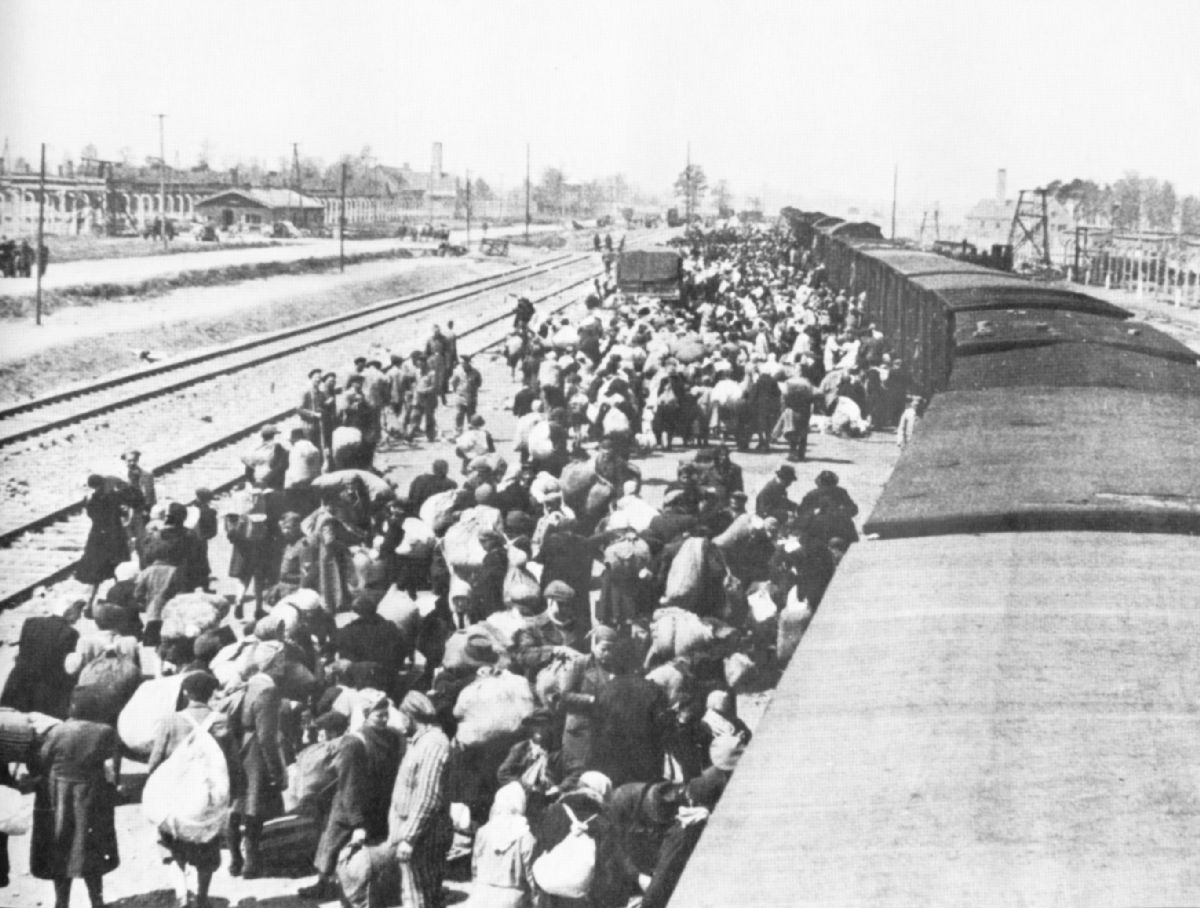
In 1946, a year before the Höss Trial, an important Polish collection of documents contained the transcript of a letter from the administrative head of Auschwitz II (Birkenau) to the head of the central administration, in which it was stated, that the camp BII of Birkenau was »utilized as admission- and transfer-camp.« [19] It was also known, already since the Höss Trial that about 30,000 Hungarian Jews [20] who were being held in the transfer-camp and who were not registered in the camp, as was described in the second Kalendarium-edition and analyzed by myself in the following sections. This means, that the Auschwitz-museum kept silent about the truth as long as possible.
In 1989 Jean-Claude Pressac accepted my carefully formulated conclusions as explained in my writing against Wellers, that under the (unfounded) assumption, that all 91 trains mentioned in the first edition of the Kalendarium arrived in Auschwitz, one has to start with about 271,000 Hungarian Jews deported to that camp [21]. In his first Auschwitz-book Pressac still talked about 200,000 to 250,000 Hungarian Jews which were gassed in Auschwitz; [22] he obviously arrived at these numbers, by accepting the number of 271,000 Jews deported to Auschwitz which I calculated, subtracted from it the 29,000 registered in the camp and for safety reasons left a wide margin (271,000 minus 29,000 equals 242,000).
Pressac accepted in 1993 also my rigorous conclusion. He briefly summarized the above sketched problematic and wrote, that according to the 2nd edition of the Kalendarium 53 Jewish transports arrived from Hungary in Auschwitz, [23] which amounts to approximately 160,000 deportees [24]. Pressac came still up with another second number of deportees – 240,000 –, which however is based on erroneous starting numbers. He thought that 20,000 to 30,000 Hungarian Jewesses were transferred from Auschwitz to Stutthof. Together with the approximately 28,000 registered Jews and the approximately 25,000 Jews transferred to other camps this would result in a number of 80,000. These – throughout employable – inmates would amount to one third of the deportees, which would give a total number of 240,000 [25]. But in actuality only about 12,100 Hungarian Jewesses were transferred to Stutthof.
Pressac granted an interview to a Valérie Igounet on June 15, 1995, in which he gave the following to protocol: [26]
»Concerning the Hungarian Jews he [Mattogno] was right, when he wrote in 1987, that the deportations took place from May to June [correctly: beginning of July], whereas Danuta Czech, the Polish editor of the “Kalendarium of the Events in the Concentration Camp Auschwitz-Birkenau 1939-1945”, as well as Georges Wellers, who used these sources unchecked, have alleged, that they lasted from May to October. Wellers refused, to get into contact with Mattogno by letter about this question, because from his point of view one does not discuss with revisionists. A super-zealous judge even issued an [international] order to arrest Mattogno, in case he should enter French territory. Czech published her “Kalendarium” in the sixties, on which Wellers based his calculation of the number of Auschwitz-victims (1.6 million instead of four million [which was at that time still alleged by the Auschwitz museum]). A corrected second edition of the “Kalendarium” came out in 1989. Of the [in the first edition] mentioned 91 transports remained only 50. Czech made a mistake and thought that the camp-internal transfers in Birkenau were transports.
Since only 50 transports remained which comprised 150,000 people instead of the originally assumed 438,000, Czech “in order to compensate” increased the number of transports which arrived in May and June – without any proof – by alleging that on this or that day “transports” instead of “a transport” arrived, by which she made herself guilty of history falsification. However no international order for the arrest of Czech was issued. About Weller’s calculation, they are worthless since the second “Kalendarium” edition, which however did not prevent the Poles to announce the erroneous results of Weller as a “serious” source.«
For the sake of completeness I would like to indicate, that Wellers wrote me a highly insulting letter and accused me that I »distort the historic truth«. Evidently he did not like it at all, that I uncovered his deceits with which the oh so honest announcer of alleged falsifiers invented 594,191 “gassed” Jews!
About the thesis of Arthur Butz I will come back at the end of this essay.
The general problem of the deportation of Hungarian Jews comprises several specific points, which necessarily have to be analyzed more closely, if one wants to arrive at a solid conclusion.
How many Hungarian Jews were Deported to Auschwitz?
On August 22, 1944 a member of the secret resistance movement in Auschwitz, who was active under the name of »Urban«, prepared a thorough statistic of the number of inmates for the day before, the 21st of August. This table includes the number of inmates per camp and by inmate-category. The total number of the prisoners according to this statistic is 104,891, distributed as follows: [27]
| Auschwitz I: | 15,974 [28] |
| Auschwitz II: | 19,424 |
| Auschwitz III: | 30,539 |
| Women Camp: | 38,954 [29] |
These numbers can be considered reliable, as is shown by comparing with the only documented report: According to the statistical report »Arbeitseinsatz« (work deployment) of August 21, 1944 the number of inmates in Birkenau – Auschwitz II – was 19,468 inmates, [30] which is about identical with above number.
»Urban« mentions the presence of 11,821 registered male Hungarian Jews in the camp Auschwitz. Of these 3,881 were in Auschwitz I and 7,940 in Auschwitz III (Monowitz). Additionally there were 16,187 Hungarian Jewesses quartered in the women camp of Auschwitz II [31]. Therefore there were on August 21, 1944 28,008 registered Hungarian Jews and Jewesses in the camp complex of Auschwitz.
Are these numbers reliable?
From the »Liste der Judentransporte« (list of transports of Jews) [32], which exclusively contains the registrations under the serial numbers A and B, we know, that until August 21, 1944 12,374 male Hungarian Jews as well as 15,288 Hungarian Jewesses were registered in Auschwitz, a total of 27,662 Jewish people from Hungary. But Hungarian Jews were also registered under the usual serial number. Thus of the two transports of Jews which left Hungary on April 29, 1944 were in Auschwitz on May 2, 486 men (serial numbers 186 645 to 187 130) and 616 women (serial numbers 76 385 to76 459 and 80 000 to 80 540) included in the registry.
Thus grew the number of the registered Hungarian Jews to 28,764 (12,860 men as well as 15,904 women), »Urban« however talks about 16,187 Hungarian Jews. This can be explained, because small groups of Hungarian Jews arrived with other transports. For example on April 1, 1944 at least 10 Hungarian Jews with the numbers between
177 354 and 178 122 were registered. [33]
It can be concluded, that the number of registered Jews who arrived since May 17, 1944 from Hungary, who were in Auschwitz on August 21, was about 27,500.
In his statistical report »Urban« reported: [34]
»In Birkenau are besides the above mentioned [inmates] about 30,000 non-registered Hungarian Jews, who are designated for the gas. This number is subject to variations.[…] To this has to be added – also subject to variations –the number of “Durchgangshäftlinge” (transfer prisoners), at the moment 30,000 Hungarian Jews.«
It has also has to be investigated here, how reliable these reported numbers are. For this it is quite necessary to understand how the admission procedure of Hungarian Jews in Auschwitz was actual done.
The »Durchgangslager« (transfer camp) of Birkenau
After their arrival in Auschwitz the Hungarian Jews were divided into three categories:
- Employable, who were registered right after their arrival in the camp.
- Non-registered employable.
- Non-registered non-employable.
The prisoners who were registered right after their arrival were employed in the camp itself.
The non-registered employable came into a transfer camp, which consisted of the camp BIIc, a part of camp BIIa and later a part of the camp BIIe and the camp BIII.
A non-published, important German document sheds light on the way the reception of the prisoners, which belonged to the last category, was handled. On June 26, 1944 the direction of the camp Dachau complained to the administration of Auschwitz, that prisoners who were transferred from Auschwitz and who arrived in Kauferling, a sub-camp of Dachau, were clothed only in rags. The chief of the clothing-warehouse for inmates of Birkenau wrote a letter to the camp administration in order to justify his situation, of which I quote the most important parts: [35]
»In order to clarify the situation, the following describes the complete process from the arrival of the Hungarian Jewish prisoners to the train embarkation. After the arrival of the admissions in this concentration camp all civilian clothes are taken away from the prisoners and after a thorough delousing procedure these prisoners are fitted out with prison garb which is provided by the administration. […]
After the individual transports which arrived are clothed, they are transferred to the “Durchgangslager” (transfer camp) in Auschwitz II and taken over by the “Arbeitsdienstführer” (work leader) Uscha [Unterscharführer] Olexius. He then prepares a receipt for the types of clothes and indicates with what pieces of clothing the admitted prisoners are provided. These receipts are submitted for review. The admitted stay several days, up to 2 to 3 weeks in the transfer camp. Because of the lack of sufficient quarters 1000 to 1200 inmates are accommodated in each barrack, which are normally only suited for 300 prisoners. This condition alone results in a serious contamination of the pieces of clothing. The inmates who are quartered in the “Durchgangslager” (transfer camp) are grouped into transports and placed in “Quarantänelager” (quarantine camps) where they will stay for several days until their departure. […]
The clothing-department of the camp Auschwitz have clothed since May 16, 1944 until today about 57,000 inmates and prepared 48 transports with 45,132 prisoners for the departure, without receiving the least complaint until now.«
The quarantine camp was identical with camp BIIa. In Moscow J. Graf and myself discovered an important report about the purpose of this camp as “Durchgangslager” (transfer camp) for the Hungarian Jews. The document, dated July 26, 1944 survived only incomplete (the second page is missing, and the right margin is partially crumbled). The title is as follows:
»HKB Ambulance BIIa. Monthly Reports about temporary placed “u”[ngarische Juden” (Hungarian Jews)].«
The report covers the time period from June 26 to July 26, 1944; from this can be deduced, that there was with great probability a previous report which dealt with the time period from the middle of May to June 15. The paragraph which is of interest to us is as follows: [36]
»During the reported time from June 26 to July 26, 1944 […gap in text…[37]] average 2,500 Hungarian Jews ready for transportation in the camp in 3 blocks, they stay 3 – 10 days in the camp.
They were subjected to a thorough medical check-up each during the admission and during the departure and checked for lice. Daily fever- and lice-check ups, lice carrier delousing in in-camp disinfestation plant, clothes and laundry disinfected in steam boilers and impregnated with “lauseto” (German anti-lice agent).
Those found seriously sick retransferred to BIIf or transferred to another camp.
On July 1, 1944 admission of 450 juvenile Hungarian Jews from BIId. […]
Because too many prisoners were housed in the blocks, up to 1000, many had to sleep on the bare concrete floor or on humid earth ground, which consequently caused frequent colds and diarrheas. The youths in “Sonderquarantäne” (special quarantine) in block 12 did not change their underwear for 10 weeks, the Hungarians in block 8 for 8 weeks. Since both groups did not belong to the same camp population, soap could not be distributed to them. Allocation of soap is urgently needed.«
»The first transport with prisoners arrived on June 9, 1944. At this time the construction section is occupied by approximately 7,000 female (Jewish) prisoners.«
It says about the quarantine measures: [39]
»Because the prisoners of the construction section III have to be called to work at an accelerated speed, an actual quarantine is not performed. In order to avoid during a possible occurrence of epidemics longer delays in the work assignments, it is necessary to subdivide through fencing the camp into four sections . This way at least part of the inmates can further be deployed or evacuated in case of occurring epidemics.«
The camp BIIc consisted of 32 dwelling barracks. According to above documents each barrack had from 1,000 to 1,200 persons penned up, so that in the average about 35,000 non-registered Hungarian Jews were in the camp. And when on June 16, 7,000 Jewesses – evidently from Hungary – were housed in Sector BIII under difficult circumstances, it is clear, that the accommodation possibilities of the camp BIIc must have been exhausted. From all this it appears, that at that time there must have been at least 42,000 non-registered Hungarian Jews in Birkenau. By the way, on October 2, 1944, 17,202 Jewesses were taken in by the camp from the transfer camp, but not registered [40]. About the female inmates the »list of prisoner transports« ended on September 20, 1944 with the number A-25378.
The highest number, which was assigned to a Hungarian Jewess, who was later, in January 1945, liberated by the Soviets, was A-27841. Her name was Ilona Schlamovitz and she was deported in May 1944. If the 17,202 above mentioned Jewesses were registered, the highest numbers of the series A- would have been higher than 42 000. Finally it is to be noted, that of the 500 Jewesses, who were evacuated from Auschwitz on about October 10 and arrived in Buchenwald on the 12th, at least 200 did not have a registration number. [41]
However, the Jewesses who were accepted into the camp on October 2 were counted separately, under the section »Durchgangs-Juden« (transfer Jews). [42]
From all that was said it can be concluded, that the number stated by »Urban« for August 21, 1944 of 30,000 non-registered Hungarian Jews is believable; the actual number was presumably even higher.
Transfers from the »Durchgangslager«.
From May 17 on a very large number of Hungarian Jews was evacuated out of the Birkenau transfer camp. Up to the 21st of August the Kalendarium (2. edition of 1989) registered a total of 21,497 of such Jews. The actual number however is more than twice as high, as can be seen from the table below, which supplements the information supplied by D. Czech with additional impeccable documented data. [43]
| DATE | NUMBER | CONCERNS | DESTINATION |
|---|---|---|---|
| 5/17 | 1,500 | Hung. Jews | KL Groß-Rosen |
| 5/23 | 1,000 | Hung. Jews | KL Buchenwald |
| 5/24 | 3,000 | Hung. Jews | KL Groß-Rosen |
| 5/24 | 189 | Hung. Jews | KL Groß-Rosen |
| 5/28 | 2,000 | Hung. Jews | KL Mauthausen |
| 25/28 | 963 | Hung. Jews | KL Mauthausen |
| 5/29 | 1,000 | Hung. Jews | KL Mauthausen |
| 6/1 | 1,000 | Hung. Jews | KL Buchenwald |
| 6/5 | 2,400 | Hung. Jews | KL Sachsenhausen |
| 6/5 | 2,000 | Hung. Jews | KL Buchenwald |
| 6/6 | 2,000 | Hung. Jews | KL Mauthausen |
| 6/8 | 4,000 | Hung. Jews | KL Groß-Rosen |
| 6/11 | 2,000 | Hung. Jews | KL Mauthausen |
| 6/14 | 500 | Hung. Jews | KL Mauthausen |
| 6/15 | ? | Hung. Jews | KL Dachau (Kauferling) |
| 6/17 | 1,000 | Hung. Jews | KL Buchenwald |
| 6/17 | 1,500 | Hung. Jews | KL Mauthausen |
| 6/23 | 434 | Hung. Jews | KL Buchenwald |
| 6/29 | 2,502 | Hung. Jewesses | KL Stutthof |
| 7/1 | 2,000 | Hung. Jewesses | KL Buchenwald |
| 7/6 | 2,500 | Hung. Jews | KL Buchenwald |
| 7/10 | 800 | Hung. Jewesses | KL Dachau |
| 7/13 | 2,500 | Hung. Jews | KL Buchenwald |
| 7/15 | 2,500 | Hung. Jews | KL Buchenwald |
| 7/20 | 2,500 | Hung. Jewesses | KL Stutthof |
| 7/30 | 530 | Hung. Jewesses | KL Buchenwald |
| 8/13 | 1,000 | Hung. Jewesses | KL Buchenwald |
| 8/14 | 2,800 | Hung. Jewesses | KL Stutthof |
| 8/16 | 2,800 | Hung. Jewesses | KL Stutthof |
| 8/20 | 270 | Hung. Jews | KL Buchenwald |
| Total: | 49,188 |
According to the earlier quoted report by the head of the clothing department for the inmates there were 45,132 prisoners evacuated out of Birkenau during the time period from May 15 until July 14,1944. According to above table there were during this time 49,188 prisoners deported to other camps. The difference – 4,056 prisoners – can be traced back to the transports of Hungarian Jews out of Auschwitz I and Auschwitz II.
The above mentioned numbers now make it possible for us to determine for August 21, 1944 the following numbers:
| Registered Hungarian Jews in the camp: | 27,500 |
| Hungarian Jews transferred to other camps | 49,200 |
| Non-registered Hungarian Jews in the transfer camp | 30,000 |
| Total about: | 106,700 |
Therefore we arrived so far at the well founded conclusion, that the number of employable Hungarian Jews in Auschwitz was at least 106,700.
Were only Employable Jews Deported from Hungary?
In a report dated May 26, 1944 Eberhard von Thadden, an expert on Jews within the German Foreign Ministry, wrote: [44]
»According to the observations so far, about 1/3 of the deported Jews are able to work. They are immediately after their arrival in the camp Auschwitz distributed to the agencies of Gauleiter Sauckel, the OT [Organization Todt] etc.«
The photographs in the Album d’Auschwitz, to which I will return later, show clearly, that also Hungarian Jews who were unable to work (disabled, old people and children) arrived. [45] Therefore employable as well as non-employable Jews were deported from Hungary.
That only one third of these deportees were suitable for work deployment, as von Thadden noted, is also confirmed by a letter which Ernst Kaltenbrunner wrote on June 30, 1944 to the SS-Brigadeführer Blaschke, which was about Hungarian Jews which were sent to Straßhof in Austria: [46]
»According to the experiences so far these transports will consist of an estimated 30% (in this case about 3,600) employable Jews […]«
Accordingly there have to be for about 106,700 employable Jews about twice as many – about 213,400 – non-employable, which results in a total number of Jews who were deported from Hungary to Auschwitz of appr. 320,000.
The Criteria for the Selection of Employable Jews
The criteria for the selection of employable Jews were quite flexible. The 300 Hungarian Jews who were registered on August 14, 1944 from the transfer camp of Birkenau, were assigned the numbers B-5860 to B-6159. They were then sent to work in the refineries of Trzebinia, a sub camp of Auschwitz [47]. A further 101 Jews from Hungary were registered with the numbers B-10072 to B-10172 and sent to the same refinery.[48]
These inmates belonged to the following age groups:
| Age | Group on August 14 | Group on September 15 |
|---|---|---|
| 14 years (1930) | 9 | 0 |
| 15 years (1929) | 106 | 7 |
| 16 years (1928) | 84 | 8 |
| 17 years (1927) | 29 | 4 |
| 18-20 years | 22 | 7 |
| 21-30 years | 14 | 9 |
| 31-40 years | 24 | 20 |
| 41-50 years | 7 | 32 |
| 51-60 years | 3 | 12 |
| 61-68 years | 2 | 2 |
| Total | 300 | 101 |
On July 3rd 174 Hungarian Jews of the transfer camp were registered with the numbers A-15857 to A-16030. On the list with the names are two children of 11 and 8 years: Laszlo Leszlauer, born in Budapest on March 2, 1933, Number A-15952, and Isnac Herskowitz, born in Czanahosz on February 4, 1936, Number A-15922. [49]
The already quoted report of July 26, 1944 mentions, that on July 1,450 young Hungarian Jews were transferred from the camp BII/d to the quarantine camp BIIa. The youths who were later sent to Trzebinia presumably came from this group.
A further point: Those 578 Hungarian Jews, who were still in Auschwitz at the time of the Soviet liberation, belonged to the following age groups:[50]
| 1 to 10 years : | 29 |
| 11 to 14 years: | 52 |
| 15 to 49 years: | 433 |
| 50 to 60 years: | 50 |
| 61 to 70 years: | 9 |
| 71 to 79 years: | 3 |
| Age unknown: | 2 |
In contrast to the adults, the children were mostly twins [51]. The historian Szita Szabolcs, who prepared among others the most thoroughly documented study about the Jews who were deported to Straßhof, gives the following information about the age groups of the 16,600 who were sent to that camp:[52]
| Age | Male | Female |
|---|---|---|
| 0-2 Years | 200 | 250 |
| 3-6 Years | 500 | 500 |
| 7-12 Years | 900 | 900 |
| 13-14 Years | 400 | 350 |
| 15-20 Years | 800 | 1,300 |
| Over 31 Years [sic] | 4,500 | 6,000 |
| Totals: | 7,300 | 9,300 |
Straßhof was certainly a special case, but it should be noted, that in Austria also inmates were conscripted to work who were theoretically not able to work. S. Szabolcs published a letter of the Technical Emergency Help. Office Bad-Vöslau to BdS and SD., Sondereinsatzkommando for Hungarian Jews, Aussenkommando Vienna II, which mentions a list of 42 Hungarian Jews who were working »for the construction of a SS-hospital since October 1, 1944«. This letter mentions further: [52]
»These Jews are from the camp Straßhof and worked in Klein-Mariazell and Bernhof for the construction of temporary housings after the catastrophic thunder-storms.«
These were therefore people who were actually employed to work. The lists mentions 13 Jews with over 70 years, one each of 15, 13 and 10 years, two of eight and one of four years. The oldest, Arnold Singer, born March 28, 1868 was 76 years old, the youngest, Agnes Anisfeld, born August 31, 1940, counted 4 years.
Although the non-registered Hungarian Jews in Auschwitz were quartered in the transfer camp under primitive conditions – because as we shall see later the camp administration was not prepared to receive such masses of people -, did the SS-people not only not “gass” the sick, but treated them medically, and if necessary even with surgical incisions. The earlier quoted report of June 28, 1944 includes the following information about the medical and sanitary care of these Hungarian Jews: [53]
»Medical Treatment:
During the reported time 3,138 inmates were treated in the hospital. Of these:
| Surgical Cases | 1426 |
| Diarrhea | 327 |
| Constipation | 253 |
| Angina | 79 |
| Diabetes | 4 |
| Heart Condition | 25 |
| Scabies | 62 |
| Pneumonia | 75 |
| Influenza | 136 |
| Internal Disorders | 268 |
| Others | 449 |
| Infections: | |
| Scarlet Fever | 5 |
| Mumps | 16 |
| Measles | 5 |
| Erysipelas | 5.« |
Were Hungarian Jews Deported only to Auschwitz?
According to Randolph Braham, 6 or 7 trainloads with deported Hungarian Jews from the Zone IV (presumably 20,787 persons) departed for Straßhof.[54] These deportees are therefore included with the number of 437,402, which Edmund Veesenmeyer, German ambassador in Budapest, mentioned in a telegram of July 11, 1944.[55] On June 30 a further transport with 1,684 Hungarian Jews left with a detour via Vienna for Bergen-Belsen, where it arrived on July 8.[56]
Already in May did several transports with Hungarian Jews arrive in Austria, in Gänserndorf close to Vienna. One of the first departed with 4200 prisoners from Baja Bácska on May 26. From the beginning of June were Jews from East Hungary employed as forced laborers in the Gau Niederdonau (District of Lower Danube).[57]
The presence of Hungarian Jews in other localities sounds rather strange. In Stutthof arrived from Kaunas in Latvia:
- 54 Hungarian female Jews (Registration Numbers 48,947 – 49,000) on July 19 as part of a transport with a total of 1,097 female Jews.[58]
- 588 Hungarian female Jews on August 4 as part of a transport with 793 female Jews, of which 743 are known by name.[59]
From Riga in Latvia arrived in Stutthof:
- 484 Hungarian Jewesses known by their names on August 9 as part of a transport with 6,383 Jewesses, of which 1,858 are known by name. The percentage of Hungarians among these Jewesses known by name is therefore 26%.[60]
- 15 Hungarian Jewesses on October 1 as part of a transport of 1,777 Jewesses, of which 817 are known by name.[61]
A total of at least 1,141 Hungarian Jewesses were transferred from Kaunas and Riga to Stutthof. From where were they sent to the Baltic States? I will address this question in the next section.
Also worthwhile mentioning is the case of Płaszów. This work camp was not far from Cracow. According to the Polish historian Aleksander Bieberstein, the SS-Standartenführer Gerhard Maurer asked the commandant of Płaszów on May 14, whether he would be in a position, to take 10,000 Hungarian Jewesses, who were to be employed by the weapons industry.[62] In fact several thousand Hungarian Jewesses were then transferred to Płaszów. On August 6 about 8,000 Jewesses arrived in Auschwitz from this camp, from where shortly afterwards 4,000 to 5,000 were passed on to Stutthof.[63] These are of course the transports which came to Stutthof on August 14 and 16, each with 2,800 Hungarian female Jews.[64]
How did these Hungarian Jewesses get to Płaszów? Directly from Hungary or through Auschwitz?
The transports from East-Hungary (Carpatho-Ukraine and North-Transylvania) came all from the east through Cracow to Auschwitz[65]. It is therefore almost certain, that the Jewesses who were sent to Płaszów underwent a selection in Cracow before they arrived in Auschwitz. The total number of these Jewesses could very well have been 10,000, as Maurer requested, and it is also conceivable, that in Cracow further Jews were selected for other destinations.
Original Purpose and Destination of the Deportations of Hungarian Jews.
On April 9, 1944 Adolf Hitler informed the air force chief Erhard Milch, that Reichsführer SS Himmler received the order to make 100,000 Jews available for the erection of underground factories within the framework of the Jäger-construction program.[66] On May 9 Hitler ordered that 10,000 men shall be pulled out of Sevastopol in order to guard the 200,000 Jews who were to be transferred to the concentration camps of the Reich for work deployment within the Jäger-construction program.[67]
However the preparations for the deportations of the Hungarian Jews did not conform with these plans at all. On May 2 von Thadden sent the following telegram to the German embassy in the Slovakian town of Preßburg (Bratislava):[68]
»A travel schedule for the transport of a larger number of Hungarian Jews for work deployment in the eastern territories will arrive in Vienna on May 4 – 5. Presumably a large part of transports will have to be channeled through Slovakia. Please notify us in case there are serious preconceptions.«
Ludin, the German minister in Preßburg, answered on May 3:[69]
»Please do not go through the territory of Slovakia for the transportation of a larger number of Hungarian Jews for work deployment in the eastern territories if possible.«
On May 5 von Thadden sent a further message to Ludin about the subject »Transport of Hungarian Jews for work deployment in the eastern territories«, which said:[70]
»With reference to this subject there are the following difficulties:
A transport route through Lemberg is because of military reasons very difficult, a transport from East-Hungary – in this territory the deportation is supposed to start – over Budapest-Vienna would lead to a considerable and partly undesirable disquieting of the population in Budapest. Therefore the RSHA desires very much that at least the transports from Eastern Hungary, if they cannot pass though Lemberg, should go through Slovakia. […]
Note: The RSHA [Reichssicherheitshauptamt (Reich’s security main office)] is also very much interested in a transport route over Lemberg, because it would be the shortest way. To the extent as the passage through Lemberg is made accessible at all by the military, it shall be made use of.«
Let us summarize:
- The deportation of Hungarian Jews was to begin in the east of the country;
- The purpose of the transports was for work deployment;
- The shortest way to reach the destination was over Lemberg.
Already a cursory look on the map shows, that the shortest way from East Hungary into the »eastern territories« was indeed over Lemberg.
It is therefore clear that the original plan for the deportation of Hungarian Jews was the transport of work-capable Jews to the occupied eastern territories, where they undoubtedly were to build fortifications against the Soviets within the frame work of the organization Todt. This could possibly be in connection with the Hitler-order of March 8, 1944 for the erection of fortifications in the eastern territories, among others in Bobrujsk, Mogilew, Orša and Witebsk.
The presence of Hungarian Jews in Kaunas and Riga could be explained under this circumstance. Presumably some transports were sent directly from Hungary via Lemberg to the Baltic states.
Many transports from East Hungary (Felsővisó, Kőrömezó, Máramarossziget, Huszt, Iza, Munkács) went indeed over Stryj to Lemberg,[71] and everything therefore indicates, that some transports did not go westward to Przemysl-Auschwitz, but northward into the eastern territories, as was provided by the original plan. This is further confirmed by the fact that on May 25 at least one Jewish transport from Hungary arrived in Lublin/Majdanek, which without doubt came from East-Hungary.[72]
The number of 1,141 Hungarian Jewesses who were deported from Kaunas and Riga to Stutthof, but who were only a part of the deportees, would in this case correspond to the number of two transports.[73] (This of course is also true in the case that these Jewesses were sent from Auschwitz to thee Baltic states.[74]
It is worth to mention in this connection, that exactly at the time when the deportations from Hungary started, i.e. on May 15, 1944 a transport with 878 – almost all employable – Jews from Drancy in France left for Kaunas.[76]
In any case is it certain, that Auschwitz as a “Sammellager” (collection camp) was only a temporary solution, because as we have seen the camp administration was totally taken by surprise by the enormous inflow of prisoners and had no time to make the necessary provisions for an orderly housing of the future forced laborers of the Reich. This of course would have been true to even larger measure for the alleged “Ausrottungsvorrichtungen” (extermination devices).
The deportation of Hungarian Jews to Auschwitz was officially designated as »Sonderaktion Ungarn-Programm« (special action Hungarian program),[77] where the word »Programm« refers to the planned work deployment like for example the »Jäger-Bauprogramm« (Jäger construction program), while the expression »Sonderaktion« (special action) refers only to the deportation.[78]
What was the fate of the Non-Employable Hungarian Jews?
At the present level of knowledge we cannot answer this question with certainty supported by documents. The revisionist criticism has proven, based on air-photos taken by US reconnaissance planes as well as the capacity of the crematoriums, that non-employable Jews were not at all »gassed after their arrival«. This is further confirmed by the pictures in the previously mentioned Album d’Auschwitz.
First several photos in this album show all chimneys of the crematoriums (Crematoriums II and III: photo 6 on p. 51, photo 7 on p. 53, photo 17 on p. 63; crematoriums IV and V: photo 99 on p. 131, photo 125 on p. 155), but from none of these exits smoke.[79]But if the non-employable Hungarian Jews were gassed, the crematoriums would have been in continuous operation day and night in the second half of May 1944 (the pictures in the Album d’Auschwitz were taken on May 26), and even then could they only have cremated a small part of the “gassed”.[80]
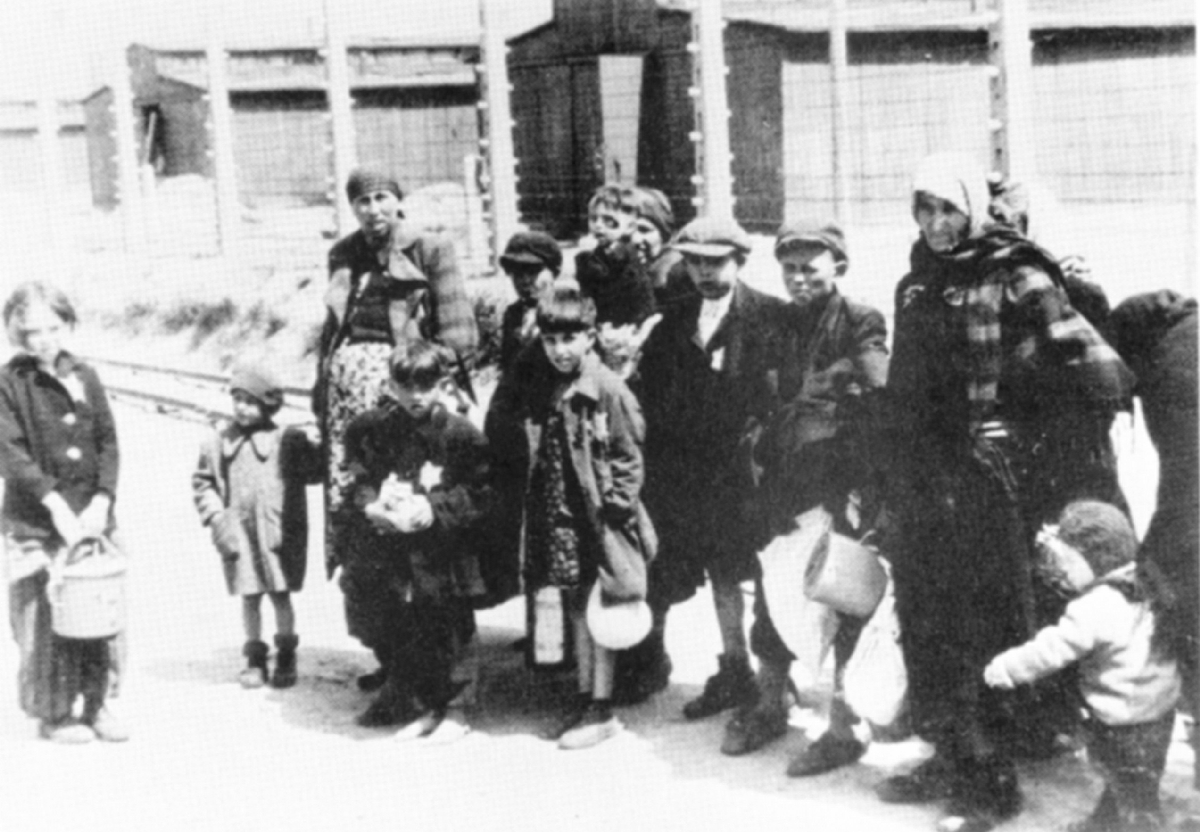
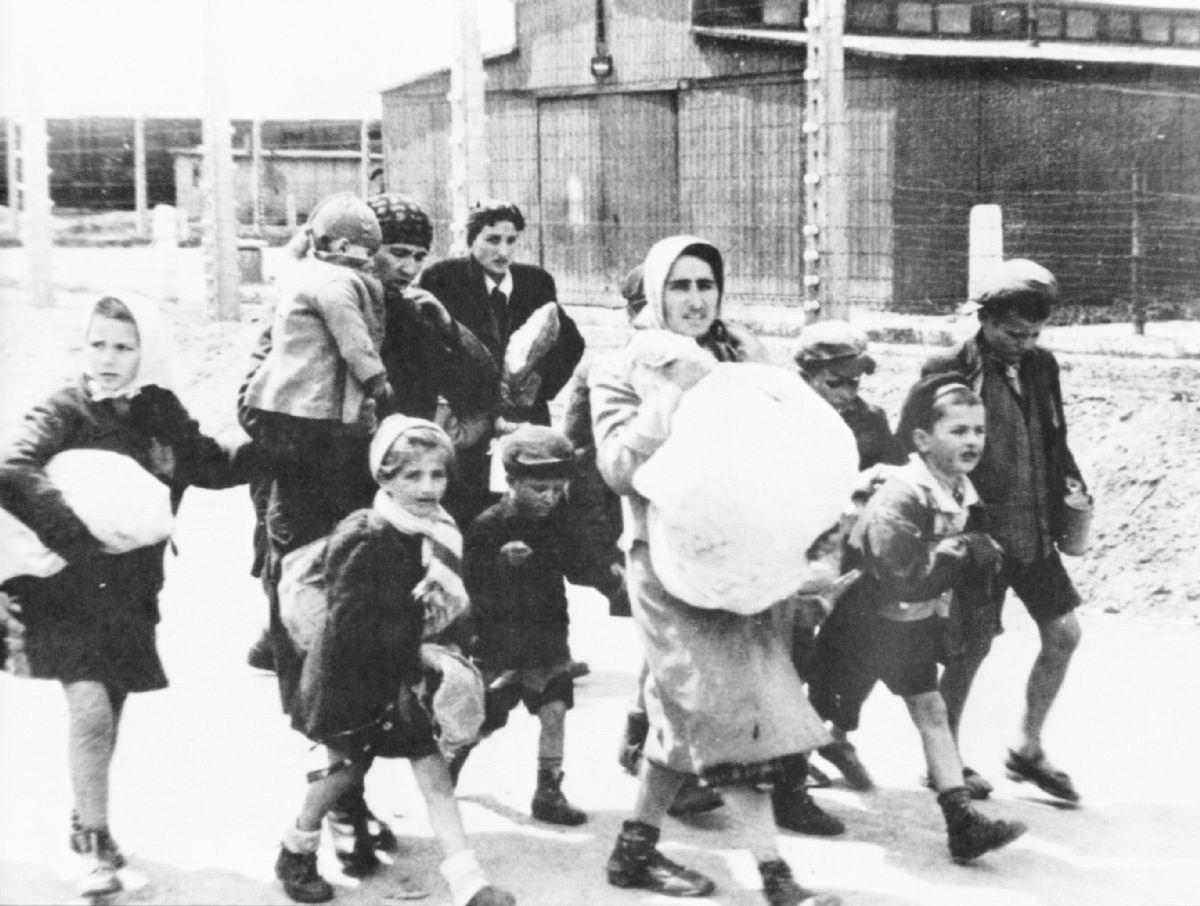
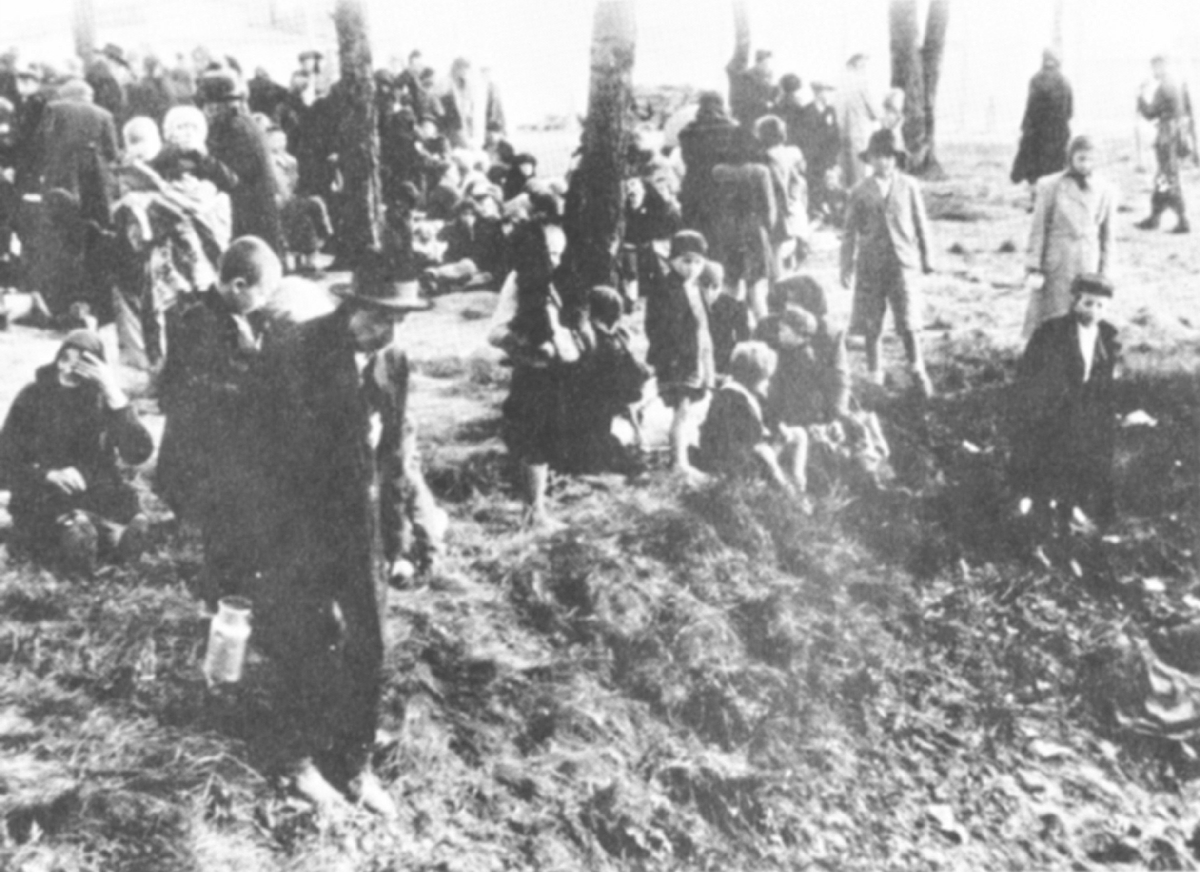
Secondly, the pictures show that the employable Jews left all their luggage back on benches, while on the other hand the non-employable could keep some luggage, consisting of knapsacks and bags. Especially clear on this are photos 6 on p. 51, photo 163 on p. 185 (where the non-employable, mostly children, even carried two large cooking pots), photo 165 on p. 187 as well as photo 169 on p. 191. Why were the non-employable sent into the “gas chambers” with bags, knapsacks and cooking pots? The photos show further that the non-employable rested in the orchard close to the fire water pond east of the crematorium IV. (the photo 174 on p. 194 shows in the foreground an old man who is about to climb down the slight bank of the fire pond in order to scoop up water into a metal container.) In none of the photos are people shown in the yards of the crematoriums II and III, although these were quite spacious. Especially important are in this connection the photos 152 and 153 on p. 176 and 177, which are shown in the wrong chronological sequence. The events shown on photo 153 actually preceded those on photo 152, because on the latter the group of people, which appears on the first one in front of the east wing of crematorium III, already passed the entrance gate to the yard of the crematorium, which can be seen on the right margin of the picture. And finally, the entrance gate is closed. It is therefore obvious that the non-employable went down the camp street, which led parallel to the railroad track passed the crematorium II and III, then turned right, through the “Zentralsauna” (central sauna) and the “Effektenlager” (storage for valuables), then continued past the west side of crematorium IV, then again to the right and finally entered the orchard at the fire pond.
If these non-employables were destined for “gassing”, why then was a large part of them not sent to the yards of the crematoriums II and III with the alleged gas chambers of much higher capacity and – actually – much more capable cremation ovens than in crematoriums IV and V? Is not the assumption much more logical that these people who kept their hand luggage, waited for the departure from Auschwitz?
The question to where these non-employables were sent is however much more difficult to answer. The case of the Hungarian Jews who were deported to Straßhof could give us an idea how they were housed. In the “Gau Niederdonau” (State of Lower Danube) the Jews were accommodated in 175 quarters, where also the non-employable stayed and which were called “family camps”.[81] And at least until June 22, 1944 was the military front in the north still east of the line Narva-Opocka-Vitebsk-Bobrujsk, and a considerable part of the eastern territories, infinitely much larger than the Gau Niederdonau, was still in German hands.
How many Jews were Deported from Hungary?
As we have seen about 106,000 employable Hungarian Jews were with certainty deported to Auschwitz, from which a total number of about 320,000 deportees can be extrapolated. For other destinations than Auschwitz besides the about 21,000 Hungarian Jews which were sent to Straßhof , minimum of at least 18,000 has to be assumed (6 transports: two to Gänserndorf, one each to Bergen-Belsen, Riga, Kaunas and Lublin/Majdanek), so that the number of the deported to Auschwitz could not have been higher than [437,402 – (21,000 + 18,000) =] 398,400, of which a third – about 132,000 – must have been able to work. Of these we could up to now trace about 106,700 with certainty.
Moreover the capacity of the “Durchgangslager” (transfer camp) was already in June 1944 about 42,000 persons, so that Otto Wolken’s statement about the presence of about 50,000 Hungarian Jewesses in the Birkenau transfer camp was probably close to the truth.[82]
Therefore it is probable, that the number of the Hungarian Jews who were quartered in the transfer camp on August 21 was higher than 30,000 (the inmate »Urban« also stated, that the number was subject to variations); additionally there are many indications that the number of people deported from Auschwitz to various places is considerably higher than the minimum number which we calculated before, and finally the list of those that were transferred to other camps is most likely incomplete, especially for the time from July 15 to August 21, and especially for the camps Auschwitz I and III, where, – as stated above – on August 21, 1944 a total of about 11,800 Hungarian Jews stayed.
Summarizing it follows, that the ca. (132,800 –106,700 =) 26,100 missing employable Hungarian Jews (which amounts to ca. 78,300 deportees in about 26 transports), belong to these different categories and that the total number of 437,402 deportees is at least in the order of magnitude correct.
The Statistical Documents about the Deportations of the Hungarian Jews.
Table 1 in the Annex combines the data which are included in above mentioned »List of Jewish Transports«. Up to July 11, 1944 (the last ascertained date of the arrival of a transport from Hungary in Auschwitz, this transport left on July 8) this list includes 58 entries, which corresponds to at least (2,975 x 58 =) 172,500 deportees.[83] But because the minimum proven number of Hungarian Jews deported to Auschwitz is about 320,000, it seems obvious to me that a registration could refer to several transports, so that Danuta Czech’s numbers are in this case correct.
In Table 2 I listed the Hungarian Jews who were liberated by the Soviets in Auschwitz, and who stated an exact and believable date of their deportation or their arrival in Auschwitz. Overall do the corresponding dates match quite accurately the dates of the registration of Hungarian Jews in the camp (Table 1). The low number of 110 inmates were deported on not less than 43 different days, which corresponds to at least 43 transports with (2,975 x 43) about 128,000 deportees. However on each deportation day departed more than one transport. On the other hand 320,000 proven deportees represent ca. 107 transports; therefore a number of transports at least three times higher than the 43 deportation days can be concluded.
In what time periods the deportations according to the existing documents (Veesenmeyer-telegrams and Ferenczy-reports) occurred is shown in Table 4 in the Annex.
A report of July 15 of the secret resistance movement in Auschwitz states, that in the camp from May 16 to June 13 more than 300,000 Hungarian Jews arrived in 113 trains.[84] According to the Veesenmeyer-telegrams 289,357 Jews were deported in 92 trains from Hungary until June 7, 1944;[85] between June 11 and 16 a further 50,805 Jews left Hungary in 23 trains, which results in the average to 2,209 deportees per train. On June 14 finally the number of deported added up to 324,005. However between June 11 to 14 were [289,357 + 50,805) – 324,005 =] 16,157 persons deported, which comes to 7 transports. Assuming that on June 11 two transports departed and arrived in Auschwitz on June 13, then 5,000 people arrived at that time in the camp and the total amounted to ca. 294,000 in 94 trains. Several thousand Hungarian Jews were further shipped to Austria. Therefore the number of over 300,000 Hungarian Jews as mentioned by the resistance movement is slightly high, but in the order of magnitude correct.
In Table 3 in the Annex I include the list of transports from Hungary, which Randolph L. Braham published in the Hungarian edition of his book The Politics of Genocide[86] He indicated in a note, that these data were collected by the station master of Kassa and that a certain Gaskó Miklós made a copy of it which he later published. As a source Braham quotes the periodical Menorà, Toronto 1984, June 1, 4 and 12. The list comprises 134 transports up to July 9, 1944.
In the third and fourth column of Table 5 in the Annex I present a comparison of the number of deportees based on the documents from Veesenmeyer and Ferenczy, and those which result from the published list by Brahams. This comparison proves, that this list, of which among others the origin is not known, is not especially reliable, even if it contains some true elements. Besides, non of the transports from Central Hungary went through Kassa (Slovakian: Košice), and only part of the transports from Carpatho-Ukraine and North-Transylvania went through this station,[87] so that the station master could impossibly have seen 134 transports passing by.
This list reflects the actual flow of deportations only partially, so that it appears to be a reconstruction based on already known documents. As examples for these can be mentioned the list published by Karsai Elek, which (without dates) states the number of deported from 43 Hungarian cities – a total of 427,400 persons –,[88] or a report which was sent to Geneva on June 19, 1944, which announced the number of deportees from 37 cities up to June 10 as up to 335,000 persons,[89] as well as of course the Veesenmeyer-telegrams and the Ferenczy-report.
Considerations about the Thesis of Arthur Butz
A. Butz repeats in his article, which I mentioned in the beginning, his known thesis, according to which the deportation of 437,402 Hungarian Jews between May and July 1944 could only be proven with forged or falsified documents. According to Butz, Jews were deported from Hungary all right, but in much less numbers. He does not mention an alternate number and was content with discarding the order of magnitude of 438,000.[90]
To support his thesis he lists three main arguments:
- The difficulty or impossibility to transport so many deportees;
- A 1948 Red Cross report about Hungary during the war time;
- The argument that the existing documentation is »suspect«, which to him means “forged” or “falsified”.
As we noted above, not less than (320,000 + 21,000 + 18,000 =) 359,000 Jews were deported with certainty, and this number alone is already sufficient, to rebut the thesis of A. Butz. As J. Graf in his article, which is quoted in the beginning, correctly noted, it would not make any sense to fabricate a clever and refined forgery in a gigantic scale, in order to gain less than 80,000 false deportees. Additionally is the with certainty already established number several times larger than the estimates by A. Butz, who started earlier with about 100,000 deported Hungarian Jews.
I would like to answer briefly to the theses brought up by A. Butz as follows:
There is no doubt that the German administration in Hungary on April 19 had very great difficulties finding trains for 10,000 Jews, but exactly for this reason they called in a »Fahrplankonferenz« (travel itinerary conference) in Vienna on May 4 and 5, in order to get a handle on this problem and to prepare a time schedule for the transportations.[91] If this would not have been the case, one has to declare with the same logic also as impossible the deportation of 100,000 Jews – the number which was originally estimated by A. Butz. It was during this conference decided, to have »daily 4 transports with Jews« to depart, starting on May 15.[92] If one starts with the assumption that a return trip takes six days, then 24 trains – four per day for six days – would have sufficed to keep the mechanism of deportation going, because the four trains which departed on the first day would have been available again. I don’t see here an impossibility nor that a special difficulty exist here.
The report of the International Red Cross about Hungary has no historic value at all. On the one hand it could hardly have escaped Friedrich Born, the ICRC-representative in Budapest, that at least 320,000 Hungarian Jews were deported to Auschwitz. On the other hand the ICRC did know in the year 1948 about the official version, according to which »until June 27 [1944] 475,000 Jews were deported.«[93] The report of the Red Cross does not contain the slightest indication about all of this. How could the author of the report maintain, that the »high point of the suffering« started for the Hungarian Jews in October 1944,[94] although they were informed that from May to July 1944 at least 320,000 Jews were deported from Hungary to a camp, which already at that time in general passed for an extermination camp? How could they consider the deportation of about 30,000 Jews for work deployment worse than the deportation of about 320,000 to an (alleged) extermination camp?
It seems to be obvious to me, that the ICRC described the events in Hungary ad usum delphini. The reason for this was in my opinion the deadly embarrassment about not having at that time said anything and done nothing to prevent this terrible tragedy.
The idea that the large documentation about the deportation of the Hungarian Jews could be forged or falsified I always found astonishing, because presupposition for this would have been an international plot. A. Butz expresses the suspicion that the German documents were forged by Horst Wagner, an assistant to foreign minister Ribbentrop, as well as by von Thadden under supervision of Robert Kempner, as a return favor for a kind of »Schutz vor Strafverfolgung« (protection against criminal persecution).[90] But it does not appear that Veesenmeyer during the Wilhelmstraße-trial protested against these allegedly forged documents.
I finally would like to indicate, that this trial started in 1948 (the judgment was pronounced on April 11, 1949) and that the Ferenczy-reports, which mention a practically equally high number of deportees (434,351 as compared to 437,402) were already known in the year 1948, else Eugene Levai could not have quoted it in his Black Book on the Martyrdom of Hungarian Jews[95] which was published in that year. Can it really be believed that Hungary which was controlled by the Soviets quickly sent a translation of these reports to Robert Kempner, so that he could give them to Horst Wagner and Eberhard von Thadden and ordered them to prepare the relevant forgeries? How else could the agreements between the two series of reports be explained?
Annex
|
|
|
|
|||||||||||||||||||||||||||||||||||||||||||||||||||||||||||||||||||||||||||||||||||||||||||||||||||||||||||||||||||||||||||||||||||||||||||||||||||||||||||||||||||||||||||||||||||||||||||||||||||||||||||||||||||||||||||||||||||||||||||||||||||||||||||||||||||||||||||||||||||||||||||||||||||||||||||||||||||||||||||||||||||||||||||||||||||||||||||||||||||||||||||||||||||||||||||||||||||||||||||||||||||||||||||||||||||||||||||||||||||||||||||||||||||||||||||||||||||||||||||||||||||||||||||||||||||||||||||||||||||||||||||||||||||||||||||||||||||||||||||||||||||||||||||||||||||||||||||||||||||||||||||||||||||||||||||||||||||||||||||||||||||||||||||||||||||||||||||||||||||||||||||||||||||||||
| Gendarmery District |
Time Period of Deportation | Number of Trains | Number of Deported according to Ferenczy | Number of Deported according to Veesenmayer |
|---|---|---|---|---|
| VIII, IX, X | May 15 to June 7 | 92 | 288,333 | 289,357 |
| II,VII | June 11 to 16 | 23 | 51,829 | 50,805 |
| V,VI | June 25 to 28 | 14 | 40,505 | 41,499 |
| III, IV, I | July 4 to 8 | 8 | 53,684 | 55,741 |
| Date | Number of Deported | Date | Number of Deported |
|---|---|---|---|
| May 17 | 23,363 | June 3 | 253,289 |
| May 18 | 51,000 | June 7 | 289,357 |
| May 19 | 62,644 | June 14 | 324,005 |
| May 21 | 94,667 | June 15 | 326,009 |
| May 24 | 117,082 | June 19 | 340,142 |
| May 25 | 138.870 | June 26 | 351.850 |
| May 28 | 184.049 | June 30 | 381.661 |
| May 31 | 217,236 | July 7 | 422,911 |
| June 1 | 236,414 | July 9 | 437,402 |
| June 2 | 247,856 |
Abbreviations:
| AFB: | Archivio Federale, Bundesarchiv, Bern. |
| AGK: | Archiwum Głównej Komisji badania zbrodni hitlerowskich w Polsce (Archiv der Kommission zur Erforschung der Hitler-Verbrechen in Polen), Warschau. |
| AMS: | Archiwum Muzeum Stutthof . |
| APMO: | Archiwum Państwowego Muzeum Oświęcim-Brezinka (Archiv des Staatlichen Museums Auschwitz-Birkenau). |
| GARF: | Gosudarstwenni Archiv Rossiskoi Federatsii (Staatliches Archiv der Russischen Föderation), Moskau. |
| RGVA: | Rossiiskij Gosudarstvenniy Vojenniy Archiv (Staatliches russisches Kriegsarchiv, ehemals Tsentr Chranenija Istoriko-dokumental’nich Kollektsi (TCIDK, Zentrum zur Aufbewahrung geschichtlich-dokumentarischer Sammlungen, Moskau). |
| ROD: | Rijksinstituut voor Oorlogsdocumentatie (Reichsinstitut für Kriegsdokumentation), Amsterdam. |
Notes
Carlo Mattogno wrote this article in April 2001 and revised in July 2001. Translated by Jürgen Graf from Italian to German.
- [1]
- VffG, 4(2) (2000), S. 140-149; English: The Journal of Historical Review, July-August 2000, p. 19-28.
- [2]
- VffG, 4(3&4) (2000), p. 277-284; English: The Journal of Historical Review, July-August 2000, p. 19-28.
- [3]
- »Transfers to the Reich. The Unregistered Inmates of Auschwitz«, The Journal of Historical Review, March-April 2000, p. 21-25.
- [4]
- »Beyond Auschwitz. New Light on the Fate of the Hungarian Jews«, ibid., p. 26-35.
- [5]
- Danuta Czech, Kalendarium der Ereignisse im Konzentrationslager Auschwitz-Birkenau, publiziert in Hefte von Auschwitz, Wydawnictwo Państwowego Muzeum w Oświęcimiu, Issues 2, 1959; 3, 1960; 4, 1961; 6, 1962; 7 & 8, 1964.
- [6]
- Compare the complete list of the transports in my study Wellers e i “gasati” di Auschwitz, Edizione la Sfinge, Parma, March 1987, p. 51-54.
- [7]
- Hefte von Auschwitz, 7, 1965, p. 91.
- [8]
- Le Monde Juif, octobre-décembre 1983, Nr. 112, p. 127-159.
- [9]
- Ibid., p. 147 and 153.
- [10]
- At that time I did not have access to the text of this report.
- [11]
- Le procès de Jérusalem. Jugement-Documents. Introduction de Léon Poliakov. Calman-Lévy, Paris 1963, p. 199.
- [12]
- Edmund Veesenmeyer, German ambassador in Budapest, listed a number of 437.402 deportess until July 9, 1944. NG-5615.
- [13]
- Wellers e i “gasati” di Auschwitz, aaO. (Note 6), p. 18-20, 37, 39.
- [14]
- Danuta Czech, Kalendarium der Ereignisse im Konzentrationslager Auschwitz-Birkenau 1939-1945, Rowohlt Verlag, Reinbeck bei Hamburg 1989.
- [15]
- Ibid., p. 699.
- [16]
- Ibid., p. 777.
- [17]
- L’Album d’Auschwitz, Editions du Seuil, Paris 1983, Photo No. 6, p. 51.
- [18]
- AGK, NTN, 88. p. 46.
- [19]
- N. Blumenthal, Dokumenty i materiały, Lodz 1946, p. 95.
- [20]
- D. Czech, Kalendarium…, Edition of 1989, p. 860.
- [21]
- The number results from this calculation: [(437.402 : 147) x 91=] about 271.000.
- [22]
- Jean-Claude Pressac, Auschwitz: Technique and Operation of the Gas Chambers, Beate Klarsfeld Foundation, New York 1989, p. 253.
- [23]
- In reality only 57 transports arrived.
- [24]
- J.-C. Pressac, Die Krematorien von Auschwitz. Die Technik des Massenmordes, Piper Verlag, München/Zürich 1994, S. 198-199. Den Anhang »Die Zahl der ungarischen Juden, die nach Auschwitz kamen, und ihre Sterblichkeitsrate« (The Number of Hungarian Jews who came to Auschwitz and their Rate of Death) is not in the original French edition.
- [25]
- Ibid., p. 171 and 173.
- [26]
- »Entretien avec Jean-Claude Pressac«, in: Valérie Igounet, Histoire du Négationnisme en France, Editions du Seuil, Paris 2000, p. 643-64.
- [27]
- AGK, NTN, 155, p. 115.
- [28]
- The original states “15971” because of an error in the calculation.
- [29]
- The original states “39234” because of another error in the calculation.
- [30]
- APMO, D-AuII-3a/39, p. 71.
- [31]
- Women concentration camp.
- [32]
- APMO, D-RO/123.
- [33]
- AGK, NTN, 156, p. 140-146.
- [34]
- AGK, NTN, 155, p. 95 and 96.
- [35]
- AGK, NTN, 88, p. 111-113.
- [36]
- GARF, 7021-108-32, p 76.
- [37]
- A gap in the text.
- [38]
- L’Album d’Auschwitz, aaO. (Note 17), Photos 163 & 165, S. 185, 187.
- [39]
- RGVA, 502-1-168, p. 6-6a.
- [40]
- APMO, D-AU II 3a, p. 5a.
- [41]
- APMO, D-Bu-3/1/5.
- [42]
- In the reports under Arbeitseinsatz des F.L. Birkenau (work deployment in the women camp Birkenau) from October 5, 1944. APMO, D-AuII-3a/1a-4c.
- [43]
- About the transferred to Stutthof see AMS; about the deported to Mauthausen see AGK; to Groß-Rosen see Isabell Sprenger, Groß-Rosen. Ein Konzentrationslager in Schlesien, Böhlau Verlag, Köln/Weimar/Wien 1996.
- [44]
- NG-2190.
- [45]
- L’Album d’Auschwitz, aaO. (Note 17).
- [46]
- PS-3803.
- [47]
- AGK, NTN, 145, p. 82-92 (list of names).
- [48]
- Ibid., p. 92-95.
- [49]
- ROD, c(21.23)32, No. 1866 and 1836 of the List.
- [50]
- GARF, 7021-108-26, p. 1-16; 108-22/23.
- [51]
- See also the interesting article by Jean-Marie Boisdefeu »A propos des jumeux d’Auschwitz« (About the Twins of Auschwitz), Etudes rėvisionnistes, vol. 1, p. 257-267, in which the author comes to the conclusion that about 118,500 Hungarian Jews were deported to Auschwitz, which is based on a method of calculation which is in my opinion insufficiently documented.
- [52]
- Szita Szabolcs, Utak a pokolból. Magyar deportálak as annektált Ausztriában 1944-1945 (Ways out of Hell. Deported to Austria), Metalon Manager Iroda Kft, Kesckem?t 1991, p. 97.
- [53]
- GARF, 7021-108-32, p. 76.
- [54]
- Randolph L. Braham, The Politics of Genocide. The Holocaust in Hungary, Columbia University Press, New York 1981, vol. 2, p. 652.
- [55]
- NG-5615.
- [56]
- Der Kastner-Bericht über Eichmanns Menschenhandel in Ungarn, Kindler Verlag, München 1961, p. 130, 134.
- [57]
- Leonore Lappin, »Der Weg ungarischer Juden nach Theresienstadt«, in: Theresienstädter Studien und Dokumente, Prag 1996, p. 57-59.
- [58]
- AMS, I-IIB-10.
- [59]
- Ibid.
- [60]
- AMS-I-IIE-12.
- [61]
- AMS-I-IIB-12.
- [62]
- Aleksander Bieberstein, Zagłada Żydów w Krakowie, Wydawnictwo Literackie, Krakau-Breslau 1986, p. 138.
- [63]
- Magdalena Kunicka-Wyrzykowksa, »Kalendarium obozu płaszowskiego 1942-1945«, in: Biuletyn Głównej Komisji badania zbrodni hitlerowskich w Polsce, Warsaw 1982, XXXI, p. 69.
- [64]
- AMS, I-IIB-11.
- [65]
- Martin Gilbert, Endlösung. Die Vertreibung und Vernichtung der Juden. Ein Atlas, Rowohlt Verlag, Reinbeck bei Hamburg 1995, p. 197.
- [66]
- R-134.
- [67]
- NO-5689.
- [68]
- NG-5565. R.L. Braham, The destruction of Hungarian Jewry, New York 1963, p. 151.
- [69]
- ibid, p. 152.
- [70]
- ibid, p. 367-368.
- [71]
- Martin Gilbert, Endlösung. Die Vertreibung und Vernichtung der Juden. Ein Atlas, (footnote. 65), p. 197.
- [72]
- Tadeusz Menzel (editor), Majdanek 1941-1945, Wydawnictwo Lubelskie, Lublin 1991, p. 454 (table prepared by Zofia Leszczyńska of the transports which arrived in Majdanek in 1941-1944).
- [73]
- According to a telegram sent by Oswald Pohl to Himmler on May 24 were 50% of the employable Hungarian Jews women. Since those were about one third of the deportees, the employable women were about one sixth of the total, and therefore 1,141 employable women correspond to more than 6000 deportees, i.e. at least to two transports.
- [74]
- S. Crowell mentions the book by A. Ezergailis The Holocaust in Latvia 1941-1945, The Missing Center, Riga 1996), according to which in the camp Dungada close to Riga between 2000 und 5000 Hungarian Jews were interned, who arrived from Auschwitz since May 1944. (p. 30).
- [75]
- L’Album d’Auschwitz, (Note 17), photo 174, p. 194
- [76]
- Serge Klarsfeld, Le mémorial de la déportation de juifs de France, Paris 1978.
- [77]
- Telegram from Kammler to the Zentralbauleitung (Central Construction Administration) of Auschwitz of May 21, (actually 25) 1944, RGVA, 502-1-83, p. 21.
- [78]
- Compare my study “Sonderbehandlung” ad Auschwitz. Genesi e significato, Edizioni di Ar, Padua 2001, II, 18 “La Sonderaktion Ungarn”. (A German version of this work is in preparation.)
- [79]
- Only Pressac seriously still believes that the chimneys of the crematoriums of Birkenau could not smoke, because the smoke was forbidden by the congress of Dresden on June 7, 1876 (V. Igounet, p. 648)! Please compare my counter proof in the article referred to in the following footnote.
- [80]
- Compare my article Supplementary response to John C. Zimmermann on his “Body Disposal at Auschwitz”, published by Russell Granata, http://www.russgranata.com/Risposta-new-eng.html.
- [81]
- S. Szabolcs, p. 279.
- [82]
- However also Polish female and male Jews from Plaszów and Lodz were quartered in the transfer camp in August 1944.
- [83]
- Average number of deportess per transport: (437.402: 147 trains =) 2.975.
- [84]
- APMO, Au D-Ro/91, t. VII, p. 451.
- [85]
- NG-5619.
- [86]
- A Magyar Holocaust, 1988, vol. 2, p. 514-515.
- [87]
- Martin Gilbert, p. 196-197.
- [88]
- Vádirat a nácizmus ellen (Accusation against Nazism), Budapest 1967, Vol. 3, p 36-37.
- [89]
- AFB, E 2001 (D) 1968/74/14, p 5.
- [90]
- A. Butz, Note 2), p. 277.
- [91]
- NG-5565.
- [92]
- R.L. Braham, The destruction of Hungarian Jewry, p. 371.
- [93]
- Deposition of R. Kastner on September 13, 1945. PS-2605.
- [94]
- A. Butz, The Hoax of the Twentieth Century, Historical Review Press, 1977, p. 138,
- [95]
- The Central European Times Publishing Co. Ltd., Zürich 1948, p. 472.

Bibliographic information about this document: Originally published as "Die Deportation ungarischer Juden von Mai bis Juli 1944," in Vierteljahreshefte für freie Geschichtsforschung, 5(4) (2001), pp. 381-395
Other contributors to this document:
Editor’s comments: