
Colls Digs a Deeper Hole
A Review of Finding Treblinka by Caroline Sturdy Colls
Finding Treblinka: Forensic and Archaeological Discoveries by Caroline Sturdy Colls. Cornell University Press, 2026. Paperback, 464 pages, notes, index, ISBN: 978-1-5017-8650-1. $33.95.
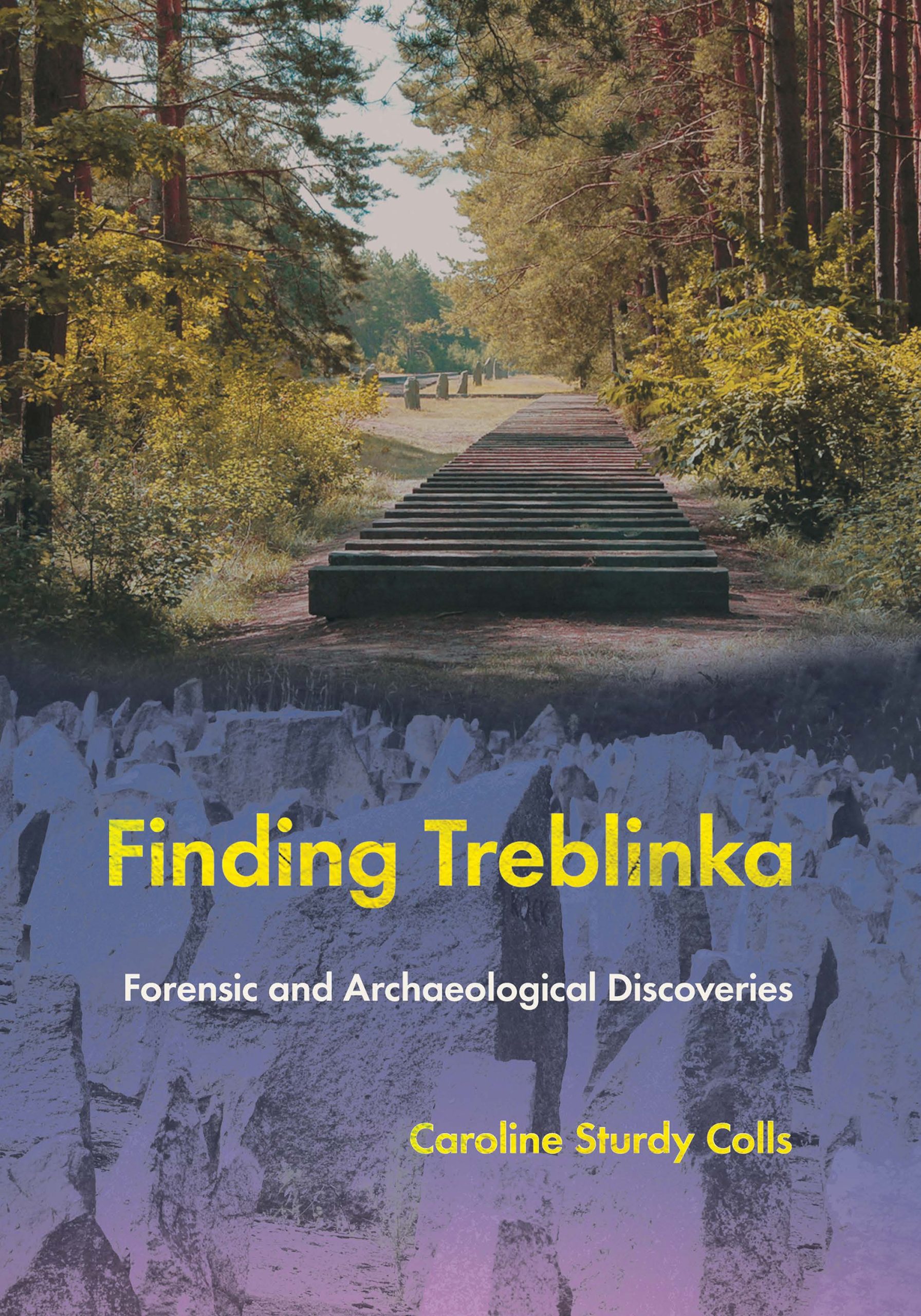 The last few years have seen a minor boom in Treblinka scholarship. In 2024, Jacob Flaws’s Spaces of Treblinka and the Treblinka Museum’s Treblinka Warns and Reminds! were released. This year has already delivered three new titles: Chad Gibbs’s Survival at Treblinka, Chris Webb’s latest update to The Treblinka Death Camp (projected March release), and the subject of this article, Caroline Sturdy Colls’s Finding Treblinka: Forensic and Archaeological Discoveries. It is a veritable Second Treblinka Gold Rush.Finding Treblinka is the first English-language history to examine in detail both Treblinka I (labor camp) and Treblinka II (“extermination camp”). Colls integrates documentary research with her own and others’ field work since 2010. The book presents a standard mainstream history of both camps, and Colls cites a number of published and archival sources. Her discussion of the early history of the Treblinka I labor camp connects it to events throughout the larger geographic region. Numerous maps, diagrams, figures, and photos aid the reader in following her archaeological discussions.
The historical narrative is clear and the book represents something close to a paragon of mainstream Holocaust historiography – comprehensive, archivally broad, and narratively straightforward. That is both its strength and its limitation. Finding Treblinka offers value to scholars of the Treblinka camps, and Colls is mostly careful in framing her archaeological conclusions, although she tends to oversell some of her field work. Her decision to treat each camp separately, while geographically logical, comes at a cost: the historical narrative becomes less cohesive.
David Skrbina’s review “Truth Lost, Truth Found“ covers the book’s structure, the history of the camps, and the mainstream narrative of the bathhouse-gassing-burial-cremation sequence.[1] Instead of reiterating much of that content, this review will focus on how Colls contextualizes witnesses and testimony, as these serve as the foundation of her investigation of each camp. Her treatment of documentary evidence raises important questions about how historians continue to handle various aspects of witness statements.
Piling Up Atrocities
Despite the array of sources, many are primarily utilized for lurid atrocity propaganda. Throughout, the book suffers from a focus on atrocities, with several chapters containing little else than long lists of beatings, executions, and assaults carried out by Nazis and “Trawniki men” (non-German camp guards).[2] Actual history gets buried under the unrelenting violence reported by numerous witnesses.
For instance, Chapter 3, “A Landscape of Violence,” details dozens of instances of violence at the Treblinka I labor camp. These include executions of sick inmates, trampling by horse, shootings, “torturous marches,” beatings with a wide variety of blunt instruments, stabbings, dog attacks, a steamroller, “shooting games,” drunken beatings, various forms of sexual violence, “the cage,” the “alley of death,” the “third tower,” and more. Chapter 10 is a similar list of atrocities covering Treblinka II, which also includes gas chambers (utilizing diesel, gasoline, chemical liquids, chloride, and bleaching powder), the “death bench,” standing in the freezing cold, hangings, mass shootings, and more. Interestingly, the only method she said was “never verified” is the lethal use of steam and hot water (288).
Other than punishing and killing Poles, Jews, and others, it is not clear in Colls’s telling why Germany found the Treblinka sites important, especially the labor camp. Colls refers to the nearby work sites, but the main activity of the camp, in her estimation, was murdering several dozen inmates per day, while requesting more inmates be sent to the camp for labor important to the German war effort (107).
This relentless catalog of violence – what Gary Weissman has called the “sanctimonious veneration of horror” – displaces the kind of analysis that would make Treblinka intelligible as a historical phenomenon, curtailing rather than encouraging critical thinking about the camps’ function and context. The reader comes away being exposed to what witnesses accuse the Nazis of doing, but not why the camps existed in the first place, how they fit into the broader SS economic apparatus, or what made them function beyond sadism and murder. The book’s subtitle promises “forensic and archaeological discoveries,” yet her documentary eye is trained almost exclusively on brutality and violence, ignoring labor and logistics of the camp complex.
Burying the Economic & Labor History
The labor itself is a missing component of her history, despite Germany’s extensive use of forced labor during the war years. Colls references several work locations the inmates were sent to, but mostly in passing. Instead of being just a camp for the gravel quarry workers, some inmates would travel to Małkinia (a railway junction and town north of Treblinka), work on construction projects in the local area, and work on nearby farms. The Organization Todt supervised the workers at Małkinia (31-33). This is the extent of her discussion of the economic context of Treblinka.
The quarry’s connection to DEST, the major SS company that ran other quarries and brickworks throughout the SS concentration camp system, is only briefly mentioned (33), but not that the Treblinka II staff eventually took over the operation of the gravel quarry.[3] Sara Berger referenced documents indicating the Theodor van Eupen, commandant of Treblinka I, attempted to put Franz Stangl under his command from Małkinia .[4] Colls cites Berger’s book numerous times in her history of Treblinka II, but not these inter-camp connections and possible connections to other locations in the region (notes to Chapter 7).
Colls does not bring any of this research forward or even acknowledge these connections. If Treblinka II absorbed operation of the quarry, it means the camps were not just geographically adjacent but potentially shared economic interests. This is an instance where the separate treatment of each camp undermines her ability to provide a cohesive history of the camp complex, leaving an explanatory gap where the documentary record indicates the camps were more tightly integrated.
If Colls’s treatment of the economic context is thin, her handling of the sources that anchor her narrative shortchanges the reader in a different way. The historical foundation is built on eyewitness statements, yet those statements are rarely subjected to the source criticism that historians routinely apply to documentary evidence.
Noninvasive Treatment of Sources
Eyewitness testimony is generally taken at face value, with relatively little acknowledgment of contradictions between accounts, why she chose one version over another, and the circumstances under which many statements were produced.
For example, when discussing the excavation and cremation of corpses in mass graves at Treblinka II, Colls quotes Jankiel Wiernik’s 1945 statement that Heinrich Himmler visited the camp in late January or early February 1943 (296). However, she does not acknowledge that, in the booklet attributed to Wiernik and published in 1944, he relates this to “the period when the Germans talked a lot about Katyn,” which is consistent with a late March or early April dating. This earlier work further states that the Katyn discovery “made Himmler decide to visit Treblinka personally and to give orders that henceforth all the corpses of inmates should be cremated.”[5]
Directly after her use of Wiernik’s 1945 statement, she also writes that “Others have argued that the visit did not take place until late February / early March 1943” (296). She does not reveal that Wiernik himself is one of these “others,” nor does she explain why she considers his 1945 statement more credible than his 1944 booklet, despite referencing that document many times elsewhere.
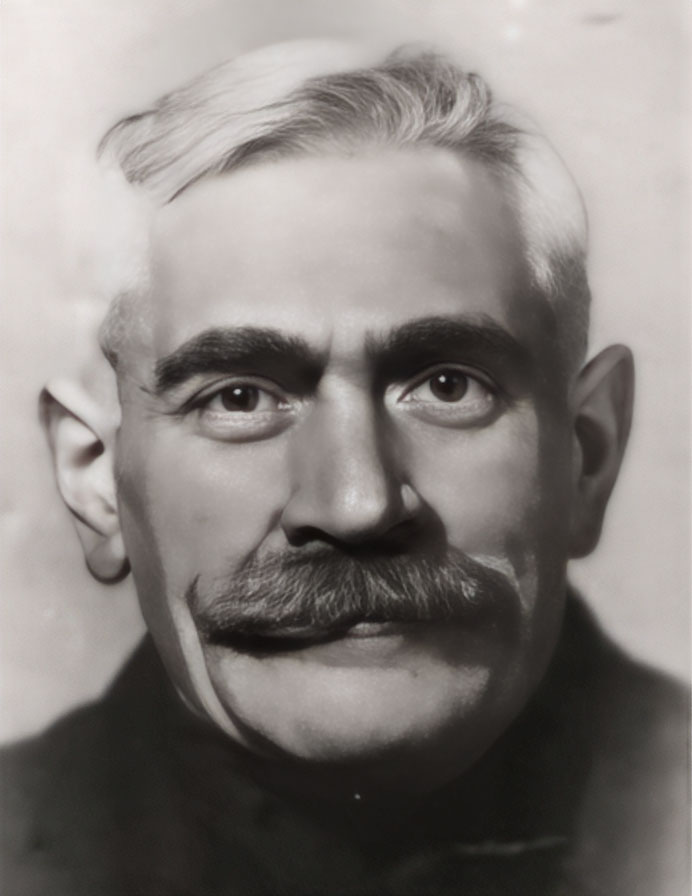
This discrepancy matters because Wiernik’s 1944 booklet “One Year in Treblinka” is one of the earliest and most widely cited sources on Treblinka II. If Colls is going to privilege his later, post-war statement over his more contemporaneous account, she owes the reader an explanation. She offers none, which suggests a pattern of using testimony as a grab-bag of factoids rather than as a body of evidence that requires contextualization and discernment.
That pattern is further evident in her treatment of the 1944 Soviet investigations of T-I and T-II, which she covers only superficially, noting when and which groups investigated the camps, but providing little substantial context. Possibly the most important omission is that, by mid-August 1944, the Red Army investigators had a copy of Wiernik’s “One Year in Treblinka,” had translated it, and that numerous witnesses echo that work to a significant degree.[6]
Colls refers to the Soviet estimation of 3 million victims in Treblinka (152), but does not mention that Wiernik’s book uses the phrase “approximately 3.5 million.”[7] Despite citing a number of the interrogation protocols from these Soviet investigations, she does not highlight that numerous witnesses gave the same exact figure or similar numbers like “no less than 3 million.”[8]
She references Abram Goldfarb’s first interrogation protocol numerous times, especially when discussing the “Old Gas Chambers” (250-252). Goldfarb’s testimony is highly reminiscent of Wiernik’s book, and Goldfarb even mentions knowing “Yakov Vernik” being the “author of the brochure ‘A Year in Treblinka.’” Goldfarb, after escaping Treblinka, claimed to have hidden in the woods until the territory was captured by the Red Army, so would have had little independent opportunity to acquire a copy of Wiernik’s brochure.[9]
Colls treats these two witnesses as independent and their statements as corroborative of each other. At one point, she writes “Wiernik echoes Goldfarb,” but the reverse is the case: at his interrogation, the Soviets already had a copy of Wiernik’s book, Goldfarb mentions Wiernik and his book by name, and his interrogation protocol is highly similar to Wiernik’s work.
During her discussions of each camp, she mentions the Red Army requested that the Soviet Extraordinary State Commission (ChGK) conduct investigations of the Treblinka camps, but does not reveal whether they conducted any investigations (121, 152-153). In fact, ChGK interviewed numerous witnesses in October 1944 and wrote two draft reports dated December. Over several interrogation protocols and reports, it was determined that up to 1,000 citizens of the United States and Great Britain were deported from Warsaw to be killed in the Treblinka gas chamber as some of the first victims of the camp. Eight witnesses provided a variety of evidence regarding this, including seeing notices posted in the Warsaw ghetto, speaking with US/British citizens at Treblinka, and finding American and British passports, postcards, and university diplomas among the personal effects of the victims at Treblinka.[10] Despite referencing Pachaljuk’s Russian-language book on Treblinka which contains the ChGK report and interrogations, Colls does not mention this investigation at all, concluding that archival restrictions make it difficult to conclude if ChGK carried out additional exhumations of graves at the labor camp (121).
The unreliability of Soviet interrogation protocols and reports has been well-known for decades, but Colls does not address this issue in any depth. Marian Sanders has observed the “artificial quality” of NKVD interrogation reports, writing that “witnesses rarely deviated from the subject, an indication that their words may have been dictated by the NKVD.”[11] Vadim Birstein has also pointed out that “investigations conducted by SMERSH officers were usually unprofessional and cases were generally falsified.”[12]
This does not give Colls pause before referencing SMERSH’s investigations of “Trawniki men” from Treblinka II.[13] One of the Trawniki guards on trial confirmed Wiernik’s account of the camp, and “much of their report centered on quotations from Wiernik’s” brochure (163). She utilizes the interrogations and maps of the Trawniki guards throughout her book as corroboration of the established narrative of the camp without examining the circumstances under which these interrogations may have been done.
Across Finding Treblinka, Colls treats witness testimony as though the words on the page correspond directly to events in the past, unmediated by the circumstances of their production, the politics of their collectors, or the motivations of their speakers. She does not ask whether the Soviet interrogators, who possessed a translation of Wiernik’s brochure, might have steered witnesses toward confirming it. She does not ask how Goldfarb, who had been hiding in the forest for nearly a year, could have independently arrived at the same detailed narrative as Wiernik, or how he came to be familiar with the title of a secret brochure printed weeks ago by the Warsaw underground. She does not ask why multiple witnesses converged on the same improbable “3.5 million” figure. She simply uses portions of their statements while ignoring any remotely troubling context. This is not source criticism; she is mining sources for their value as confirmation bias.
Scavenging the Witnesses
Her superficial treatment of investigations and testimony extends to the witnesses themselves. She spends a disproportionate amount of time on the personal and professional backgrounds of the SS at the Treblinka camps. Irmfried Eberl, the first commandant of Treblinka II, receives several paragraphs of biographical details (185-186). The same is true for Franz Stangl, second commandant, and Kurt Franz, deputy commandant (206-207). Theodor van Eupen, commandant of Treblinka I, and his deputy Karl Prefi are also fleshed out (21-22).
By contrast, the survivor-witnesses are treated as repositories of accusations and atrocities whose lives outside the camp experience are virtually terra incognita. This is somewhat understandable, as detailing the backgrounds of the Jewish and Polish witnesses would reveal that many of them were partisans, ghetto fighters, and members of underground organizations.
Jankiel Wiernik was a member of the Bund, a Jewish socialist party in Poland, and potentially an underground communist infiltrator, which was not uncommon in interwar Poland.[14] In the 1930s, his involvement in an illegal communist printing operation was discovered by authorities in Warsaw.[15] During the war, Wiernik was a high ranking member of Zegota, the underground Council to Aid Jews, and distributed money to Jews in Warsaw hiding on the Aryan side of the city.[16]

was a member of the Polish army in 1939 and spent time in a German POW camp in Lublin. He worked with Rachel Auerbach of the Warsaw underground Oyneg Shabes group to record one of his two Treblinka accounts, and died fighting as a ŻOB (Jewish Combat Organization) member in the 1943 Warsaw Ghetto Uprising.[17]
Oscar Strawczynski was interrogated twice by the Soviet Extraordinary State Commission regarding Treblinka, where he related seeing evidence of British and US citizens’ presence in the camp.[18] After escaping in August 1943, he joined a partisan group of ŻOB refugees and wrote his account of Treblinka titled “Ten Months in Treblinka.”[19]
Franciszek Ząbecki was a member of two detachments of the Polish Home Army, which was declared illegal by the Soviets.[20] He was fortunate not to be imprisoned, deported, or shot by SMERSH or the NKVD.
This asymmetry is revealing. The SS men receive biographies because their careers can be traced and the litany of atrocities spares none of them. The Jewish and Polish witnesses receive no such treatment because their lives before and after Treblinka are more complex: they were partisans, underground operatives, political activists, soldiers in resistance movements. To acknowledge this would be to acknowledge that their testimonies may not have been those of neutral observers and martyrs, but products of political commitment, survival strategies, and postwar circumstances. It is easier to treat them as conduits for accusations against the Nazis, but that ease comes at the cost of historical honesty.
Toeing the Mainstream Line
To be clear, Finding Treblinka is not without genuine contributions. It provides a clear summary of archaeological investigations since 2010, and Colls’s archival reach, especially into Soviet interrogations and reports, is broader than any previous English-language study. In many respects, it is a near-perfect example of the mainstream approach to Holocaust history. If her goal was to produce a standard, comprehensive account of Treblinka that incorporates the latest available sources, Colls has succeeded admirably. The trouble is that the standard itself is flawed: the mainstream approach produces books that retread the same ground.
Colls gives us new archaeological data, fresh maps, and a more detailed account of both camps than any previous English-language work. But she gives us these positive contributions without the critical framework that would make them historically meaningful. The economy that the labor camp impacted is barely explored; the Soviet investigations that produced so many of her sources are superficially examined; the witnesses who anchor her history are treated as repositories of atrocity rather than as complex individuals with their own motivations and perspectives. Colls has assembled the broadest archive of Treblinka sources yet gathered in English, but a comprehensive archive is not a critical one. When contradictory testimony is unresolved, when Soviet documents are treated as independent corroboration despite internal evidence suggesting otherwise, when survivor accounts are stripped of their authors’ biographies, the resulting history acquires a false reliability. It reads as settled precisely where it has been left unexamined.
This is not a flaw unique to Colls. It is the default mode of a field that has long treated testimony as raw material for accusations rather than as evidence requiring the same scrutiny applied to any other historical source. Finding Treblinka does not correct that habit so much as extend it to the field of archaeology. The field work done at the Treblinka sites is, by her own account, deliberately superficial, minimally invasive, and respectful of Jewish religious strictures. Her historical method is noninvasive in a similar sense: it skims the surface of testimony without digging into its origins, authors, or contexts. Neither the ground at the sites nor the long-established historical narrative are disturbed through her approach.
Overall, the book is less a revolution than a consolidation – a valuable one, but one that leaves the essential work of critical source analysis still to be done. If historians are to do more than delve into archives for fresh, contextless horror, they will need to bring a sharper critical eye to the very sources that have formed the backbone of the literature on the Nazi camps. Despite its promises, Colls’s book breaks little new ground.
Other Works Cited
- Berger, Sara. Experten der Vernichtung Das T4-Reinhardt-Netzwerk in den Lagern Belzec, Sobibor und Treblinka. Epub. Studien zur Gewaltgeschichte des 20. Jahrhunderts. Hamburger Ed, 2014. https://www.hamburger-edition.de/buecher-e-books/artikel-detail/d/1904/experten-der-vernichtung/.
- Birstein, Vadim J. Smersh: Stalin’s Secret Weapon. Biteback Publishing, 2013.
- Engelking, Barbara. “Organising Help for the Jews on the Aryan Side in Warsaw.” Translated by Wojciech Kubiński. Tekstualia 1, no. 9 (2024): 61.
- Mattogno, Carlo. The “Operation Reinhardt” Camps Treblinka, Sobibór, Bełżec: Black Propaganda, Archeological Research, Expected Material Evidence. 1st ed. Holocaust Handbooks 28. Academic Research Media Review Education Group Ltd, 2024. https://holocausthandbooks.com/book/the-operation-reinhardt-camps-treblinka-sobibor-belzec/.
- Mattogno, Carlo, and Jürgen Graf. Treblinka: Extermination Camp or Transit Camp? 4th ed. Holocaust Handbooks 8. Academic Research Media Review Education Group Ltd, 2024. https://holocausthandbooks.com/book/treblinka/.
- Olson, Thomas. “Completed in March, Buried in February: Auerbach, Krzepicki and the Making of a Treblinka Eyewitness Testimony.” Inconvenient History 18, no. 2 (2026). https://codoh.com/library/document/completed-march-buried-february-auerbach-krzepicki/.
- Olson, Thomas. “Jankiel Wiernik Exposed as Communist Propagandist.” Inconvenient History 17, no. 3 (2025). https://codoh.com/library/document/jankiel-wiernik-exposed-as-communist-propagandist/.
- Pachaljuk, Konstantin Aleksandrovič, ed. Treblinka: Research, Memories, Documents. Naučnoe izdanie. Яуза, 2021. Originally published as Treblinka: Issledovanija, vospominanija, dokumenty. https://docs.historyrussia.org/ru/nodes/354229.
- Sanders, Marian R. “Extraordinary Crimes in Ukraine: An Examination of Evidence Collection by the Extraordinary State Commission of the Union of Soviet Socialist Republics, 1942–1946.” Ohio University, 1995. https://www.proquest.com/docview/304222698/abstract/D8F0E0A6B62F412EPQ/1.
- Schatz, Jaff. The Generation: The Rise and Fall of the Jewish Communists of Poland. University of California Press, 1991. https://www.ucpress.edu/books/the-generation/hardcover.
- Skrbina, David. “Truth Lost, Truth Found: A Review of Finding Treblinka by Caroline Sturdy Colls.” Inconvenient History 18, no. 3 (2026). https://codoh.com/library/document/truth-lost-truth-found/.
- Strawczyński, Oskar. “Ten Months in Treblinka.” In Escaping Hell in Treblinka. Holocaust Studies – Holocaust Memoir. 1948; Yad Vashem Holocaust survivors’ memoirs project, 2007.
- Wiernik, Jankiel. “One Year in Treblinka.” In The Death Camp Treblinka: A Documentary, translated by Alexander Donat. Holocaust Library, 1979. https://www.tapatalk.com/groups/holocaustcontroversies/treblinka-eyewitness-accounts-t1916.html.
- Wiernik, Jankiel. Rok w Treblince. Polish. Nakładem Komisji Koordynacyjnej, 1944. Box 28, Folder 489 (RG 1436). Center for Jewish History. https://digipres.cjh.org/delivery/DeliveryManagerServlet?dps_pid=IE18582590.
Endnotes
| [1] | Skrbina, “Truth Lost, Truth Found.” |
| [2] | “Trawniki men” refers to foreign auxiliary troops who were trained at the German concentration camp in Trawniki, Poland and used as guards at various other camps |
| [3] | Mattogno and Graf, Treblinka, 115. |
| [4] | Berger, Experten der Vernichtung, section “Außennetze I: Einbindung in den deutschen Besatzungsapparat.” |
| [5] | Wiernik, “One Year in Treblinka,” 169. |
| [6] | Pachaljuk, Treblinka: Research, Memories, Documents, 153–54. |
| [7] | Wiernik, A Year in Treblinka. The reference to the “approximately 3.5 million corpses” is contained in the Polish original. The English translations either do not mention a number or reduce it to half a million. |
| [8] | Pachaljuk, Treblinka: Research, Memories, Documents. Soviet witnesses using figures of 3 or 3.5 million include Bronia Teperman, Tanhun Grinberg, Franciszek Ząbecki, and Stanislaw Kon. |
| [9] | Pachaljuk, Treblinka: Research, Memories, Documents, document 2.7. Wiernik’s book was published by the Polish underground in Warsaw around May 1944. |
| [10] | Pachaljuk, Treblinka: Research, Memories, Documents, documents 2.16-2.25, 3.7. |
| [11] | Sanders, “Extraordinary Crimes in Ukraine,” 212. |
| [12] | Birstein, Smersh, 235. SMERSH was the Soviet counter-intelligence organization during the latter part of the war with Germany. Two SMERSH reports on the Treblinka “death camp,” available from the Federal Security Service of the Russian Federation (FSB), claim there were 5 million and 7 million victims. http://www.fsb.ru/fsb/history/archival_material/Treblinka.htm |
| [13] | Non-German auxiliary troops who were trained at the Trawniki concentration camp and used as guards at other camps. |
| [14] | Schatz, The Generation, 63. |
| [15] | Olson, “Jankiel Wiernik Exposed as Communist Propagandist.” |
| [16] | Engelking, “Organising Help for the Jews on the Aryan Side in Warsaw,” 51; Mattogno, The “Operation Reinhardt” Camps, 146–47. Janina Bukolska was another high ranking member of Zegota and wrote a report titled “The Treblinka “death camp.” Her office assistant in Warsaw and lifelong friend after the war was Rachel Auerbach, Oyneg Shabes member and recorder of Krzepicki’s second account. |
| [17] | Olson, “Completed in March, Buried in February.” |
| [18] | Pachaljuk, Treblinka: Research, Memories, Documents, document 2.18. |
| [19] | Strawczyński, “Ten Months in Treblinka,” 188. Similar to Jankiel Wiernik’s draft and one of Krzepicki’s testimonies, Strawczyński’s surviving account is written in multiple hands, of which only four pages (of 165) may be his handwriting. |
| [20] | Birstein, Smersh, 283. |

Bibliographic information about this document: Inconvenient History, 2026, Vol. 18, No. 3
Other contributors to this document:
Editor’s comments: