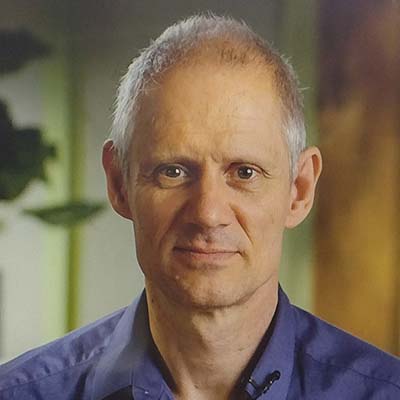
Daniel McGowan is a retired professor of economics at Hobart and William Smith Colleges in Geneva, New York. Due to interdisciplinary teaching requirements for all teaching staff at this college, Dr. McGowan gave a series of lectures on Palestine in the late 1980s/early 1990s. This led him down the rabbit hole of the Israeli-Palestinian conflict, from which he never emerged again. His staunch pro-Palenstinian viewpoints and his skepticism about Zionist propaganda led him to question the orthodox Holocaust narrative as well.
On July 30, 2025, Germar Rudolf and Jorge Besada sat down with Dr. McGowan and had him tell his story of how he got involved in the Palestine question, and what it all led to.
-
-
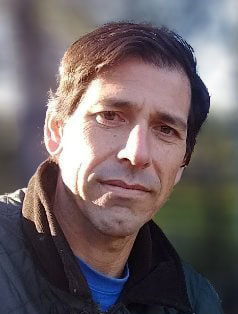
Jorge Besada is a free-market educator, author and activist. Economist Ludwig von Mises wrote: “all reasonable men are called upon to familiarize themselves with the teachings of economics. This is, in our age, the primary civic duty.” Per Mises, Jorge is 100% devoted to ‘the primary civic duty’ and thus ‘the teachings of economics’, and more specifically, the evolutionary ideas of Carl Menger and his so-called ‘Austrian School of Economics’, which provide a complete understanding of how the socioeconomic order works, has evolved and is vital for overcoming our dangerous myths like Socialism, Holocaustianized Zionism, Germ Theory, and more. Jorge’s writings are frequently published at the Ludwig von Mises Institute, the Foundation for Economic Education, and LewRockwell.com. His books, writings and other contents are available free of charge at www.besada.com. He can be reached at hayekian@gmail.com an on X @hayekian
-
Germar Rudolf was born on October 29, 1964, in Limburg, Germany. He studied chemistry at Bonn University, where he graduated in 1989 as a Diplom-Chemist, which is comparable to a U.S. PhD degree. From 1990-1993, he prepared a German PhD thesis at the Max Planck Institute for Solid State Research in conjunction with the University of Stuttgart, Germany. Parallel to this and in his spare time, Rudolf prepared an expert report on chemical and technical questions of the alleged gas chambers of Auschwitz (see The Chemistry of Auschwitz). He conclude in it that "the alleged facilities for mass extermination at Auschwitz and Birkenau were not suited for the purpose as claimed." As a result, he had to endure severe measures of persecution in subsequent years. Hence, he went into British exile, where he started a revisionist publishing outlet. When Germany asked Britain to extradite Rudolf in 1999, he fled to the U.S. There he applied for political asylum, expanded his publishing activities, and in 2004 married a U.S. citizen. In 2005, the U.S. granted him an immigrant visa based on his marriage, but seconds later arrested and subsequently deported him back to Germany in crass violation of U.S. law. In Germany, where he was put in prison for 44 months for his scholarly writings, some of which he had published in the U.S., where they are perfectly legal. Since not a criminal under U.S. law, he managed to immigrate permanently to the U.S. in 2011. Rudolf has published more than 90 books (currently available through Armreg US and Armreg UK), among them the 54 volumes of the Holocaust Handbooks. He has compiled 9 documentaries and authored 20 non-fiction books, among them the bestselling Holocaust Encyclopedia. With a brief interruption, he has managed the free-speech organization Committee for Open Debate on the Holocaust since 2014, where we defend free speech at the forefront of corporate censorship and governmental persecution. In 2017, he became chief editor of CODOH’s quarterly periodical Inconvenient History. In early 2025, he launched the Holocaust Academy, dedicated to bringing critical thinking to Holocaust education. In that context, he organized the 2026 Holocaust Summit, dedicated to “Tackling the Most-Harmful Ideology Undermining Peace, Truth and Freedom Worldwide”.
Read more about him here.