
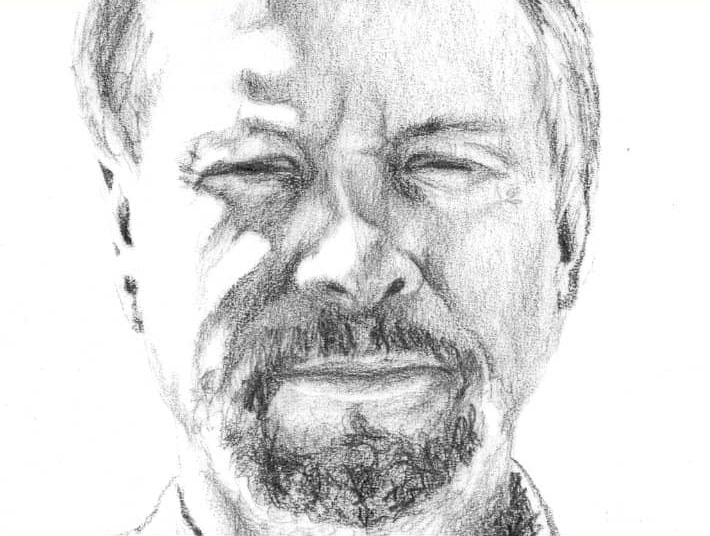
Siegfried Verbeke, Unsung Hero of Revisionism
Siegfried Verbeke was there when he was needed, and when it mattered. Every time.
First, some background: In 1994, the German authorities were hell-bent at choking all efforts to publish new, trail-blazing revisionist research. The 1993 German original of my expert report on the chemistry of Auschwitz (Holocaust Handbooks, Vol. 2) induced the German thought police to put me on trial, the main proceedings of which started in November of 1994. The publication of the German original of my anthology titled Dissecting the Holocaust (Holocaust Handbooks, Vol. 1) appeared that same month, resulting in house searches and confiscations all over Germany in an attempt to annihilate that book. A detailed article of mine on fraudulent forensic research about Auschwitz, conducted by a Polish team of pseudo-scholars, led to another criminal investigation against me. Wherever an article of mine appeared during 1995, it resulted in the offices of the respective periodical being raided, office equipment getting seized, the affected magazine issue being confiscated and destroyed, and everyone involved investigated for saying things Jews hate.
In the summer of 1993, I had launched another anthology project, a response of several leading revisionists to a book by French pharmacist-turned-historian Jean-Claude Pressac. The resulting anthology now carries the title Auschwitz: Plain Facts (Holocaust Handbooks, Vol. 14). It reached maturity in 1995, but at that point in time, no German publishing outlet was willing to touch anything I had written with a ten-foot pole. It was a safe recipe to get a visit from the Dezernat Staatsschutz, the branch of Germany’s police proudly carrying on the Gestapo’s tradition. So where would this book see the day of light? Who would dare put his name and address on it?
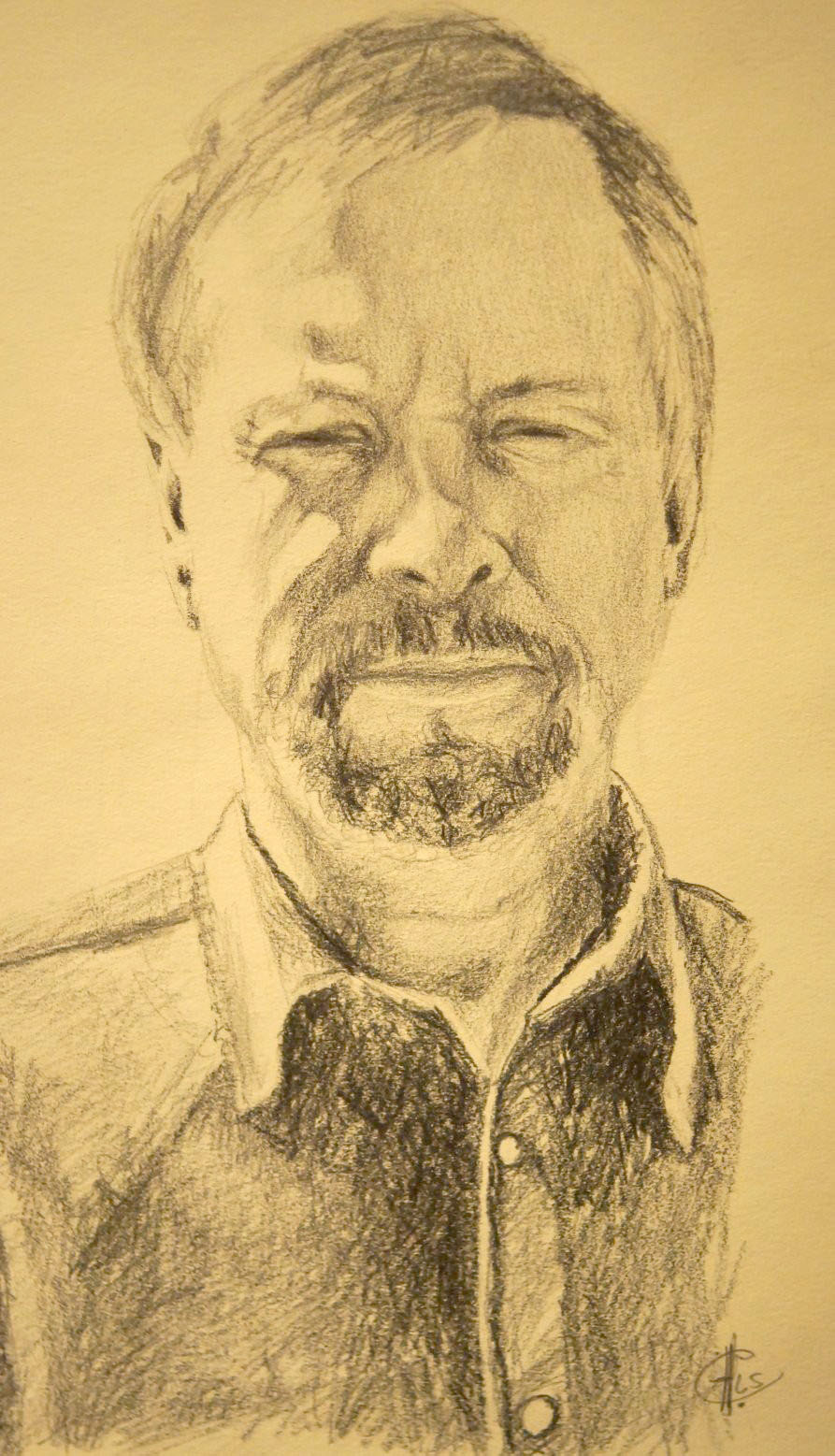
Riding to the rescue came a knight in shining armor: Siegfried Verbeke, a Dutchman from Antwerp, Flanders, and owner of a copy shop with the ability to produce paperback books. Already in 1993, he had published a Dutch and French translation of my expert report on Auschwitz, although without asking me first (hence, he translated an outdated text…). Learning about the rising tide of persecution against me, Siegfried got in touch in 1995, offering his help. I asked him whether he would take on the risky project of publishing the new book. He eagerly agreed, and so it was issued under the imprint of the not-for-profit organization he had established ten years earlier: Stichting Vrij Historisch Onderzoek, or V.H.O. for short, meaning Foundation for Free Historical Research. Siegfried’s brother agreed to have his name put on the book as the responsible editor. And so it was done.
The operation turned into somewhat of a mess when I left Germany in early 1996, impeding communications between Siegfried and me for a while, until I had finally settled in England for good in the summer of that year – or so I hoped. What used to be an obscure Flemish outlet was subsequently lifted to worldwide prominence. In 1997, I launched a German quarterly periodical officially published by V.H.O. and bearing that foundation’s name in its title: Vierteljahreshefte für freie Geschichtsforschung: Quarterly for Free Historical Research (VffG). Siegfried and I managed to acquire the contact lists from several aging German revisionists, such as Thies Christophersen and Udo Walendy. With this potentially solid customer base, we then launched a magazine- and book-publishing enterprise that took off nicely. VffG soon had some 1,000 subscribers, advertising V.H.O.’s range of books and brochures at the end of each edition.
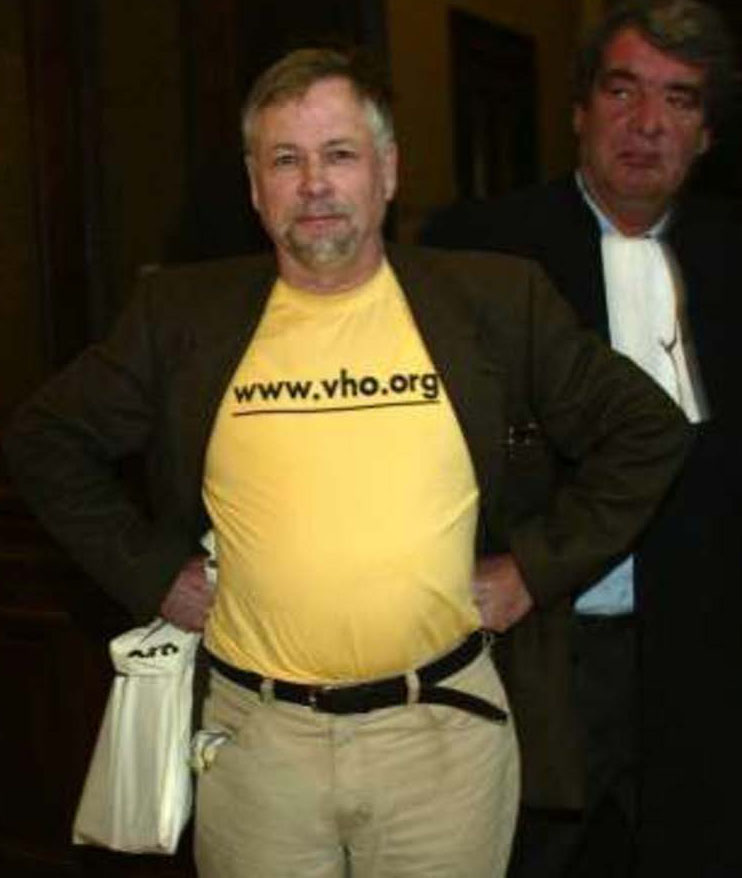
Later in 1997, after dabbling with html and the internet for a few months using AOL’s service of permitting subdomains, I bought the rights to the three-letter domain name vho.org. This put V.H.O. on the map as a multi-language revisionist outlet online, for everyone to see, and most importantly out of reach of the Gestapo. While Siegfried had no skills in the computer and internet departments, he was enthusiastic about what I was doing, making sure VHO.org got all the attention it deserved. When the Flemish media reported about this evil denier in their midst in May of 2001, initiated by a police raid triggered by a French search warrant, Siegfried proudly wore a t-shirt with the simple message “WWW.VHO.ORG” on it (see the image to the right). Journalists photographed him that way, and this image made the rounds in mainstream media, leading to traffic spiking on our site. He printed simple stickers with the same message, which people in Europe bought in bulk and stuck to utility poles all over the continent. Mimicking this, others started simply spray-painting this domain name on random billboards. Just mentioning the domain name led to criminal investigation in Germany for stirring up the people. It also led to media publishing photographs of these disfigured billboards, again helping us out greatly.
We had fun!
Since I was hiding in England under an assumed identity, and Siegfried was fronting for me in Flanders, communication with my customers was cumbersome and often heavily delayed. Siegfried collected incoming mail and forwarded it to me, and I sent outgoing letters to him, to be put in the mail in Antwerp. In the long run, this was not a good business model, and so in early 1998, we parted ways. I established my own publishing outlet, Castle Hill Publishers, yet operated the vho.org site as before, whose online store then featured both Castle Hill’s offerings and those of VHO.
A disagreement between Siegfried and me on how to run the web site and what products to sell through Castle Hill Publishers’ online shop led me to take legal control of the domain name in the summer of 2000, which up to that point had been registered by me in Siegfried’s name. Siegfried remained oblivious of my domain-name heist, which at that point in time was still rather easy to pull off. In fact, I suspect he never even knew that he had been the formal owner at any point in time.
This change of ownership in 2000 turned out to be a blessing for him in 2005. During that year, Germany initiated a major crack-down on international revisionism. Ernst Zündel was deported from Canada, I was deported from the U.S., and Siegfried got arrested in Belgium due to a German arrest warrant. The German authorities wanted to blame him for everything connected to www.vho.org. From a German prison, I managed to collect evidence proving that Siegfried had not owned the site since summer 2000, and I signed an affidavit stating that he has never been involved in anything concerning the site anyhow. He merely advertised it. Since “propaganda offenses” expire in Germany after five years, and Siegfried got arrested five years and a few months after the change of ownership, the German authorities had to let him go – and focus their zeal on me instead.
Between 2005 and 2009, www.vho.org went partially dormant during my time in prison, being run by a volunteer who had assisted me in running the server and any software installed. After my release, he quit, but I was not in a position to do much with it either while living in Europe, within the Gestapo’s reach. After immigrating permanently to the U.S., my focus turned entirely to a close cooperation with CODOH, and vho.org became a mere static repository of revisionist items posted since its inception.
During my prison time and the forced dormancy of vho.org, Siegfried’s focus gradually shifted to a close cooperation with French revisionist Vincent Reynouard, with whom he had been working since 1997. For example, they pursued several video projects together, most notably on the Einsatzgruppen executions behind the Eastern front (all in French: La “Shoah par balles” (ep. 1); La “Shoah par balles” (ep. 2); Le mythe de la “Shoah par balles”).
When Vincent needed help in 2015 to dodge a one-year prison term imposed by the French authorities, and a sheer endless string of further prosecutions, Siegfried was again there to help. His wife allowed Vincent to live in a small house she owned in the suburbs of London. That was the beginning of Vincent’s years in British exile, which ended only in early 2024 with his extradition to France.
Even many seasoned revisionists or afficionados of revisionism may never have heard of Siegfried Verbeke. He usually avoided the limelight but was a decisive mover and organizer in the background during the 1990s and into the late 2010s. Health issues finally forced him to slow down in the 2020s.
He passed away on June 28, 2026, at the age of 85. Another dear friend and comrade in our struggle for freedom and truth entered the eternal hunting grounds.
See also the birthday presentation below created on occasion of Siegfried’s 80th birthday.

Bibliographic information about this document: Inconvenient History, 2026, Vol. 18, No. 3
Other contributors to this document:
Editor’s comments: