Personal matters should not be part of contributions to Inconvenient History – unless it affects Inconvenient History. I am not yet sure that it will, but I thought it conducive to give a little glimpse into what’s going on in my little world at home, so the reader can appreciate my trials and tribulations, and any possible fallout of it in the future. In fact, in the editorial to Issue No. 2 of 2018, I already hinted at my difficult domestic situation when I wrote:
“In addition, I am now married, and have to run a household as a stay-at-home dad of three school-age kids, two of which are special-needs children. My wife has a career, long commutes, and after work spends time studying at an online university to get additional credits required to get licensed in her field in Pennsylvania. Hence, there is little if any spousal support at home.”
One of the special-needs children has now matured to the point where things are looking better than ever, so there is hope. On the other hand, my marital situation keeps deteriorating, primarily driven by disagreements over child-rearing issues, as far as I understand the situation. It culminated not too long ago in a few unbecoming scenes not to be described here. My wife and I are trying to patch things up. Either way, this is not conducive to a calm and productive work environment at home, from which I run Castle Hill, CODOH and Inconvenient History. I am closing my eyes and hope that nothing worse will happen.
-
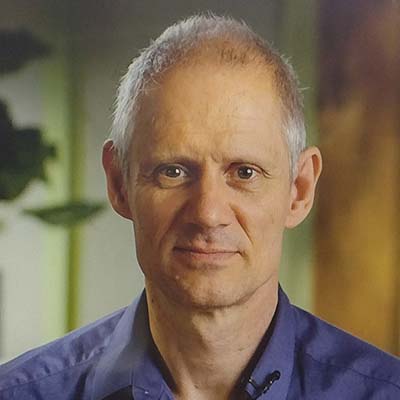
Germar Rudolf was born on October 29, 1964, in Limburg, Germany. He studied chemistry at Bonn University, where he graduated in 1989 as a Diplom-Chemist, which is comparable to a U.S. PhD degree. From 1990-1993, he prepared a German PhD thesis at the Max Planck Institute for Solid State Research in conjunction with the University of Stuttgart, Germany. Parallel to this and in his spare time, Rudolf prepared an expert report on chemical and technical questions of the alleged gas chambers of Auschwitz (see The Chemistry of Auschwitz). He conclude in it that "the alleged facilities for mass extermination at Auschwitz and Birkenau were not suited for the purpose as claimed." As a result, he had to endure severe measures of persecution in subsequent years. Hence, he went into British exile, where he started a revisionist publishing outlet. When Germany asked Britain to extradite Rudolf in 1999, he fled to the U.S. There he applied for political asylum, expanded his publishing activities, and in 2004 married a U.S. citizen. In 2005, the U.S. granted him an immigrant visa based on his marriage, but seconds later arrested and subsequently deported him back to Germany in crass violation of U.S. law. In Germany, where he was put in prison for 44 months for his scholarly writings, some of which he had published in the U.S., where they are perfectly legal. Since not a criminal under U.S. law, he managed to immigrate permanently to the U.S. in 2011. Rudolf has published more than 90 books (currently available through Armreg US and Armreg UK), among them the 54 volumes of the Holocaust Handbooks. He has compiled 9 documentaries and authored 20 non-fiction books, among them the bestselling Holocaust Encyclopedia. With a brief interruption, he has managed the free-speech organization Committee for Open Debate on the Holocaust since 2014, where we defend free speech at the forefront of corporate censorship and governmental persecution. In 2017, he became chief editor of CODOH’s quarterly periodical Inconvenient History. In early 2025, he launched the Holocaust Academy, dedicated to bringing critical thinking to Holocaust education. In that context, he organized the 2026 Holocaust Summit, dedicated to “Tackling the Most-Harmful Ideology Undermining Peace, Truth and Freedom Worldwide”.
Read more about him here.