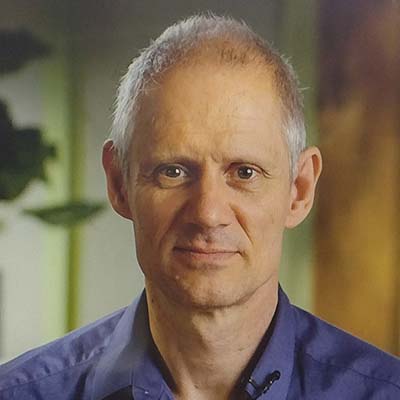
By Fred A. Leuchter, Robert Faurisson, Germar Rudolf ∙ August 1, 2005
Last updated on
The “Holocaust” is often characterized as the greatest crime in the history of mankind. Yet for 44 years not a single forensic investigation into this alleged crime has ever been undertaken. This changed in 1988, when Fred A. Leuchter, at that time the only U.S. expert for execution technologies, was asked by German-Canadian Ernst Zündel to go to Poland and investigate the facilities in the Auschwitz, Birkenau, and Majdanek camps which are claimed to have served as chemical slaughterhouses for hundreds of thousands of victims—also called “gas chambers.” Leuchter changed the course of history when he concluded in his report that the locations investigated “could not have then been, or now be, utilized or seriously considered to function as execution gas chambers.”
Subsequently Fred Leuchter also went to other camps, where mass murder with poison gas is claimed to have happened (Dachau, Mauthausen, Hartheim). He then wrote a similarly devastating report which concluded “that there were no gas execution chambers at any of these locations.” This study was accompanied by an annotated bibliography about published claims regarding these three alleged locations of mass murder compiled by Dr. Faurisson.
In a third expert report, Fred Leuchter described in detail the technique of execution gas chambers as used in the U.S. for capital punishment, and juxtaposed it with claims about alleged Third Reich gassings. In a fourth report, Leuchter criticized a book on “gas chambers” written by French scholar Jean-Claude Pressac.
This edition republishes the text of all four reports and accompanies the first one, which has caused a huge controversy and triggered a landslide of new research, with critical notes and research updates, backing up those of Leuchter’s claims that are correct, and correcting those that are not.
This fourth, corrected edition also features a section on a more-recent and thorough investigation of the alleged Dachau gas chamber
4th corrected and expanded edition, 252 pages. Format: pb, 6"×9", 199 illustrations. Published by Castle Hill Publishers (Uckfield, UK) in Nov. 2015. ISBN13: 9781591481188 (ISBN10: 159148118X) For prices please see retail outlets.
Purchase Options
Note: Books published by Castle Hill Publishers should be available anywhere books are sold – except for those companies boycotting us, like Amazon and Barnes & Noble. Search other online stores using the book-price search-engine links provided below, or when searching other stores, use the ISBN number provided above. Also ask your local bookstore to order it for you. They should be able to get it for you.
Buy at the Source form CODOH/Castle Hill Publishers.
Search book-price search engines:
FindBookPrices.com: search engine to find good book deals.
Electronic files of some (but not all) of the volumes of the Holocaust Handbooks have been released to the public domain for educational purposes only. Where this is the case, the files can be downloaded above. They may be copied and distributed by third parties free of charge only. No commercial use by third parties is permitted. If copied and distributed, no changes to the book are permitted without the prior written consent of the book's author(s)/editor(s).
Until the late 1980’s, Fred A. Leuchter, Jr. (born Feb. 7, 1943), was the foremost expert on the design, construction and maintenance of hardware, including homicidal gas chambers, used to execute convicted criminals in the United States. After receiving a Bachelor's degree (in history) from Boston University in 1964, Leuchter did postgraduate work at the Harvard Smithsonian Astrophysical Observatory. Leuchter is perhaps best known as the author of four controversial forensic reports on alleged German wartime extermination gas chambers. Leuchter designed and maintained gas chambers for several U.S. penal institutions. He was sent by Ernst Zündel to investigate Auschwitz, Majdanek, Dachau, Hartheim and other alleged "Nazi Death Camps" and "gassing facilities." Author of the devastating, trail-blazing series of Leuchter Reports (I, II, III, IV) and several articles and videotaped presentations that resulted from these investigations. Sensational Zündel witness in the Great Holocaust Trial in 1988.
Prof. Dr. Robert Faurisson (born Jan. 25, 1929, Shepperton, UK; died Oct. 21, 2018, Vichy, France) was a British-French expert for litertature, text, document and witness critique. He received his PhD in letters and the humanities in 1972 from the Sorbonne, where he also taught from 1969 to 1974. From 1974 until 1990, Faurisson was a professor of French literature at the University of Lyon II. He is a recognized specialist of text and document analysis, and is the author of four books on French literature. After years of private research and study, Dr. Faurisson first made public his skeptical views about the Holocaust extermination story in two items published in December 1978 and January 1979 in the influential Paris daily Le Monde.
Germar Rudolf was born on October 29, 1964, in Limburg, Germany. He studied chemistry at Bonn University, where he graduated in 1989 as a Diplom-Chemist, which is comparable to a U.S. PhD degree. From 1990-1993, he prepared a German PhD thesis at the Max Planck Institute for Solid State Research in conjunction with the University of Stuttgart, Germany. Parallel to this and in his spare time, Rudolf prepared an expert report on chemical and technical questions of the alleged gas chambers of Auschwitz (see The Chemistry of Auschwitz). He conclude in it that "the alleged facilities for mass extermination at Auschwitz and Birkenau were not suited for the purpose as claimed." As a result, he had to endure severe measures of persecution in subsequent years. Hence, he went into British exile, where he started a revisionist publishing outlet. When Germany asked Britain to extradite Rudolf in 1999, he fled to the U.S. There he applied for political asylum, expanded his publishing activities, and in 2004 married a U.S. citizen. In 2005, the U.S. granted him an immigrant visa based on his marriage, but seconds later arrested and subsequently deported him back to Germany in crass violation of U.S. law. In Germany, where he was put in prison for 44 months for his scholarly writings, some of which he had published in the U.S., where they are perfectly legal. Since not a criminal under U.S. law, he managed to immigrate permanently to the U.S. in 2011. Rudolf has published more than 90 books (currently available through Armreg US and Armreg UK), among them the 54 volumes of the Holocaust Handbooks. He has compiled 9 documentaries and authored 20 non-fiction books, among them the bestselling Holocaust Encyclopedia. With a brief interruption, he has managed the free-speech organization Committee for Open Debate on the Holocaust since 2014, where we defend free speech at the forefront of corporate censorship and governmental persecution. In 2017, he became chief editor of CODOH’s quarterly periodical Inconvenient History. In early 2025, he launched the Holocaust Academy, dedicated to bringing critical thinking to Holocaust education. In that context, he organized the 2026 Holocaust Summit, dedicated to “Tackling the Most-Harmful Ideology Undermining Peace, Truth and Freedom Worldwide”.
In 2017, a German publishing company asked me to contribute a thorough introduction to a reprint edition of Jean-Claude Pressac’s 1989 book of the same title. Unfortunately, this German publisher went out of business in late 2018, so no such reprint ever appeared. My introduction is still valuable, though; hence I published it in January…
Jean-Claude Pressac’s book, Auschwitz: Technique and Operation of the Gas Chambers, is the first serious and detailed response to the revisionist critique of the generally accepted Auschwitz extermination story. This 564-page work is itself evidence that Holocaust Revisionism can no longer be dismissed as a temporary or frivolous phenomenon, but is a formidable challenge that…
Plan of Auschwitz Crematorium II. Leichenkeller 1. Below ground level morgue. Leichenkeller 2. Below ground level morgue. Leichenkeller 3. Below ground level morgue. Furnace room. Ground level only. 15 cremation muffles. Corpse elevator. Only the small central part of the building, where the furnace room joined Leichenkeller 1 and 2, had two levels. Corpse chute….
When American expert for execution techniques Fredrick A. Leuchter presented his famous expert report on the gas chambers of Auschwitz and Majdanek to a Canadian court in 1988, he initially caused confusion: in his technical drawings of the morgues no. 1 of the crematoria II and III of Auschwitz-Birkenau, which allegedly served as “gas chambers,”…
Ernst Zundel interviews German researcher and author Ingrid Weckert regarding her book on the truth about Kristallnacht, the anti-Jewish pogrom in 1938 Germany. Also interviewed is the US brilliant chemist Dr William B Lindsey about the properties of Zyklon B, the pesticide allegedly used to murder millions of people during World War II. A interesting video (27…
By Carolyn Yeager Elie Wiesel questioned under oath in a California courtroom in 2008: Q. And is this book Night that you wrote a true account of your experience during World War II? A. It is a true account. Every word in it is true. In Part One, I established that the decision to rebrand…


 Buy at the Source form CODOH/Castle Hill Publishers.
 FindBookPrices.com: search engine to find good book deals.
 BookFinder4U.com: for U.S.only.