
The Myth of the Extermination of Homosexuals by the Third Reich
On the Making of a Propaganda Figure
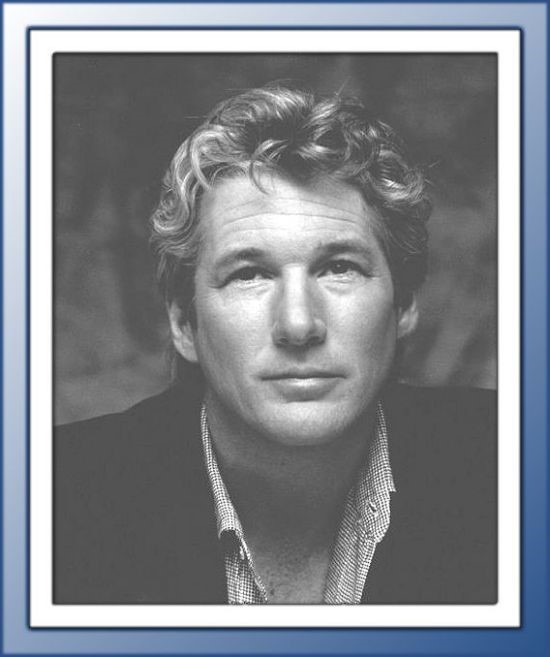
On December 2, 1979, the Broadway play Bent opened at the New Apollo Theater in New York City. The starring role was played by Richard Gere. Bent is the tale of a German homosexual named Max who is arrested and sent to Dachau. To avoid the stigma of wearing the pink triangle, Max denies his homosexuality, and opts instead to claim he is Jewish. (According to the logic of Bent, the status of homosexuals in the concentration camps was even lower than that of Jews.) Max falls in love with another homosexual inmate, and the play depicts their trials and tribulations. At the end, Max reclaims his inverted status as a homosexual, and commits suicide by falling on an electrified fence.
This maudlin melodrama was largely responsible for popularizing the false notion that homosexuals were exterminated by Germany’s National Socialist regime.
The play’s publicity promoted the claim that huge numbers of homosexuals had been murdered. Martin Sherman, the homosexual and Jewish author of Bent, stated in an interview in the November 15, 1979 New York Times that:[1]
“It wasn’t until I heard from gay friends of mine in London that at least 250,000, perhaps as many as 500,000 homosexuals died in the [German] camps that the possibility of doing a play about it occurred to me. […] That was in August 1977.”
Since 1973, claims had been made in the media alleging a National-Socialist extermination of homosexuals. The Broadway success of Bent, and a growing acceptance of homosexual “liberation” went far to secure the foundations for this mythology.
Claims of an extermination program directed at homosexuals were seldom if ever heard before 1973. That year saw a rapid shift in “official” attitudes toward sexuality. In 1973, the American Psychological Association declared that it would no longer classify homosexuality as a mental illness. Also in 1973, the United States Supreme Court legalized abortion. These two decisions helped a powerful minority of “gay-rights activists” and “feminists” to force their now “politically correct” opinions into the public arena.
A chronological review of the more extravagant claims demonstrates how the mythical death toll of homosexuals under the National-Socialist regime expanded in the telling:
An article in the November 1974 Gay Liberator reported that the Protestant Church of Austria had recently claimed 220,000 homosexuals were killed during the Third Reich.
In 1975, James Steakley’s book The Homosexual Emancipation Movement in Germany was published as part of an Arno Press series on homosexuality. Steakley claimed that the National-Socialist campaign against homosexual males resulted in the deaths of over 200,000 gays. Steakley gave as his source the previously mentioned article in the Gay Liberator.
In an opinion-page editorial in the September 10, 1975 issue of The New York Times titled “The Yellow Star and the Pink Triangle,” Ira Glasser, a member of the American Civil Liberties Union, wrote:
“Nearly a quarter of a million homosexuals were executed by the Nazis between 1937 and 1945, along with the six million Jews.”
Of particular interest in this quotation is the word “executed.” This implies specific murder or extermination as opposed to deaths by disease or starvation.
In a 1978 article titled “Gay Genocide from Leviticus to Hitler,” Louis Crompton claimed that between 100,000 and 400,000 homosexuals perished in National-Socialist Germany.[2]
Finally and as mentioned earlier, Martin Sherman, author of Bent, opined in 1979 that “at least 250,000, perhaps as many as 500,000 homosexuals died in the camps.”[3]
The myth was again massively bolstered by the 1981 publication of Frank Rector’s book The Nazi Extermination of Homosexuals,[4] which sold very well. In it, Rector writes:
“It seems reasonable to conclude that at least 500,000 gays died in the Holocaust because of anti-gay prejudice. […] In fact, 500,000 victims may be too conservative a figure.”
It is significant that Rector included homosexuals as “official victims” in that amorphous event known as the “Holocaust.” He even claimed that homosexuals were sent to the gas chambers. Among the illustrations printed in his book is a frequently reproduced photo of a U.S. Army soldier standing in front of an approximately 10-cubic-meter disinfestation chamber at the Dachau Concentration Camp (claimed to be a homicidal gas chamber). Rector’s caption reads:
“The final solution to the homosexual problem lay behind that door for homosexuals not exterminated in many other various ways. This chamber is at Dachau. The screaming, the weeping, the futile gasping for breath, the agony that room held in airtight horror was, in its hideous way, a blessing for many gays. It reduced their suffering to about fifteen minutes.”
Also in 1981, an article titled “Some Jews and the Gays” by homosexual novelist Gore Vidal appeared in The Nation (November 14). In it, Vidal was responding to an essay by neo-conservative Jewish author Midge Decter titled “The Boys on the Beach,” published in the September 1980 edition of Commentary. In this article, Decter had been ruthlessly critical of the homosexual lifestyle, so Vidal told her that, “like it or not, Jews and homosexualists are in the same fragile boat.” He then proceeded to lecture her that in some future “holocaust,” neo-conservative Jews “are going to be in the same gas chambers as the blacks and the faggots.”
Vidal backed up his account of homosexual victimization with the claim that fellow homosexual writer Christopher Isherwood once told him that “Hitler killed 600,000 homosexuals.”
Vidal was so outraged at Decter’s “fag-baiting” that he claimed that her article outdid The Protocols of the Elders of Zion. He asserted that Decter
“has managed to go one step further than the Protocols’ authors; she is indeed a virtuoso of hate, and thus do pogroms begin.”
By 1988, the myth had received international recognition. In the French book Le triangle rose: La déportation des homosexuels, 1933-1945, Jean Boisson stated that he believed the Nazis killed one million homosexuals, presumably all citizens of the Reich.[5]
A pattern is evident in such a list of alleged mortality figures for homosexuals in the Third Reich.
First, estimates of the number of gay deaths seem to have steadily grown with time. It appears that, as the story of the Nazi extermination of homosexuals was repeatedly told, the myth took on a life of its own.
Secondly, these claims of hundreds of thousands of deaths did not appear before 1973. While a number of books on the National-Socialist era written before 1973 mention the incarceration of homosexuals in concentration camps, most accounts known to this author do not make any accusations of extermination.
It seems that the claim of a Nazi extermination of homosexuals first surfaced during the same years that homosexuality began to gain a measure of acceptance from Establishment academics, scientists and journalists.
 |
 |
 |
| Bent was shown in 1997 in the USA as a feature film. Three pictures from scenes of the film. On the far right, Mick Jagger as “Greta Garbo”. Director: Sean Mathias; Actors: Lothaire Bluteau, Clive Owen, Ian McKellen, Brian Webber, Mick Jagger. www.imdb.com/title/tt0118698 | ||
During the 1970’s, the homosexual community in the United States and abroad acquired considerable political power. This was manifested in the election of several overtly homosexual politicians, and the repeal or sodomy laws in many states and countries.
The elevation of homosexuals to the highest ranks of the “politically correct” completed the inversion of former public moral and political values. What had once been condemned by society had become, if not a virtue, at least an acceptable “lifestyle.”
Acceptance as official victims of the “Holocaust” has given homosexuals the illusion of moral superiority over an allegedly oppressive patriarchal, white, heterosexual value system that has been the norm of Western Civilization for 2000 years.
Correct Statistics on Homosexual Arrests and Detentions in the Third Reich.
To begin to determine the true figure for homosexual arrests and incarcerations in concentration camps in the Third Reich, it is essential to look at the Third Reich’s official records.
The following table contains official figures of persons sentenced to prison under Section 175 of Germany’s war-time penal code (prohibition of homosexual acts), according to Gestapo files:[6]
| Year | Convictions |
|---|---|
| 1931 | 665 |
| 1932 | 801 |
| 1933 | 853 |
| 1934 | 948 |
| 1935 | 2,106 |
| 1936 | 5,320 |
| 1937 | 8,271 |
| 1938 | 8,562 |
| 1939 | 7,614 |
| 1940 | 3,773 |
| 1941 | 3,735 |
| 1942 | 3,963 |
| 1943 | 2,218 |
| 1944 | 2,000 (estimated) |
In addition, about 4,967 men of the German Armed Forces were indicted between 1940 and 1943 for offenses against Section 175 of the German penal code.[7]
These figures total 54,330. Estimates of 50,000 to 63,000 convictions for homosexuality from 1933 to 1944 are accepted by serious researchers on the subject.[8]
Only a small percentage of these men were sent to concentration camps after serving their prison term.
Obviously, if fewer than 63,000 German men were sentenced to prison for homosexuality, figures of hundreds of thousands of deaths in concentration camps are impossible exaggerations.
Erwin J. Haeberle, in an article titled “Swastika, Pink Triangle, and Yellow Star: The Destruction of Sexology and the Persecution of Homosexuals in Nazi Germany,” criticizes lurid and inaccurate portrayals of this subject:[9]
“It was only in the late 1960s that the two Germanies reformed their old sodomy paragraph 175 and decriminalized all sexual contact between consenting male adults.
Soon thereafter, an emerging ‘gay rights’ movement, especially in the U.S., discovered the Nazi persecution of homosexuals. Unfortunately, because of the paucity of information and a complete absence of solid research, misconceptions and exaggerations were common. ‘Underground papers’ and ‘gay freedom rallies,’ even a Broadway play and then some of its reviews, painted a lurid, and all too often inaccurate, historical picture. Finally, and very appropriately, a team of German researchers shouldered the task of ascertaining some basic facts. Rüdiger Lautmann, a sociologist at the University of Bremen, together with some collaborators, examined original camp records and published the findings in a major study dealing with a whole variety of societal responses to homosexuality.”
The research by Dr. Rüdiger Lautmann is extremely significant. It was published in Frankfurt, Germany, in 1977, and appeared as an article in English already in 1975.[10] Based on his research at the International Red Cross’s Tracing Service in Arolsen (Hesse, Germany), Prof. Lautmann estimated:
“The total number of officially defined homosexual prisoners ever incarcerated in the camps was about 10,000 (but it could be as low as 5,000 or as high as 15,000).”
Ten thousand homosexual prisoners sentenced to concentration camps are approximately 18% of the 54,330 men who served prison time. Thus, it can be seen that only a small number of homosexuals who had been convicted in court were taken into “protective custody” and sent to concentration camps.
Working in the Arolsen archives, Dr. Lautmann and his associates gathered individual data (prisoner I.D. cards, fact sheets, lists of personal belongings, administrative data, infirmary sheets, work squad lists, death notices, medical records etc.) for 1,572 pink-triangle concentration camp inmates. As control groups, the records of 751 Jehovah’s Witnesses and 219 political prisoners were used.
These data were used as a basis for estimates of the sociological character and fate of approximately 10,000 homosexuals sent to concentration camps. According to the data, most homosexuals were interned in the following camps in Germany and Austria: Buchenwald, Dachau, Flossenbürg, Mauthausen, Natzweiler, Neuengamme, Ravensbrück and Sachsenhausen.
Repeat offenders, transvestites and male prostitutes were most likely to be sent to concentration camps after serving their prison sentences. In fact, Lautmann’s study estimated that 86% of men sent to concentration camps for homosexuality had previously been convicted for sexual crimes of a homosexual nature.
In addition, of the total number of men sent to concentration camps, Lautermann estimated that 10% had been previously convicted of “seduction,” which was defined as a sexual act with a minor from fourteen to twenty years of age, or with a dependent (Sections 174 and 176 German penal code).
In preparation for the 1936 Berlin Olympics, the Germans greatly increased arrests of these kinds of individuals. The 250% leap in convictions from 1935 to 1936 reflects this effort by the German police to rid the streets of homosexuals.
The Death Rate for Homosexuals in the Concentration Camps
Of the 1,572 pink-triangle cases Dr. Lautmann studied, 1,136 provided enough data to ascertain an approximate death rate for these homosexual inmates. 60% of Lautmann’s homosexual case studies died while in concentration camps, while 41% of political prisoners and 35% of Jehovah’s Witnesses died.
Nevertheless, it would not be correct to apply this 60% figure to the total estimate of 10,000 homosexuals interned in the camps over the twelve years of the Third Reich. Indeed, Lautmann’s 1,572 homosexual case studies appear to be mostly from the end of the war, when the death rates in the camps were skyrocketing because of disease.[11] The death rates in the camps were low from 1933 through 1940.
Statistics are available which confirm an extremely higher death rate in the camps during the war years. As an example, the fluctuating death rates from month to month at the Dachau Camp are documented in the book Dachau: 1933-45, The Official History.[12] Certain years, notably 1941-42 and 1944-1945, saw the highest death rates, especially at the very end of the war when conditions in Germany totally broke down. For instance, only 17 people died in February of 1940; yet in March of 1945, 3,977 died.
Therefore, the average death rate over twelve years for homosexuals who were put in concentration camps is undoubtedly far lower than Lautmann’s estimate of 60%. Nevertheless, these mortality figures are a serious matter. Concentration camps were obviously dangerous places for homosexuals.
Yet it cannot be claimed that these men were murdered. The vast majority of these deaths were probably caused by typhus. The suffering and death caused by this disease are well documented by German and Allied sources. Typhus is transmitted by body lice, and caused millions of deaths in wartime Europe. The Germans used Zyklon B to disinfest clothing, bedding and buildings in an attempt to contain the epidemics. Typhus was not eliminated in Europe until the introduction of DDT and other powerful insecticides and technologies toward the end of the war.
Particularly absurd are claims that homosexuals were marched to the gas chambers. Assertions that concentration camps such as Dachau had homicidal gas chambers have been proven to be false.[13]
It is true that gays had a far more difficult time surviving in the dangerous environment of the camps than other groups of prisoners. Homosexuals were sometimes singled out for mistreatment by guards and inmates, especially during the first days after they arrived in camp. The homosexual’s status as the lowest type of inmate only reinforced their isolation, which made survival much more difficult.
Lautmann reports:
“Any group-forming or contact between homosexual inmates immediately raised the suspicion of the guard personnel. […] The homosexual population frequently must have been too small in numbers to have organized mutual aid, for example, by engaging in barter. Possibility for communication with inmates of other categories also were limited, on the one hand because of the personal discredit that might result for a prisoner of another category seen to associate with a homosexual inmate. […] Of course, this situation mirrors the social status of all homosexual men in the Germany of the time, but in the camps their stigmatization was exacerbated to a perilous degree. […]
Under conditions of extreme stress, such as incarceration, family ties are an important source of security. Obviously, the homosexual prisoner, as compared to inmates in other categories, was less often in the position to receive support from a conjugal family. […] The prisoners with the pink triangle were three to five times less often married (or widowed) than the others, and nearly twice as often without children.”
Lautmann also discovered:
“Those pink-triangle inmates most threatened with death were the very young [18 to 21] and the older prisoners. Only for inmates between twenty-one and thirty were chances of survival at all good. […] How much survival depended on adapting to conditions in the camps is shown by the correlation between length of incarceration and the nature of the termination of imprisonment. […] among homosexual inmates who were in the concentration camps for one year or less, four out of five died, whereas for those who were imprisoned for longer than two years, three out of four survived.”
Another condition which isolated homosexuals was that gays were transferred from one camp to another far more frequently than other inmates. This meant having to adjust to entirely new conditions in the new camp, with the attendant struggle for adequate food, clothing and medical care.
It is also interesting to note that, according to Lautmann, homosexuals did not have a higher rate of suicide than did political prisoners or Jehovah’s Witnesses (1%).
The Jewish Backlash against the Homosexual “Holocaust”.
Several authors, usually Jewish, have taken exception to the inclusion of homosexuals as victims of the “holocaust.” The Simon Wiesenthal Center Annual for 1990 expressed the situation as follows:[14]
“In the immediate postwar period, many of those who wrote about the concentration camps […] treated homosexuals as common criminals, justly punished for violating the penal code of the Third Reich. Postwar historians of the Holocaust, especially those asserting the exclusivist view that the Holocaust was a historical experience unique to the Jewish people, have taken a similar position. Thus, Lucy S. Dawidowicz, a leading exclusivist, has dismissed as not worthy of mention the ‘prostitutes, homosexuals, perverts, and common criminals’ incarcerated by the Nazis.”
Dawidowicz made her crack about “prostitutes, homosexuals, perverts, and common criminals” in 1981. In 1990, in an article titled “How They Teach the Holocaust,”[15] she explicitly denied the notion of a Nazi extermination of homosexuals:
“[…] some curricula enlarge the list of victims of Nazi genocide to include those whom the Nazis never intended to wipe out. The Pennsylvania/Grobman curriculum is one of several which instance homosexuals and members of the Jehovah’s Witnesses, though there is no historical evidence that the Nazis ever planned to exterminate these as groups. To be sure, the Nazis put homosexuals in concentration camps and identified them with pink triangles, proposing to “reeducate” them to function in “normal” society. And Jehovah’s Witnesses (Bibelforscher in Germany), who refused to recognize the authority of the Nazi state, were likewise sent to concentration camps (and identified by purple triangles) for a term limited to two months. Both groups were incarcerated together with other categories of prisoners whom the Germans did not intend to murder: criminals (green triangle); anti-socials—beggars, vagrants, prostitutes, and the like (black triangle); and political prisoners (red triangle). Many of these inmates, including the Jehovah’s Witnesses and homosexuals, unable to withstand the hardships of forced labor, became ill and died for lack of medical care.”
The conflicting claims of Jews and homosexuals as “holocaust” victims were also laid out in Richard Goldstein’s article “Whose Holocaust?” in the December 10, 1979 issue of Village Voice. Goldstein suggests that “For gays, inclusion in the Holocaust has become a symbol of social visibility,” and further:
“[…] myths are created to serve needs, and given the imperatives of the late ‘70s, it is inevitable that homosexuals would come to ‘need’ the Holocaust, if only because it simplifies the immensely complicated process by which they come to feel oppressed.”
But for Jewish people, claims that Jews were treated better in the concentration camps than gays (as depicted in the play Bent) are an outrage. To illustrate this point, Goldstein writes:
“But Raul Hilberg, author of The Destruction of the European Jews and a member of the President’s Commission on the Holocaust, says, ‘Homosexuals had a much better chance of survival in a concentration camp.’ He says there is no evidence to suggest that Jews were treated better than gays, and that ‘the notion of someone disguising himself as a Jew is preposterous on the face.’ Most damning is Hilberg’s assertion that homosexuals were highly valued prisoners, and that many capos, inmates who administered the barracks and disciplined the others, were gay. Hilberg is opposed to including gays in the monument to victims of the Holocaust. ‘That would be a travesty,’ he says. ‘There was no conduct that could save a Jew. This is a monument to commemorate that particular fate.”
Debunking the “Holocaust” of Homosexuals and Jews.
False claims of a National-Socialist extermination of homosexuals can be broken down into three categories:
1. INTENT
The German National-Socialist government is wrongly portrayed as planning and implementing a program of extermination of homosexuals.
2. NUMBER OF VICTIMS
The number of homosexual “victims” of the German National-Socialist government is outrageously represented as being in the hundreds of thousands (or even a million).
3. CAUSE OF DEATH
It is falsely claimed that homosexuals were murdered in gas chambers or by acts of extreme sadism and perversion.
Applying these same standards of analysis, revisionist research has shown that claims of intent, number of victims, and cause of death regarding Jewish casualties in World War Two have also been falsified.
Far more than Jews or homosexuals will admit, both “need” the inverted status conferred by their alleged “victimhood.” In the current cultural and political milieu, being proclaimed victims of the “holocaust” provides immense financial, political, social and religious benefits.
Accusations that homosexuals and Jews were “exterminated” by the National-Socialist government are false and a vicious slander of the German people.
Under such circumstances, it would be honorable for people to approach tales of the “Holocaust” with a great deal more skepticism and historical objectivity.
Notes
First published in Jack Wickoff’s newsletter Remarks, No. 22, 20 April 1997, pp. 1-5.
| [1] | Tom Buckley, “‘Bent’ to Dramatize Little-Told Nazi Horror,” NYT, 15 Nov. 1979, p. C17. |
| [2] | In: Louie Crewe (ed.), The Gay Academic, Etc. Publications, Palm Springs, CA, 1978, pp. 67-91. |
| [3] | In addition to Sherman’s aforementioned 15 Nov. 1979 interview in The New York Times, the same assertion appears in print in Bent, Avon Books, New York, 1980, p. 80. |
| [4] | Stein and Day, New York, 1981. |
| [5] | Boisson’s book is mentioned in: Warren Johansson, William A. Percy, “Homosexuals in Nazi Germany,” Simon Wiesenthal Annual, Vol. 7, Allied Books 1990. [Editor: by the same authors, see more recently: Wayne Dynes, Warren Johansson, William A. Percy (eds.), Encyclopedia of Homosexuality, Garland Pub., New York, 1990, 2 vols. (1484 + 38 S.).] |
| [6] | These figures were taken from the work by Johansson and Percy cited in the previous note, p. 251, and from Richard Plant, The Pink Triangle: The Nazi War Against Homosexuals, Henry Holt & Co, New York 1986, p. 231. Both publications refer to numerous German-language sources. |
| [7] | R. Plant, op. cit. (Note 6), p. 230. |
| [8] | R. Plant, ibid.; W. Johannson/W.A. Percy, see Note 6, Erwin J. Haeberle, Rüdiger Lautmann, in Seminar: Gesellschaft und Homosexualität, Suhrkamp, Frankfurt 1977, 2nd ed., ibid., 1984, and others. |
| [9] | In: Martin Duberman, Martha Vicinus, George Chauncey, Jr. (eds.), Hidden from History: Reclaiming the Gay and Lesbian Past, Meridian, New York 1989/90, pp. 373f. |
| [10] | R. Lautmann, “The Pink Triangle: The Persecution of Homosexual Males in Concentration Camps in Nazi Germany,” in: A Homosexual Emancipation Miscellany c. 1835-1952, Arno Press, New York 1975. This is a summary of Prof. Lautmann’s German book, op. cit. (Note 8). [Editor: see also idem, Das soziale Abwehrsystem gegen sexuelle Abweichung, insbesondere Homosexualität: Bericht zum Forschungsprojekt Entstigmatisierung durch Gesetzgebung, self-published, Bremen, 1978; idem. (ed.), Homosexualität: Handbuch der Theorie- und Forschungsgeschichte, Campus-Verlag, Frankfurt/Main, 1993; idem and Angela Taeger (eds.), Männerliebe im alten Deutschland: sozialgeschichtliche Abhandlungen, Verlag Rosa Winkel, Berlin 1992.] |
| [11] | Lautmann’s article includes a table headlined “Fate of inmate, where known.” 26% of homosexuals, 41% of political prisoners, and 57% of Jehovah’s Witnesses are listed there as “liberated,” meaning they were in the camps in the spring of 1945. All subsequent quotes from this article were retranslated from a German translation, hence may not be fully accurate; editor’s remark. |
| [12] | Paul Berben, Norfolk Press, London 1975; reviewed by John Cobden, “Lessons from Dachau, “The Journal of Historical Review, Vol. 9, No. 4, 198), pp. 485-504. |
| [13] | Among the “Holocaust” authorities who have admitted that there were no gassings at Dachau (and other camps of the Altreich) are Dr. Martin Broszat (Die Zeit, 26 Aug. 1960, p. 14) and Simon Wiesenthal (Books and Bookmen, April 1975). According to revisionists, however, there were no gas chambers in any of the camps, not even in Poland. |
| [14] | W. Johansson, W. A. Percy, op. cit. (Note 6), p. 226. This quote was retranslated from a German translation, hence may not be fully accurate; editor’s remark. |
| [15] | Commentary, Vol. 90, No. 6, December 1990. |

Bibliographic information about this document: Inconvenient History, Vol. 15, No. 2, 2023; first published in Jack Wickoff’s newsletter Remarks, No. 22, 20 April 1997, pp. 1-5; see https://web.archive.org/web/20100331001905/http://www.whale.to:80/b/wikoff.html
Other contributors to this document: n/a
Editor’s comments: n/a